
Date
Tue Jul 28Seattle’s long rainy season puts every gutter and downspout to work. Leaves, pine needles, and roof runoff can quickly turn a clear drainage path into a source of overflow, soil erosion, and moisture near the foundation. A reliable maintenance routine helps protect the exterior of your home before a small blockage becomes a larger repair.
Gutter cleaning Seattle homeowners can rely on usually means clearing debris in the fall and spring, checking downspouts after heavy rain. And calling a professional when roof height, pitch, or visible damage makes ladder work unsafe.
Schedule a gutter maintenance consultation if you see water pooling beside the home, sagging gutters, or repeated overflow. The Snohomish County guide explains that gutters are a key part of a property’s drainage and water-management system, directing roof runoff toward a safer discharge area: Snohomish County gutter and downspout guidance. Understanding that role makes the seasonal schedule and safety decisions much easier.
Gutter Cleaning Seattle: Why Regular Gutter Cleaning Matters in the Pacific Northwest
Rain is part of life in Seattle, Redmond, Bellevue, Kirkland, and communities throughout the Puget Sound. A gutter system has to move that steady roof runoff away from the house. It should not simply hold leaves until the next storm. Snohomish County explains that gutters and downspouts capture and convey rainwater away from the foundation. There it can slow down, spread out, and soak into the ground. That makes regular cleaning a basic part of protecting the property, not just a cosmetic chore.
For homeowners comparing gutter cleaning Seattle services, the most important question is whether the entire drainage path is working. A clean gutter can still fail if a downspout is blocked, disconnected, or discharges directly beside the foundation. Inspect the channels, outlets, elbows, and discharge points together, then address small problems before repeated storms turn them into structural damage.
Keep Roof Runoff Away From the Foundation
Leaves, pine needles, and sediment can form a dense dam inside the gutter. Water then spills over the edge and saturates the soil beside the house. As that soil erodes or remains waterlogged, runoff can contribute to foundation movement, basement moisture, and damage to surrounding landscaping. The National College of Wellness and Construction notes that clogged or poorly maintained gutters can cause water accumulation, foundation damage, mold growth, and costly repairs. Regular inspections and cleaning provide an opportunity to catch those conditions early.
Moisture can also reach areas homeowners cannot see from the yard. Overflow against siding, fascia, or the foundation creates a persistent damp environment where mold and mildew can develop. Keeping water moving through the system helps reduce that exposure and protects the home’s interior from basement flooding and other moisture problems.
Manage Water Beyond the Property Line
Gutter maintenance also supports neighborhood drainage during intense rain. Snohomish County states that managing roof runoff can decrease the volume of water reaching streets and reduce the potential for downstream flooding. A single home will not solve municipal drainage problems. But directing its runoff to an appropriate, vegetated area keeps avoidable surges off driveways, sidewalks, and streets.
Cleaning is only one part of the solution. Check that downspouts discharge away from the foundation and that the system remains secure after storms. If the current layout leaks at multiple seams or cannot handle the home’s runoff, review options for proper gutter maintenance and a more dependable installation.
How Often Should Washington Homeowners Clean Their Gutters?
For most Washington homes, plan on cleaning gutters at least twice a year: once in late fall after leaves and pine needles have dropped. And again in spring after bloom season. Homes near dense evergreen or deciduous trees may need a third cleaning, especially before the heaviest winter rain. A seasonal schedule gives homeowners in Seattle, Redmond, Bellevue, Kirkland, and surrounding Puget Sound communities a practical starting point. But the right frequency depends on the amount and type of debris reaching the roof.
Schedule a thorough fall cleaning
Fall is the most important time to clear gutters in much of Western Washington. Leaves can form thick mats, while pine needles can interlock and seal off the channel instead of washing through the downspout. That problem is especially common around Seattle homes surrounded by mature evergreens. Remove the debris after the main leaf drop, then check that each downspout carries water freely before winter storms arrive. Snohomish County guidance also recommends directing runoff into a suitable vegetated area at least 10 feet away from the foundation, where site conditions allow: Washington gutter and downspout guidance.
Inspect again after spring growth
Spring cleaning removes blossoms, seed pods, twigs, and debris that accumulated during winter. It also gives you a chance to look for loose fasteners, standing water, or a downspout that has become restricted. Regular inspections help identify developing problems before they become major repairs. If roof moss or nearby vegetation is contributing to recurring debris, review this guide to Seattle gutter maintenance alongside the inspection.
Adjust the schedule for trees and gutter design
Heavy tree cover is the clearest reason to clean more often. If you see debris collecting shortly after a cleaning, do not wait for the next standard season. Add a midyear visit or arrange periodic service instead. Ogee-style gutters also deserve closer attention because their sharper edges and corners can collect more sediment and debris. Even though the profile holds more water than a rounded gutter. Homes with these systems may need more frequent clearing than a neighboring home with less debris exposure.
As a general Seattle benchmark, some local service guidance recommends three cleanings per year. Use that as a reasonable baseline for heavily wooded properties, while homes with open surroundings may need only fall and spring service. Landmark Roofing & Siding helps homeowners across the Puget Sound region assess the condition of their gutters and choose a schedule based on the property’s trees. Roofline, and drainage needs.
DIY Gutter Cleaning: Safety Tips and Best Practices
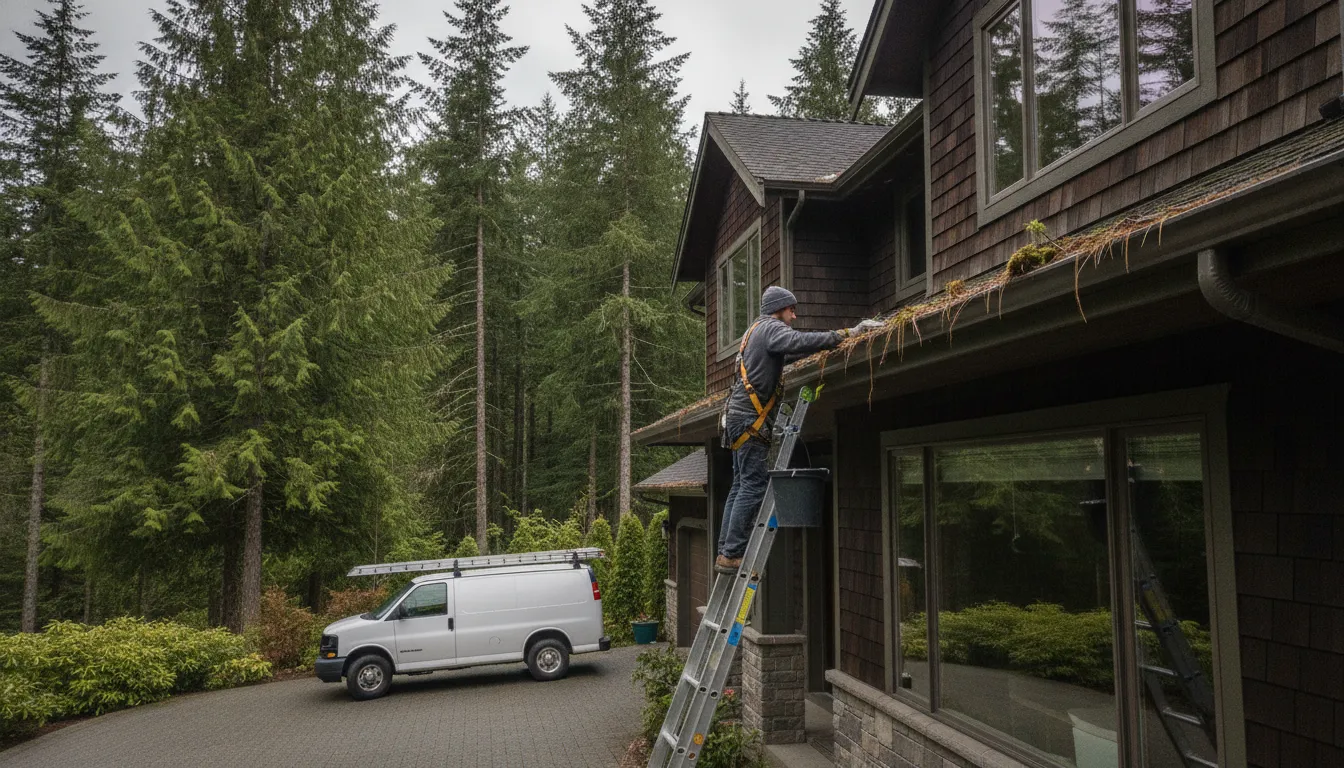
DIY gutter cleaning can be reasonable for a prepared homeowner, especially on a single-story home with easy ground access. Use this process to protect yourself and avoid turning a routine cleaning into gutter or roof damage.
- Decide whether the job is safe to do yourself. A single-story home with a low, accessible roofline may be suitable for DIY cleaning. Multi-story homes, steep roof pitches, fragile roofing materials, and difficult-to-reach gutters create substantially more risk. Professional service is the safer choice when you cannot work from stable ground or maintain secure contact with the ladder.
- Set up the ladder correctly. Place it on firm, level ground rather than soil, wet grass, or an uneven slope. Extend it fully to the working height, secure it against movement, and follow the ladder manufacturer’s instructions for the proper climbing angle. Never rest the ladder directly against unstable gutter sections, and do not climb above the safe standing level marked on the ladder. Have another adult stabilize the setup when possible.
- Gather simple tools before climbing. Use work gloves, a small gutter trowel, a bucket, and a garden hose with a gentle spray setting. Remove leaves and sediment by hand or with the trowel, placing debris in the bucket instead of dropping it around the foundation. After clearing the channel, flush the gutter and downspout with the hose. Stop if water backs up or leaks from a connection, since that can indicate a blockage or damaged section.
- Check the gutter shape and alignment. Ogee gutters can carry more water than rounded gutters, but their sharper edges and corners can collect more sediment and debris. As you clean, look for loose fasteners, sagging, separated joints, or standing water. Gutters commonly need a slope of 1/16 to 1/8 inch per foot to move water toward the downspout. The front edge should sit about 1/2 inch lower than the back, according to Snohomish County guidance: gutter and downspout guidance.
- Know when to stop. Do not attempt repairs or cleaning from a precarious position. If the roof pitch is steep, the ladder cannot be secured, or the home has multiple stories, contact a qualified roofing or gutter professional. A safe cleaning preserves the drainage system, while a fall or damaged gutter can cost far more than a service visit.
Signs Your Gutters Need Professional Attention
Some gutter problems are easy to spot from the ground. Others point to damage that requires a closer inspection. A professional assessment can address the immediate blockage while checking whether water has already affected the roof edge, fascia, siding, or foundation.
Downspouts are blocked or overflowing
A gutter can look relatively clean while a clogged downspout prevents the entire system from draining. Water backs up, spills over the roofline, and may run behind the gutter or against exterior walls. Downspout clogs can quickly result in roof water backup and total gutter system failure. During or immediately after heavy rain, look for overflowing corners, water pouring from seams, or a downspout that produces little or no discharge.
Downspouts should direct runoff away from the foundation rather than allowing it to collect beside the home. If water repeatedly pools near the foundation, the downspout may be blocked, disconnected, undersized, or discharging in the wrong location. Snohomish County guidance recommends directing runoff toward a vegetated area at least 10 feet from the foundation where site conditions allow: gutter and downspout guidance.
Gutters are sagging or pulling away
Visible gaps between the gutter and fascia, bowed sections, or loose hangers usually mean the system is carrying more weight than it should. Wet leaves, pine needles, and sediment can become heavy enough to pull gutters away from the home. Tightening one fastener may hide the symptom without correcting damaged fascia, inadequate support, or a drainage problem.
Rotting fascia boards and sagging roof edges deserve prompt attention. Regular maintenance can expose these warning signs before they develop into larger structural repairs. If the roof edge feels soft, the fascia is splitting, or the gutter continues to separate after cleaning, do not rely on a ladder inspection alone.
Water damage appears around the home
Stained siding, peeling paint, damp soil, basement moisture, or erosion beneath the eaves can indicate that runoff is bypassing the drainage system. Clogged gutters and downspouts can saturate the soil next to the foundation, increasing the risk of water damage and mold-related moisture problems. Regular maintenance is a cost-effective way to protect the home’s structure and may save thousands of dollars in preventable damage.
Landmark can assess whether the issue is limited to Seattle gutter cleaning or connected to a broader roof-edge concern. If the inspection finds related roof damage, Landmark’s professional roofing services can address the underlying problem rather than treating overflow as an isolated symptom.
| Factor | DIY Cleaning | Professional Service |
|---|---|---|
| Best for | Single-story homes, accessible rooflines, light debris | Multi-story homes, steep pitches, heavy or compacted debris |
| Safety risk | Moderate (ladder stability, reaching, weather) | Low (trained crew, proper equipment, insurance) |
| Inspection scope | Visual check of visible channel and downspout | Full system check including hangers, brackets, fascia, elbows, and discharge points |
| Equipment needed | Ladder, gloves, trowel, bucket, garden hose | Commercial vacuums, ladders, safety harnesses, professional tools |
| Cost range | Time and basic tool investment | Varies by home size, debris volume, and access |
Choosing the Right Gutter Maintenance Plan for Your Home
The right maintenance plan depends on your roofline, gutter material, tree coverage, and exposure to heavy rain. A professional assessment should look beyond visible debris and confirm that the entire drainage system is working as intended.
Compare seamless and sectional gutters
Seamless gutters are generally preferred in high-rainfall areas such as Seattle because they have fewer joints where leaks can develop. Sectional gutters can still work well when they are correctly sized, sloped, fastened, and maintained, but every connection deserves careful inspection. For a closer look at system design and proper gutter maintenance, review the installation factors that help protect a home from runoff.
Long, straight runs require additional planning. Gutter runs longer than 40 feet should include expansion joints at connection points so the material can accommodate contraction and expansion. Without the right joints, movement can stress seams and fasteners over time.
Select a durable material
Aluminum is a common choice for Washington homes because it is lightweight and resistant to corrosion. The material should meet a minimum thickness of 1/4 inch for adequate durability. Steel provides additional strength. But galvanized steel gutters should be at least 29 gauge and may require painting to help protect surrounding soil and drainage pathways from zinc leaching.
Material selection should also account for the shape and layout of the system. An installation professional can evaluate whether the gutter profile, downspout capacity, roof area, and slope work together during intense rainfall.
Include inspections, not just cleanouts
A maintenance visit should include clearing debris and testing water flow, but it should not stop there. Landmark’s inspection approach checks hangers, brackets, connection points, and the overall integrity of the system. The visit can reveal loose supports, developing leaks, separation from the fascia, or other issues before runoff causes damage.
For Seattle-area homeowners, a scheduled maintenance plan can be more reliable than waiting for an overflow. Landmark can help determine whether your home needs seasonal cleaning, repairs, a replacement section, or a better-designed gutter system. Flexible financing options may also be available for qualified projects.
Frequently Asked Questions
How much does gutter cleaning cost in Seattle?
Pricing depends on the home’s height, gutter length, debris volume, access, and the condition of the gutters and downspouts. A professional estimate is the most reliable way to account for those variables. Ask whether the service includes downspout clearing, debris removal, and a basic inspection.
How often should you clean your gutters in the Pacific Northwest?
Most Washington homeowners should plan to clean gutters at least in fall and spring. Homes beneath mature trees, especially evergreens, may need additional service because needles and wet debris can collect quickly. Check the system after major storms and adjust the schedule if water begins to overflow.
What is the best time of year to clean gutters in Seattle?
Late fall is an important cleaning window after leaves and pine needles have dropped, while spring cleaning removes blossoms and winter debris before heavier seasonal growth. A second inspection before the wetter months can help confirm that water has a clear path through every downspout.
Can I clean my own gutters or should I hire a professional?
DIY cleaning may be reasonable for a single-story home when the ladder can rest on level ground and be secured properly. Hire a professional for multi-story homes, steep rooflines, difficult access, heavy buildup, or any work that feels unsafe. A professional can also identify loose hangers, sagging sections, and early fascia damage.
What are the risks of ignoring gutter cleaning in Seattle?
Blocked gutters and downspouts can force water against siding, fascia, and the foundation. Ongoing moisture may contribute to rot, mold, erosion, basement flooding, or costly repairs. Overflow and sagging gutters are warning signs that the system needs prompt attention rather than another season of buildup.
Schedule Your Gutter Maintenance Consultation
Regular maintenance can help keep water moving away from your home and identify gutter problems before they become larger repair concerns. Schedule a gutter maintenance consultation with Landmark Roofing & Siding to discuss the right next step for your Washington home.