
Date
Fri Aug 14A roof can look intact from the driveway while moisture is already reaching the decking, flashing, or attic. That risk is especially important in Puget Sound, where autumn rain, winter storms, moss, and wind can expose small weaknesses before they become interior damage. Many homeowners only think about their roof after a leak appears, but by then water has often moved through several layers of the assembly.
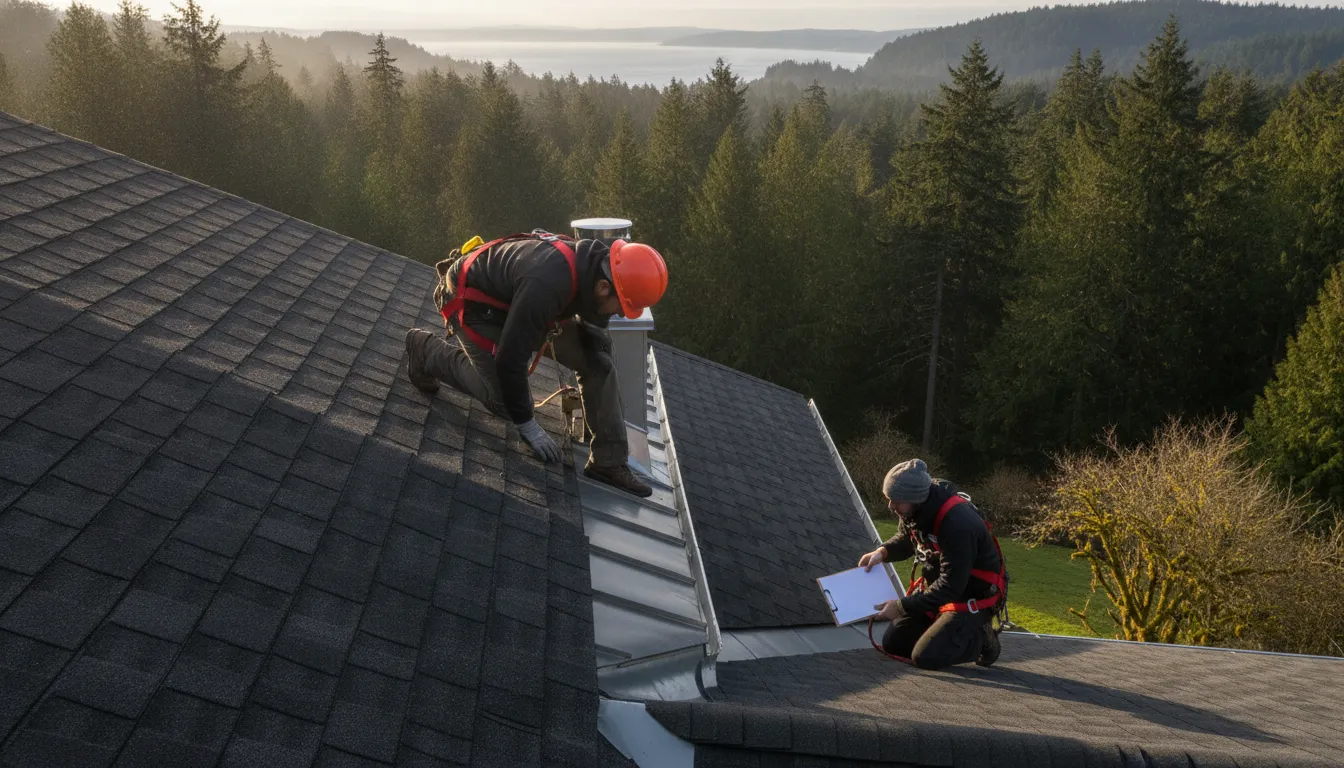
A professional roof inspection evaluates the complete roofing system, including shingles, flashing, ventilation, roof penetrations, decking, attic conditions, gutters, and downspouts. A certified inspector can identify hidden moisture, document the roof’s current condition, and recommend timely maintenance that supports warranty requirements.
For homeowners in Seattle, Bellevue, Redmond, and surrounding Washington communities, a yearly inspection built around the region’s weather calendar keeps the roof ahead of the wet season. Scheduling at least once a year, and again after severe weather, gives you a clear record of how the roof is performing. The inspection itself starts with a systematic look at the materials and drainage components that protect your home. Below is what a certified inspector actually checks, how often you should schedule the visit, and why Pacific Northwest timing matters.
What a Professional Roof Inspection Covers
A professional roof inspection examines the complete roofing system, not just the shingles visible from the ground. The inspector looks for moisture entry, structural concerns, drainage problems, and signs that materials are nearing the end of their service life. That thorough approach helps identify small defects before they become interior damage or a larger repair.
Roof surface, decking, and flashing
The inspection starts with the roof surface and the materials beneath it. The inspector checks for cracked, missing, or damaged shingles, exposed fasteners, soft areas, and evidence that moisture may be moving through the roof assembly. A professional also evaluates the decking where accessible. Damaged or weakened decking can affect how the roof performs, even when the surface looks acceptable.
Flashing receives close attention around chimneys, skylights, wall transitions, and other seams. These joints are common points of entry when flashing is loose, corroded, or improperly sealed. Chimney caps and brickwork also matter because damage at the roof-to-chimney junction can allow water into the structure. If you are already seeing signs of a leak, a roof leak repair assessment can help determine whether the source is on the surface or farther inside the system.
Shingles, metal roofing, and roof penetrations
Shingle condition provides useful information about roof age and performance. Curling edges and significant granule loss can indicate that shingles are aging and may need replacement soon. On a metal roof, the inspection includes checking for rust, oxidation, and damage to the protective coating.
Roof penetrations receive their own review. Vent pipes, exhaust outlets, skylights, and other openings interrupt the roof plane and need durable seals. The inspector checks the surrounding flashing and boots for cracks, gaps, or movement. These details can be difficult to evaluate safely without the right training and equipment.
Ventilation and the attic
A roof inspection often continues into the attic. Staining or mold growth can indicate moisture intrusion or inadequate ventilation. The inspector may use a moisture meter to locate hidden water damage that is not visible during a surface examination. The attic can also reveal structural sagging or other issues concealed by the roof covering.
Ventilation is reviewed alongside the attic condition. Poor airflow can contribute to heat and moisture buildup, affecting both the attic and the roof materials above it. The goal is to understand how the entire system is working, rather than treating one visible symptom.
Gutters and downspouts
Gutters and downspouts are part of the roof drainage system, so they belong on the inspection checklist. The inspector looks for leaves, branches, sediment, clogs, loose sections, and poor discharge points. Debris can trap moisture and contribute to water backup, rot, and damage around the roof edge. A complete inspection connects these drainage findings with the condition of the roof, attic, flashing, and decking.
Schedule a professional roof inspection to have your complete roofing system reviewed with photo documentation and clear next steps.
How Often Should You Schedule a Professional Roof Inspection?
Most homeowners should schedule a professional roof inspection at least once a year. Annual service creates a consistent record of your roof’s condition and gives an inspector a chance to identify small problems before they become interior water damage or larger repairs. Landmark recommends inspecting sooner when severe weather affects the Puget Sound area, especially after a heavy windstorm. A consistent annual review provides a practical baseline for tracking how the roof changes over time.
Wind can loosen shingles and damage ridge vents, even when the roof looks normal from the ground. A post-storm inspection can identify displaced materials, exposed areas, or vulnerable ventilation components before the next round of rain. Do not wait for a ceiling stain to confirm that damage occurred. By that point, moisture may already have moved beneath the roofing system.
Annual scheduling should also include a close review of roof penetrations, such as vent pipes. These transitions interrupt the roof surface and depend on properly sealed flashing. Because they are higher-risk areas for leaks, checking them during every yearly inspection helps keep routine maintenance from overlooking a common failure point.
- At least once a year: Use a recurring inspection to document roof condition, monitor aging, and identify maintenance needs.
- After severe PNW windstorms: Schedule an inspection when strong winds may have loosened shingles or damaged ridge vents.
- Before the wet season: Plan a fall visit to confirm that vulnerable areas are secure before heavy autumn and winter rain. Review this guide for a professional roof inspection before winter.
- Before listing your home: Inspect the roof before selling to reduce unexpected repair requests and escrow surprises.
A pre-sale inspection gives you time to address known concerns on your own schedule rather than responding under contract deadlines. It can also make the roof’s condition easier to explain to prospective buyers. The inspection should cover more than visible shingles. A thorough review considers flashing, penetrations, drainage, ventilation, and accessible attic areas.
These timing recommendations are a starting point, not a substitute for responding to warning signs. A new leak, missing shingle, damaged flashing, or visible sagging deserves prompt attention regardless of when your last inspection occurred. Regular evaluations also support better planning: you can prioritize minor maintenance now, monitor an aging roof, and prepare for replacement when the evidence points that way.
Why a Fall Inspection Matters in the Pacific Northwest
Schedule a roof inspection before the heavy autumn and winter rains arrive. In Seattle, Bellevue, Redmond, and communities across Puget Sound, fall is the practical window to find and fix roof issues before repeated storms test every vulnerable area.
A seasonal inspection confirms that shingles remain secure, flashing is intact, and gutters can move water away from the home. It also gives you time to address small defects before wet weather turns them into interior leaks, saturated decking, or emergency repair needs. The Pacific Northwest’s long rainy season makes that timing more important than waiting for a visible ceiling stain.
Why moss deserves more than a cosmetic cleanup
Moss commonly thrives in the region’s damp, shaded conditions. It is not only an appearance issue. Moss holds moisture against the roof surface, which can accelerate shingle degradation and contribute to deck rot. During a professional inspection, the condition beneath and around moss growth can be assessed instead of treating the visible growth as the entire problem.
That assessment matters because trapped moisture can conceal damaged shingles, weakened areas, or places where water is beginning to work under the roofing materials. A roof that looks generally intact from the ground may still have trouble spots that become obvious only after weeks of rain.
How runoff management protects the home
Heavy seasonal rain also puts pressure on the roof drainage system. Gutters and downspouts need to carry water away without clogging, overflowing, or discharging against the home’s foundation. Leaves and branches can trap moisture and create water backup, while poorly managed runoff can contribute to soil erosion and structural damage.
The USDA Natural Resources Conservation Service notes that roof runoff must be managed properly to help prevent erosion and damage to the building foundation: roof runoff guidance from the USDA NRCS. An inspection should consider the roof surface and the path water takes after it leaves the roof, including gutters, downspouts, and areas where discharge reaches the ground.
Book the inspection early enough to complete maintenance before the wet season settles in. For homeowners in Seattle, Bellevue, Redmond, and surrounding Washington communities. A fall check can provide a clear plan for moss management, drainage maintenance, and repairs before winter weather arrives.
How Professional Roof Inspections Protect Your Warranty
A roof warranty is easier to protect when maintenance is documented before a problem appears. Many manufacturers require annual or biennial professional inspections to keep coverage active. If an owner cannot provide inspection records, warranty coverage may be at risk, even when the roof issue itself appears minor.
Keep a clear record of the roof’s condition
A professional inspection creates a dated record of what the roofing system looked like at a specific point in time. The report should identify visible concerns, include photographs, and explain recommended maintenance. Keep each report with invoices, repair records, and warranty documents. This file gives you evidence that the roof received reasonable care and makes it easier to answer questions from a manufacturer, insurer, or future buyer.
The first inspection also establishes a useful baseline. Later inspections can be compared with that original record to track normal aging and identify changes in the roof’s condition. That information helps you plan for repairs or replacement instead of waiting for a failure to force an emergency decision. Homeowners researching roof replacement in Bellevue can use the same lifecycle approach: understand the current condition, document changes, and plan work around the roof’s actual needs.
Address small defects before they become warranty disputes
Minor defects are often easier and less expensive to correct during routine maintenance. An inspection may find missing nails, loose flashing, or another small weakness that allows moisture into the roofing assembly. Repairing those conditions early can prevent more costly damage to the deck, insulation, or interior finishes.
Early repairs also help separate maintenance issues from covered failures. A manufacturer may question a claim if damage appears to result from neglect, unapproved alterations, or a condition that was allowed to worsen. Promptly correcting documented defects does not guarantee coverage, but it demonstrates responsible upkeep and reduces avoidable complications when a claim is reviewed.
Keep these records after each visit, because consistent documentation turns a professional roof inspection into more than a one-time check.
Save the inspection date and inspector name, along with photos of the roof surface, flashing, penetrations, and drainage. Keep the written condition assessment and recommended maintenance, plus invoices and receipts for completed repairs. Retain a copy of the manufacturer warranty and its maintenance instructions.
A complete record provides a defensible maintenance history, supports practical replacement planning, and gives you a better chance of preserving warranty protection when you need it.
Signs That Tell You It’s Time for a Professional Roof Inspection
A ceiling stain is not a minor cosmetic issue. It usually means water has already moved through the roof system and damaged materials inside the home. Peeling paint, yellow or brown discoloration, and bubbling drywall all justify scheduling a professional inspection, even if the spot appears dry.
Interior signs of a roof problem
Check the ceiling and upper walls after heavy rain, especially beneath roof valleys, skylights, chimneys, and plumbing vents. A leak can follow framing before it becomes visible, so the stain may not sit directly below the exterior entry point. An inspector can trace the likely path and assess whether moisture has affected insulation, decking, or other structural materials.
The attic can reveal problems that are easy to miss from the ground. Staining, damp insulation, musty odors, or mold growth indicate that moisture may be entering through the roof or that attic ventilation is inadequate. A moisture meter can help identify hidden water damage that is not visible to the naked eye. Do not wait for a ceiling stain if you notice repeated condensation or dampness in the attic.
Exterior warning signs to watch for
Flashing deserves close attention around chimneys, skylights, and vents. These joints interrupt the main roof surface, making them common places for leaks to develop. Lifted, cracked, separated, or visibly deteriorated flashing should be inspected before the next period of sustained rain. The same applies to exposed fasteners or gaps around roof penetrations.
Look across the shingles for curled edges, bald patches, or granules collecting in gutters and downspout outlets. Significant granule loss and curling are indicators that shingles are aging and may be nearing the end of their service life. They do not prove that replacement is immediately necessary, but they do warrant a closer assessment of the roof’s remaining condition.
Chimney damage also calls for prompt attention. A cracked or missing chimney cap, loose brickwork, or deteriorated mortar can allow water into the flue or the roof-to-chimney junction. Because that junction is a common leak source, a professional should evaluate both the masonry and the surrounding flashing.
If you are documenting damage for a roof insurance claim in Washington, arrange the inspection promptly and keep the report, photographs, and repair recommendations together. A professional inspection can distinguish an isolated repair from a broader roof-system concern and help you address the issue before it spreads.
Professional Roof Inspection vs. DIY Checks
A DIY roof check can help you notice obvious problems from the ground, such as a missing shingle or clogged gutter. It cannot replace a trained evaluation of the entire roofing system. Climbing onto a roof is dangerous, and untrained eyes can miss warning signs that develop below the surface.
The practical difference is not simply who looks at the roof. A professional inspection combines safer access, specialized tools, documented findings, and experience interpreting small defects before they become major repairs.
| Inspection factor | Professional inspector | DIY check |
|---|---|---|
| Detection | Evaluates shingles, flashing, penetrations, drainage, attic conditions, and other signs of moisture or structural trouble. | Usually limited to visible conditions from the ground or easily accessible areas. Hidden damage and subtle warning signs may go unnoticed. |
| Safety | Uses trained procedures and appropriate equipment to reduce the risks of slips, falls, and roof-surface damage. | Requires the homeowner to manage ladder and roof hazards without professional training. Walking on some roof surfaces can also cause damage. |
| Tools | May use moisture meters to locate hidden water damage, along with close visual examination and photos of problem areas. | Typically relies on unaided vision, a flashlight, or phone photos. Those tools cannot confirm moisture inside roofing materials. |
| Report documentation | Provides a written assessment with photo evidence and recommended maintenance actions, creating a useful record of roof condition. | Often produces informal notes or observations that may not show the location, severity, or progression of a problem. |
| Warranty protection | Creates professional documentation that may support warranty requirements when the warranty calls for regular inspections. | Personal records may not satisfy manufacturer or other warranty documentation requirements. |
| Cost of missed issues | Finds manageable defects early, helping prevent water intrusion and larger repair needs. | A missed leak or loose flashing can allow damage to spread before symptoms appear indoors. |
A professional report also gives you a baseline for tracking the roof over time. That record can help distinguish normal aging from a new storm-related problem and support better maintenance decisions. The National Institute of Standards and Technology notes that good roof maintenance can extend service life and prevent costly repairs: NIST roof maintenance guidance.
Use a ground-level check between appointments to look for changes, but do not treat it as a complete inspection. If you see a ceiling stain, damaged flashing, exposed roofing material, or signs of attic moisture, avoid climbing up to investigate alone. A trained professional can determine whether the visible symptom points to a small repair or a broader roofing concern.
Schedule a professional roof inspection to document your roof’s condition and address problems before they grow.
Frequently Asked Questions
What is included in a professional roof inspection?
A certified inspector reviews the full roofing system, including shingles, flashing, roof penetrations, ventilation, gutters, downspouts, attic conditions, and visible decking. The inspection looks for moisture entry, loose or missing materials, granule loss, curling shingles, drainage problems, hidden water damage, and signs of inadequate ventilation. A written report with photos and recommended maintenance can help you prioritize repairs.
How often should you schedule a professional roof inspection?
Schedule an inspection at least once a year and arrange another inspection after a severe windstorm or other damaging weather. An annual review also makes sense before selling a home, because it can identify repair needs before they create escrow delays. Roof penetrations, such as vent pipes, deserve particular attention because they are common leak-risk areas.
Why is seasonal timing important for roof inspections in the Pacific Northwest?
Early fall is a practical time to inspect a roof in Washington because heavy autumn and winter rain can expose weak flashing. Loose shingles, blocked gutters, and drainage problems. Removing leaves and branches before the wet season helps prevent water backup. Moss also holds moisture against roofing materials, so addressing growth early can reduce the risk of shingle and decking damage.
Can a professional roof inspection help protect my warranty?
It can support warranty protection when the warranty requires documented annual or biennial professional inspections and maintenance. Keep the inspection report, photos, and repair records with your home documents. A baseline report also helps track roof aging and shows that smaller problems, such as loose flashing or missing nails, were addressed before they became larger failures.
Schedule Your Professional Roof Inspection
A documented inspection can clarify your roof’s current condition, identify maintenance needs, and support better planning for the seasons ahead. It is a practical next step for homeowners who want a clearer view of their roofing system.
Schedule a professional roof inspection with Landmark Roofing & Siding.