
Date
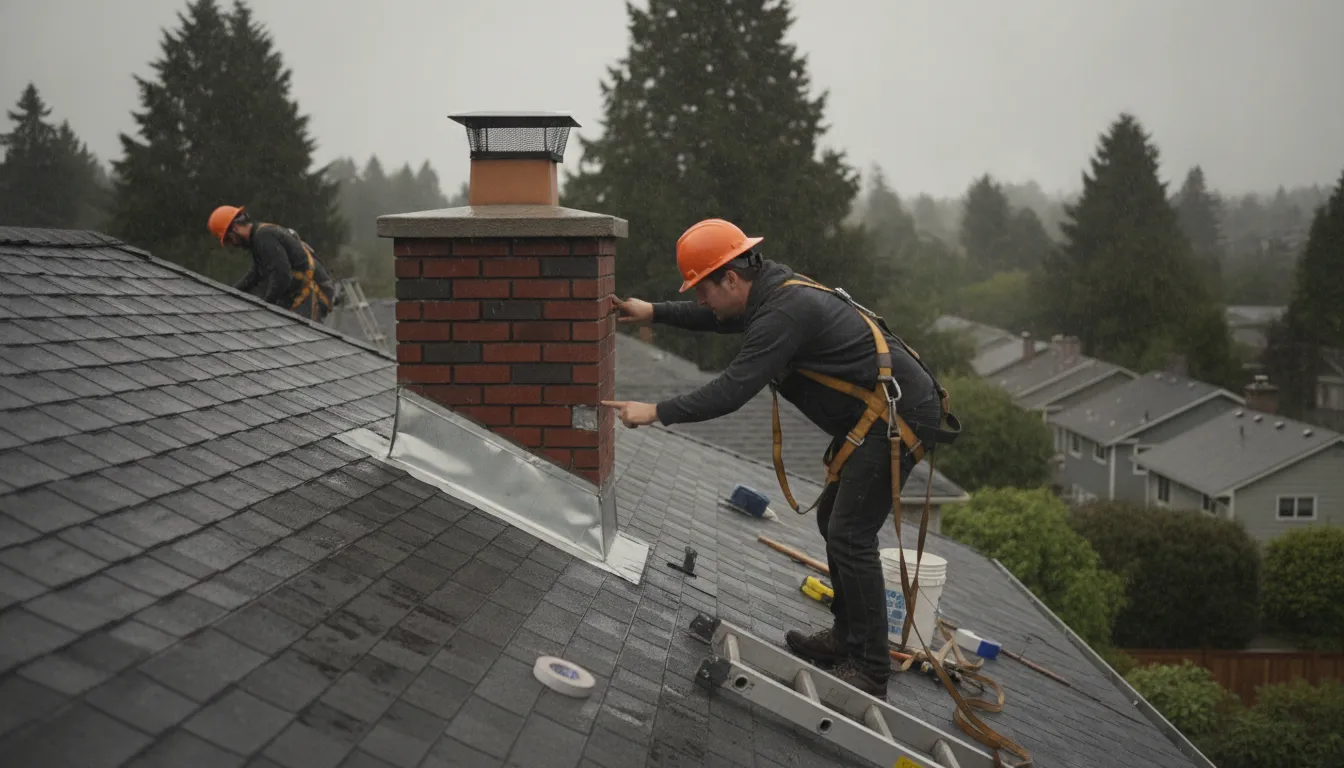
Tue Jul 21Seattle roofs endure thirty-seven inches of rain each year during an eight-month wet season. This constant moisture means even a tiny shingle crack soon becomes a major leak. Roof leak repair in Seattle stops water damage before it destroys roof decks, ceilings, and attic insulation. Professional crews find the water entry point by checking danger zones like worn chimney flashing, cracked vent boots, and blocked valley channels. They replace damaged parts with weather-resistant products built for the Puget Sound region. While short-term tarps can slow active drips during a winter storm, only expert repairs provide a reliable, long-term solution. Fixing small leaks early protects structural timber, prevents toxic mold growth, and helps homeowners avoid costly full roof replacement.
Schedule your roof inspection today. Call (855) 908-7663 to speak with a local Seattle roofing expert.
To protect a Northwest property, homeowners must first understand how water finds its way inside. Understanding why Seattle homes experience frequent roof leaks helps stop water damage before it can ruin an attic.
Roof Leak Repair Seattle: Why Seattle Homes Experience Frequent Roof Leaks
Seattle weather is tough on home roofing systems. The Pacific Northwest climate brings unique challenges that test even the strongest home exterior. In this region, ignoring a small drip can quickly turn into a major headache. Homeowners in Washington must understand how local weather patterns wear down materials over time.
Seattle homes leak most often because of flashing failures, cracked vent boots, blocked valley channels, ice dams, and moss-related shingle damage. Professional roof leak repair Seattle crews diagnose each cause by inspecting attic stains and exterior trouble spots. Then replace the compromised components with weather-resistant materials suited for the Puget Sound climate.
Continuous Rainfall and Moisture Exposure
Seattle receives about 37 inches of rain each year. This high level of rain makes it one of the wettest cities in the country. The wet season is long, lasting from October through May. This extended wet season exposes roofs to constant moisture for eight months of the year.
When materials stay wet for months, they begin to decay. Small leaks start when water finds tiny gaps in shingles or flashing. Over time, this constant dampness rots wood decking and ruins insulation. If these issues are not caught early, homeowners may need an expert emergency roof leak repair Seattle service to save the home.
Freeze-Thaw Cycle Damage
Seattle winters are mostly mild, but temperatures often dip below freezing. When rain water gets into small cracks and freezes, it expands. This expansion breaks roof sealants. When the ice melts, water flows deeper into the newly widened cracks, creating a path for leaks.
This cycle repeats many times during the winter. Each freeze makes the damage worse. It speeds up material fatigue because asphalt and metal shrink at different rates. Over a few seasons, this constant movement breaks the seals around pipes and attic vents.
Moisture Management and Roof Assemblies
Proper moisture management is vital to protect a home roof assembly from decay. According to research from North Carolina State University, roof leaks are a major cause of moisture problems in modern homes leading to mold. Mold ruins indoor air quality and damages rafters.
Homeowners in the Puget Sound face high leak risks. To keep a home dry, gutters must be cleared and roof seals checked after big storms. If damp spots appear, homeowners should seek storm-related roof leak repair help right away.
Common Causes of Roof Leaks in Seattle
Seattle homes face constant wet weather that tests every part of a roof. According to researchers at North Carolina State University, maintenance defects are a primary cause of water entering through roof leaks. Homeowners often need professional roof leak repair Seattle services to fix water entry points before they cause dry rot. Local roof repair companies in the Puget Sound area provide vital repair services that go far beyond full roof replacements. In Redmond and Bellevue, heavy winter storms make routine upkeep needed to protect a home. By fixing specific trouble spots, homeowners can keep their homes dry and safe.
Flashing failures around chimneys and vents cause the majority of Seattle roof leaks, followed by cracked vent boots, valley channel damage, aging shingles, ice dams, and moss growth. Each issue requires a specific repair approach, from replacing metal flashing to installing new vent boots and removing moss before it lifts shingle edges.
Flashing and Penetration Failures
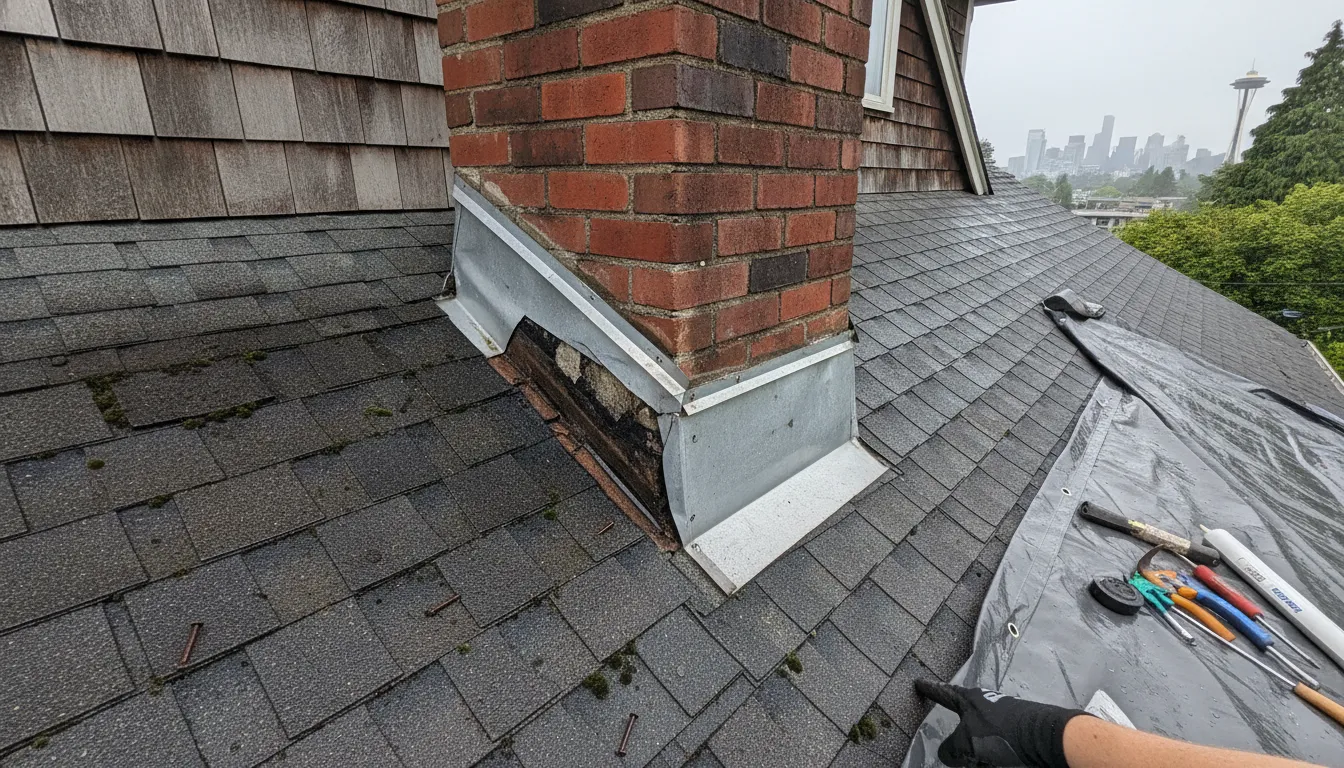
Water often gets in where the roof surface is cut or broken. Failed or damaged flashing around chimneys, skylights, and vents is a leading cause of leaks. Flashing is the metal trim that seals these joints. When wind and rain bend or rust this metal, water leaks into the attic. Gaps in chimney joints are common leak points. The Environmental Protection Agency states that roof assembly maintenance is vital to keep buildings dry.
Another weak spot is the vent boot. Vent boots are the rubber or plastic seals around plumbing pipes. The sun and rain crack these boots over time. This lets rain run straight down the pipe into walls. Valleys are also high-risk zones. A valley is the joint where two roof planes meet. Water flows down these channels in large volumes during heavy rain. If the valley lining gets a hole or comes loose, it will leak.
Material Aging and Winter Weather
Asphalt shingles do not last forever. In the damp climate, shingles lose their protective granules after about twenty years. These granules block sun rays and shield the asphalt. When they wear off, the shingles curl and crack. Wind can easily lift these weakened pieces. Rain can then seep under the shingles and rot the wood deck below. Regular roof inspections help find issues like chimney flashing wear before they turn into major leaks.
Ice dams are another winter hazard. When attic heat rises, it melts snow on the upper roof. This water runs down to the cold eave and freezes again. This ice block traps water behind it. The pooled water backing up under the shingles will cause a leak. Poor attic airflow often causes this issue.
Moss Growth and Moisture Retention
The Pacific Northwest has a lot of moss. Moss loves damp, shady roofs in Bellevue and Redmond. When moss grows on a roof, it acts like a sponge. It traps water against the shingles and keeps them wet for weeks. This constant moisture rots the roofing materials. Over time, the moss roots lift the edges of the shingles.
This lifting lets wind-driven rain blow right under them. Homeowners should use roof leak prevention and repair methods to stop moss before it ruins shingles. Removing moss early protects the roof assembly from early decay. Cleaning gutters also helps prevent moss from spreading along the eaves.
How Professionals Diagnose Roof Leaks
Finding a roof leak is hard. Water often travels far from where it first breaks through the outer shingles. Because of this, expert crews always start their search from the inside out.
Professional leak diagnosis follows a two-phase process: attic inspection to trace water stains and rot to the entry zone. Followed by exterior examination of flashings, vent boots, valleys, and ridge vents. This method pinpoints the exact failure point so repairs target the real cause rather than the visible ceiling stain.
Attic and Ceiling Checks
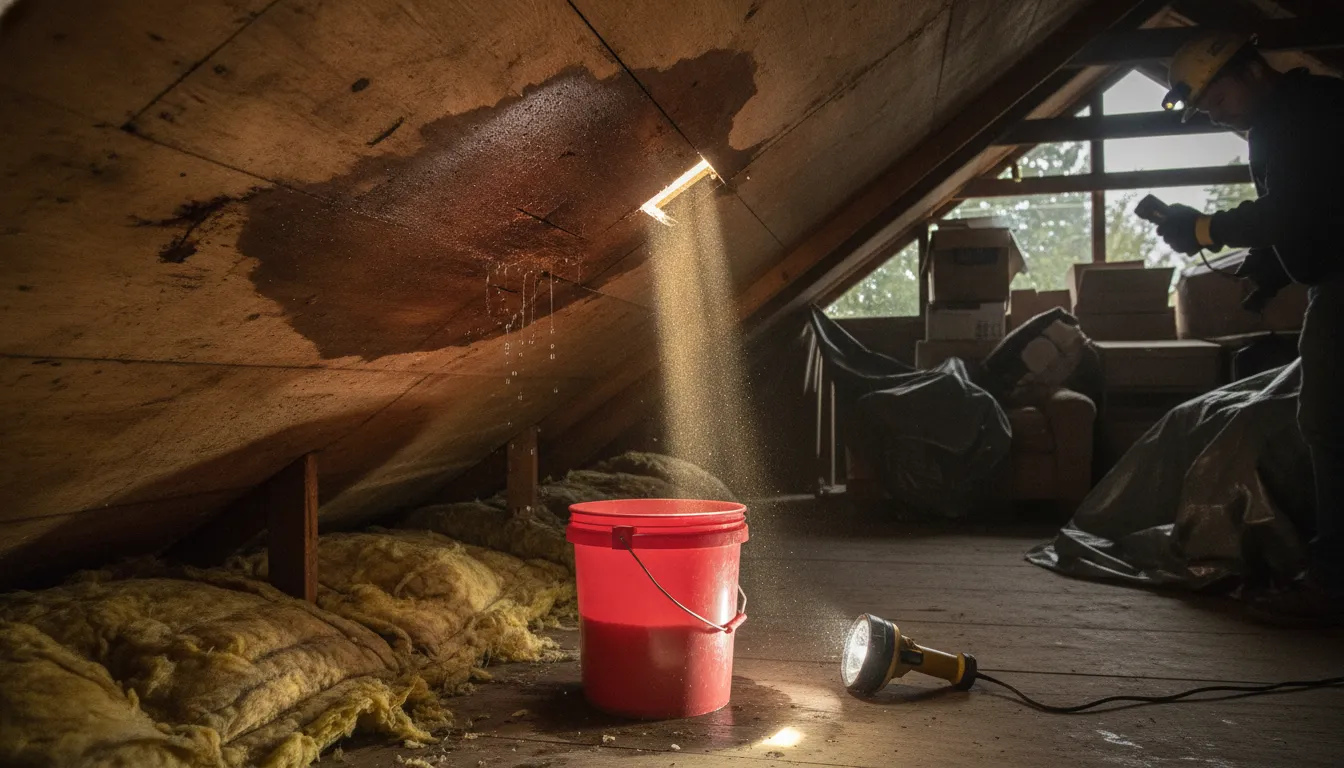
The attic is the best place to begin. A skilled roofer will crawl into the attic with a bright light to check the underside of the roof deck. They look for dark water stains, mold growth, wet insulation, or gaps where daylight shines through.
During dry summer months, water stains might look old, but they still mark the path of the leak. By checking these indoor signs first, the crew can pinpoint the general area of the damage before they step onto the roof.
Exterior Surface Examinations
Once checked, they move outside. They inspect high-risk areas where water is most likely to break through. These points include chimney flashings, valley channels, ridge vents, and vent boots.
Experienced roofers suggest regular roof checks to find issues like chimney flashing damage or shingle wear before they become major leaks. These routine checks spot shingle wear and chimney flashing damage before they lead to serious roof leaks. For local homeowners, scheduling these checks is a key step in getting timely storm-related roof leak repair before the rainy season starts.
According to the U.S. Environmental Protection Agency, preventive maintenance for roofs involves checking the exterior to stop water from entering. A trained pro can tell if a spot repair will solve the issue or if the roof is near the end of its life.
Homeowner Diagnostic Errors
A common mistake is trying to patch a leak from the inside of the house. Many people simply paint over ceiling stains. While this hides the dark mark, it does not stop the water from rotting the roof deck.
Another mistake is hiring the first cheap handyman who knocks on the door. Before hiring a crew for roof leak repair, Seattle homeowners should ask key questions about insurance, local references, and warranties to ensure quality work. Taking the time to screen a roofer prevents poor repairs that fail during the next storm.
Water is sneaky and often enters at one point, runs down a rafter, and drips onto a ceiling far from the actual leak. Trying to patch only the ceiling leaves the real hole wide open to more damage. Only a full check of both the attic and the roof can find the exact entry point and stop the leak for good.
The Professional Roof Leak Repair Process
Fixing a leaky roof in the Puget Sound area needs a clear and careful plan. Homeowners often try to patch spots on their own, but minor issues can hide major structural rot. A professional roof leak repair Seattle crew uses a proven plan to find and fix the break.
Professional roof leak repair follows a six-step sequence: emergency tarping to stop active water entry, precise source finding through attic and exterior inspection. Targeted repair of the compromised component, careful material matching for appearance and seal integrity, post-repair water testing to confirm the fix, and future maintenance guidance to prevent recurrence.
Quick Containment and Careful Checks
When water pours into a home during a heavy rainstorm, crews must act fast. Emergency repair services can include tarping to stop immediate damage from roof leaks. When active storms cause sudden damage, getting emergency roof leak repair Seattle services keeps a home safe. Once the home is safe from rain, crews check the roof and attic to find the exact leak source.
The Step-by-Step Repair Workflow
A professional repair follows a set path to make sure the fix lasts. Crews do not use quick patches that fail during the next big storm. Instead, in-house crews carry out every step with care. This process fixes the real cause of the leak and protects the roof for years.
- Emergency tarping: Active leaks need quick help. Crew members can install a sturdy tarp within 60 minutes of a call to stop immediate water damage.
- Precise source finding: Roofers run a close check of the roof and attic. They find where the water gets in by tracking stains and wood rot.
- Targeted part repair: The crew fixes the exact problem area. This might mean swapping old flashing, resealing vent boots, or putting in new shingles.
- Careful material matching: Materials are chosen to match the current roof in both color and style. This keeps the look clean and the seal tight.
- Post-repair testing: Crews spray water on the fixed area to test the seal. This test proves the roof is fully dry and watertight.
- Future maintenance tips: Experts provide a list of ways to protect the roof. These tips help prevent future leaks before they start.
Trained teams understand how Puget Sound weather affects local homes. They use only high-grade sealants and durable shingles that stand up to constant rain and damp air. By avoiding cheap shortcuts, repairs protect the home for the long term. This focus on detail is why Landmark Roofing and Siding backs its work with strong warranties.
Long-Term Moisture Management
Keeping a home dry takes more than one quick fix. Moisture can enter a house from many places, and a leaky roof is a primary threat to comfort. Following the official U.S. Environmental Protection Agency (EPA) moisture control tips helps protect the roof assembly. Yearly roof checks and basic care keep minor roof wear from turning into costly water issues down the road.
Call (855) 908-7663 today to schedule expert roof leak repair in Seattle before the next storm hits.
When Is Roof Replacement More Cost-Effective Than Repair?
A home roof protects the family and property from the elements. In the wet Puget Sound area, finding a roof leak can make homeowners wonder if they should patch it or replace the whole thing. While many local firms offer critical repairs that extend beyond a full roof replacement, a simple patch is not always enough. Homeowners must weigh the age of their shingles against the cost of ongoing work.
Roof replacement becomes more cost-effective than repair when a roof exceeds 20 years of age. When leaks appear in multiple locations, or when a single repair costs more than half the price of a new roof. A lifetime craftsmanship warranty on replacement also provides long-term financial protection that repeated repairs cannot match.
Signs of Widespread Roof Damage
Look at the big picture when considering a roof leak repair Seattle project. One small drip from a vent boot is easy to fix. But leaks that pop up in multiple spots across the roof show a larger problem. When water gets past the outer layers in many areas, the wood underneath starts to rot. Keeping a dry roof assembly is key to moisture control, as outlined in building guidelines from the U.S. Environmental Protection Agency. Patching one leak while others form will not save money.
Age of the Roofing System
The age of the shingles plays a major role in the choice. In the Pacific Northwest, standard asphalt shingles last about twenty to twenty-five years. If a roof is near the end of this window, the shingles are likely worn out and brittle. No matter how many times a leak is patched, old shingles will keep failing. Homeowners can learn more about addressing common roof leaks by checking the typical lifespan of local materials.
Financial Comparison of Options
A good rule of thumb is the fifty percent rule. If a single repair cost is more than half the price of a new roof, homeowners should replace it. The same is true if multiple small repairs are needed every year. These costs add up fast without providing long-term care. For reliable help, homeowners can turn to professional roofing services to get an honest assessment of their roof.
Warranties are also vital to the financial math. Some local fix jobs come with a simple leak stop guarantee or a five-year workmanship warranty. But a new roof from an elite team brings a lifetime craftsmanship warranty. This coverage protects the investment for decades. The table below compares these two choices to help with planning.
| Factor | Roof Repair | Roof Replacement |
|---|---|---|
| Upfront Cost | Low cost per visit | Higher one-time investment |
| Expected Lifespan | Short-term fix for target spot | Twenty to twenty-five years |
| Warranty Coverage | Basic leak stop or five-year term | Lifetime craftsmanship warranty |
| Long-Term Value | Costs can add up over time | Protects home value and stops leaks |
How Much Does Roof Leak Repair Cost in Seattle?
Many Seattle homeowners search for prices when they find water stains. The high search volume and a cost-per-click of $91.92 for roof leak repair Seattle keywords show how closely people compare rates. Yet there is no single flat rate to fix a roof leak in the Puget Sound region. Each home has unique needs, and the final cost depends on key factors.
Roof leak repair costs in Seattle depend on roof pitch and height, roof type and style. The depth of wood rot and water damage, and the ease of access to the leak zone. A professional inspection is the only way to get an accurate estimate and avoid paying for a full replacement when a targeted repair is sufficient.
Key Roof Leak Pricing Factors
The main factors that drive the bill are leak size and roof access. A simple leak on a flat, one-story home costs less to fix than a leak on a steep, tall roof. The type of roof also plays a big role. Fixing slate or clay tile takes extra skills and tools, which raises costs compared to simple asphalt shingles. Also, a small flashing fix is quick, but deep rot needs major work. If water sits for too long, it can rot rafters and the roof deck, which adds hundreds of dollars to the repair bill.
Key cost drivers include:
- Roof pitch and height
- Roof type and style
- Depth of wood rot and water damage
- Ease of access to the leak zone
Water Sources and Damage Safety
Ignoring a leak lets moisture ruin ceilings. Experts at NC State study how water enters homes. They find it comes from three sources: use, maintenance, and construction. An unfixed leak acts as a maintenance issue that can quickly cause mold growth. Expert cleanup after deep water damage must always put safety first. Because of this, crews must wear safety gear, such as masks and gloves, to handle mold safely.
Importance of a Professional Inspection
To keep costs down, homeowners should not guess at the damage. An expert roof check is the only way to find the real source of a leak. With a quick check, a trained pro can see if a basic repair or a full roof replacement is needed. This honest check helps avoid paying for a whole new roof when a targeted fix is enough. Getting a clear estimate early prevents a small drip from turning into a major expense.
Request your free roof leak inspection today. Call (855) 908-7663 or contact Landmark Roofing and Siding online to schedule an appointment.
Frequently Asked Questions
How do I stop my roof leaking in heavy rain?
If your roof leaks during a storm, place a bucket under the drip to catch water. Move belongings away from the wet spot to prevent water damage. Do not climb onto a slick roof to fix it yourself. Instead, call a local roofer to put up a quick tarp. According to the North Carolina Extension, keeping the home dry is the best way to stop mold and moisture issues.
What are common signs of roof leaks in Seattle?
Common signs of a roof leak include water spots on the ceiling or walls, peeling paint, dark stains on rafters in the attic, or a musty smell. Outside, look for cracked shingles, moss growth, or damaged flashing around chimneys and vents. If any of these signs are noticed, contacting a local roof expert for an inspection is advised.
Can a small roof leak cause structural damage?
Yes. Even a small leak allows moisture to rot roof decking, rafters, and attic insulation over time. Persistent moisture also promotes mold growth, which can affect indoor air quality and spread to other areas. Early repair is the most cost-effective approach to protecting the home.
How long does typical roof leak repair take in Seattle?
Most single-point repairs, such as replacing flashing or a vent boot, take two to four hours to complete. Emergency tarping can be done within 60 minutes of a call. More extensive repairs involving rotted decking or multiple leak points may require a full day.
Does homeowners insurance cover roof leak repair in Seattle?
Homeowners insurance typically covers roof leak repairs caused by sudden events like storm damage or falling objects. Damage from gradual wear, lack of maintenance, or aging materials is usually excluded. Homeowners should review their policy and consult their agent to understand their specific coverage.