
Date
Mon Aug 10Heavy quarried slate can easily crush a roof frame that is not reinforced for stone. This steep physical weight limit leaves many homeowners searching for lighter, modern options that still look classic. You can read about top brands in our guide to the best synthetic slate roof tiles.
Synthetic slate roofing is a modern composite alternative designed to match the beautiful look and deep profile of real stone shingles. According to the Virginia Department of Historic Resources, these man-made shingle substitutes are often made from recycled rubber or high-quality plastic resins.
These composite shingles weigh much less than real quarry stone, so you do not need to reinforce your roof frame to support them. They also resist heavy impact from hail, stand up to high winds, and carry top fire safety ratings to protect your family from wind and sparks. While they do not last as long as natural slate, they are much cheaper to install and often feature lifetime manufacturer warranties that offer great peace of mind.
If you want the look of stone without the weight, you might wonder how these composite systems work and what they are made of, so you can plan your next roof replacement. Let us start by breaking down what synthetic slate roofing is made from and why homeowners across the Puget Sound are choosing it.
Schedule a free roof inspection so our team can compare synthetic slate roofing with your current roof and recommend the right fit for your home.
What Is Synthetic Slate Roofing?
Synthetic slate roofing is a modern building product designed to look like real stone. These engineered tiles use plastics, recycled tires, or other composite materials to match the depth and profile of real slate. Many homeowners buy this option to get the classic look of stone without the heavy weight. To learn about current styles, check our guide to the best synthetic slate roof tiles before you buy.
How composite slate shingles are made
The way factories make these shingles gives them great strength and a realistic look. Over the last few years, the methods used to make these products have matured quickly. Makers mix recycled plastics, mineral dust, and rubber from old tires.
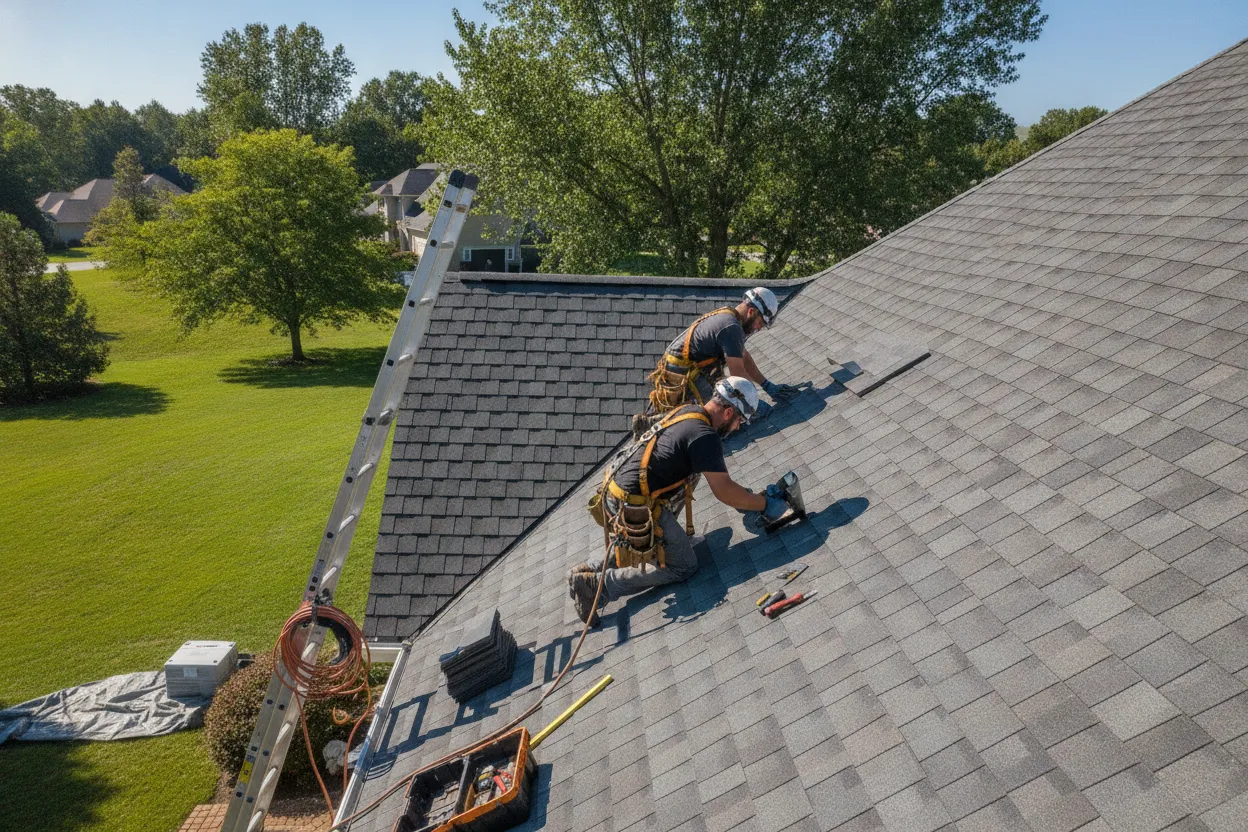
After mixing, machines heat and press the composite into molds under high pressure. The heat binds the parts together to make a tough, solid tile that will not rot or crack. Because the shingles contain recycled parts, they also offer a great way to keep old plastics out of local landfills.
Molding realistic textures from quarried stone
Homeowners often worry that a manmade shingle will look fake from the street. Early designs looked flat and shiny. To fix this, modern makers use molds taken from real quarried slate to copy the natural depth of the stone.
They press real historic slate tiles into silicone to copy every ridge and cleft. When the composite mix cools in these molds, it takes on the rough surface and edges of real rock. These deep shadow lines are what give the roof its elegant look. When sun and shade hit the tiles, they show the same rich details as real stone.
Evaluating appearance and color consistency
Another key benefit of this option is color control. Natural stone slate has many shifts in color, thickness, and texture because it is dug from the earth. Some people like this raw look. Others prefer a cleaner style.
Synthetic slate is engineered to provide a uniform color and shape across your entire home. This ensures you do not get mismatched tiles that stand out. You should not judge these shingles by looking at a single tile in a store.
To get the best view, evaluate installed samples on a roof to see how the textures and shadow lines look from a distance. If you want to upgrade, a roof replacement can give your home a beautiful, strong shield.
For homeowners in Redmond and Bellevue, choosing the right product is key. Roofs in our wet climate face constant moisture, but these composite tiles do not absorb water like wood or some natural stones do. They are made to resist moss and algae growth. This keeps your roof looking clean and fresh without the need for constant scrubbing.
Synthetic Slate Roofing vs. Natural Slate: Key Differences
Choosing between real stone and synthetic slate roofing is a major choice for any home. Both options have distinct looks and features. Before you make your pick, you can read our guide to the best synthetic slate roof tiles to see top choices.
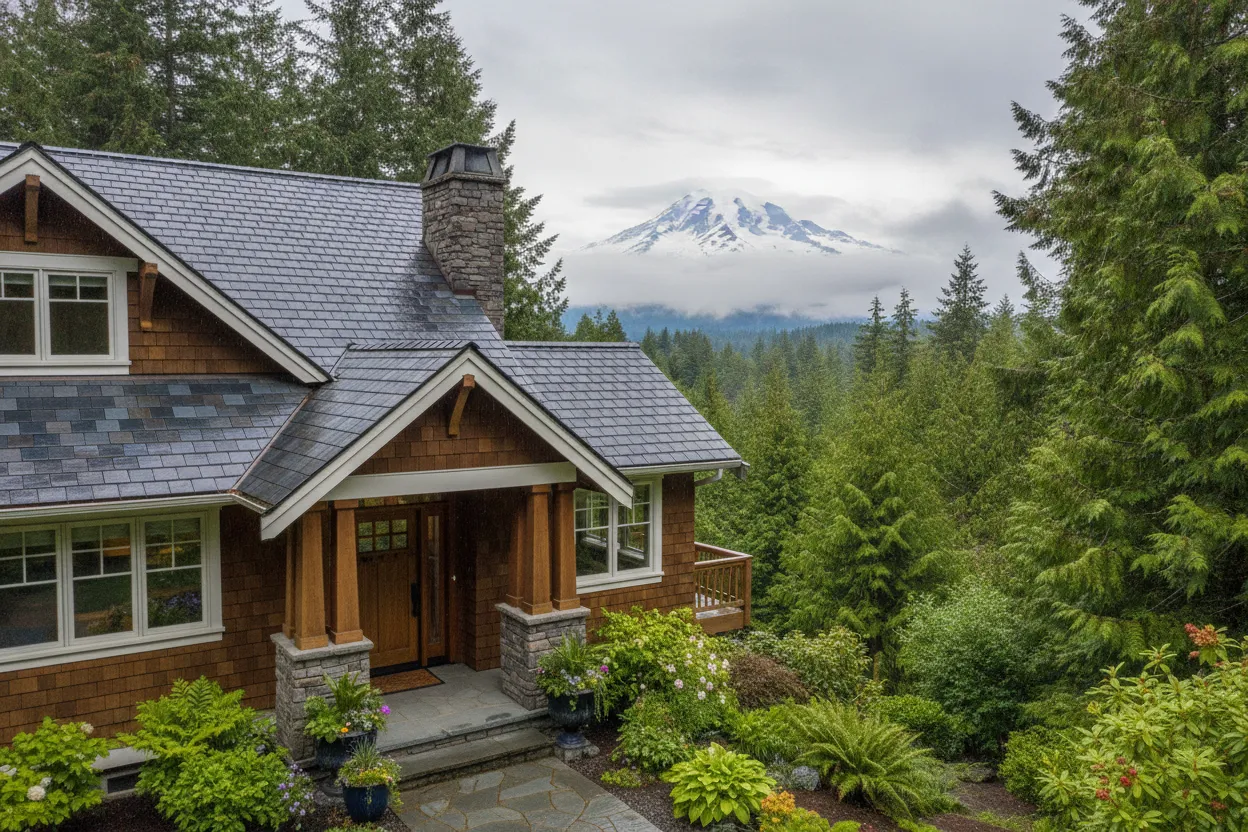
Natural slate has a rich history, but its high cost and heavy weight can make it hard to use on some Puget Sound homes. Synthetic slate tiles offer a modern choice that mimics real stone without some of the structural drawbacks.
Schedule a free roof inspection today to see how synthetic slate could work on your home. Our local team will walk you through the options and give you an honest recommendation.
Roof weight and framing needs
One major difference between these two roofing choices is weight. Real stone is heavy. It often needs extra wood framing to hold up the heavy load. This extra structural work can raise your setup costs. On the other hand, synthetic slate roofing is much lighter. For example, some synthetic tiles weigh about 1.25 pounds per tile. This is only about a quarter of the weight of real slate. Because they are so light, these synthetic tiles do not need extra roof supports. This makes them a great fit for homes that cannot hold the weight of heavy stone.
How long each roof lasts
Lifespan is one more key point where these two options differ. Real stone is famous for its long life. In fact, natural slate roofs can last between 60 and 125 years, or even longer depending on the stone quality and care. People who want a roof that lasts for many decades often choose natural stone for this reason. On the other side, synthetic slate roofs have a shorter track record. Some lower-end synthetic options can have a limited lifespan of about 24 years. Still, choosing durable roofing materials with a strong warranty can help protect your home for many years.
Care and tile repair needs
Upkeep and storm damage are other key points to compare. Synthetic slate is made to resist algae and moss. This is a big plus in the wet Puget Sound climate. Synthetic tiles also have high impact ratings. They can withstand large hail and falling tree limbs that would crack natural stone.
If a storm does damage your roof, repairing synthetic tiles is simple. A roofer can swap out single damaged tiles easily. With real stone slate, repairs are much more complex. You need a highly skilled worker with special tools to fix even a single broken stone tile. Choosing synthetic slate roofing can save you time and money on ongoing upkeep.
Initial cost vs. long-term value
The pricing for these two roofing options varies widely. Synthetic slate roofing often costs less than real stone. On average, synthetic tiles cost between nine and twelve dollars per square foot to install. This is often much cheaper than natural slate, which has a high starting price. But high-end synthetic tiles can sometimes cost as much as real stone. When choosing, you must weigh the upfront cost against the long-term value. Real stone slate is a big investment, but its long service life offers great long-term value. Synthetic slate offers a budget-friendly path with great strength for decades.
To help you make the best choice, this table compares the key features of both options.
| Factor | Synthetic Slate | Natural Slate |
|---|---|---|
| Weight | Light (about 1.25 lbs per tile) | Very heavy (requires strong framing) |
| Lifespan | 24 to 50+ years depending on quality | 60 to 125+ years (can last generations) |
| Average Cost | $9 to $12 per square foot | High initial cost (varies widely) |
| Upkeep | Low maintenance (resists moss and algae) | Requires skilled inspection and care |
| Damage Resistance | High impact and Class A fire ratings | Can crack under hail or heavy impact |
| Tile Repair | Easy to replace single damaged tiles | Needs specialized tools and labor |
How Much Does Synthetic Slate Roofing Cost?
Installing a new roof is a big choice for any homeowner. If you want the look of stone but need to save money, synthetic slate roofing is a smart choice. It gives you the look of slate without the heavy price tag.
Typical price per square foot
On average, the cost to set up this product ranges from $9 to $12 per square foot. This price includes both the tiles and the labor to put them on your roof. For a standard home, the total price can range from $18,000 to $36,000. Many local roofers offer helpful financing options to make the project fit your budget.
Some high-end composite tiles are well-made. In fact, these premium products can sometimes match the price of low-cost natural stone, as noted in this state preservation guide. If you buy a top-tier product, you may pay as much as you would for real stone. This is why you should look at other options before you buy.
Factors that drive the price
Your final cost depends on a few things, and the pitch of your roof is a main detail. A steep roof takes more time to cover, which raises labor costs. Also, the size and shape of your roof are key factors. Most homes in the Puget Sound area have complex roofs with many valleys and peaks.
But synthetic slate is much lighter than real stone, so you do not need to add extra wood support to your roof frame. Real stone is so heavy that most homes need extra framing. This extra work can add thousands of dollars to your bill. Choosing a lighter option lets you save on these hidden labor costs when you get a roof replacement.
Life-cycle value and savings
When you choose a new roof, you must think about long-term costs. A full price check must look at more than just the first day of work. You must weigh the look, the strength, and the cost to see if it fits your goals. You can read this state guide to see how much you might spend on repairs.
Synthetic slate needs little upkeep over its life, which saves you money because you do not need to clean off moss. To get a clear picture of what a project will cost, you should ask a local expert. They can look at your home and give you a detailed price sheet. Contact us today to learn more about our roofing services.
How Long Does Synthetic Slate Roofing Last?
Longevity of composite tiles
When you choose durable roofing materials, you expect them to protect your home for decades. Most synthetic slate roofing products are designed to last between 40 and 50 years if you take good care of them. This is a long life for a roof, but it does not match the life of real stone.
The National Park Service notes that real slate roofs can last from 60 to 125 years. Some stone roofs even last for hundreds of years. Synthetic options give you a lighter and cheaper roof, but they have a shorter life.
Lifespan risks with low-end tiles
Not all man-made slate tiles are made the same way. Some low-grade composite tiles have a much shorter life. If you buy cheap products, your roof might only last for about 24 years. This short span is noted in a study by the Virginia Department of Historic Resources. This means a low-end roof can fail in half the time of a top choice.
Warranties and installation rules
To make up for a shorter life, many brands offer lifetime warranties. These often cover a span of 30 to 50 years to give you peace of mind. But you must read the fine print.
Most warranties need a certified roofer to install the tiles. If you do not follow the exact rules of the maker, they can void your coverage. Along with a product warranty, you should look for a lifetime craftsmanship warranty from your roofer. This protects you from leaks and mistakes during setup.
Track record in your climate
Check how a brand performs in your area before you buy. In our region, the damp and wet weather of the Puget Sound will test any roof. You should check the track record of the tiles in wet climates before you buy. Some lifetime warranties sound great on paper, but the brand may lack long-term data to back up their claims. Talk to a local roofer who knows how different tiles hold up against rain, wind, and moss in our area.
How to maximize roof life
While synthetic slate is built to be tough, you can take steps to make it last as long as possible. Quick checks and minor care will make sure your roof goes the distance. Keep these key tasks in mind:
- Clear leaves and pine needles from the roof surface and gutters twice a year.
- Trim tree branches that hang over your roof to prevent storm damage.
- Watch for any loose or slipped tiles after a major wind storm.
What Synthetic Slate Roofing Requires for Care and Maintenance
A synthetic slate roof gives your home the look of stone without the heavy weight. This option is nearly maintenance-free, which means you will save time and money on upkeep. Real stone roofs often need costly repairs for slipped or broken tiles. Synthetic shingles avoid these common hassles because they are durable.
Routine check and cleaning steps
Keeping your roof in top shape is simple. You do not need to climb onto the roof yourself. A quick ground-level look is often enough to spot issues. Here are the main steps to follow for routine care.
- Check the valleys and flashing. You should check these metal channels twice a year to keep them clear of leaves.
- Scan for damaged tiles. Storms can sometimes drop heavy branches that crack a tile. A roofer can replace one piece without moving the rest of the roof.
- Monitor shady spots. These shingles are made to resist algae and moss, but local damp weather can still cause dirt to build up.
- Hire a trained roofer. You must work with an approved roofer to keep your product warranty valid.
Simple repairs for single tiles
If a tile does get damaged, the repair process is simple. True stone roofs need special tools and highly skilled builders to fix even minor issues. In contrast, synthetic slate roofing allows you to replace single tiles without moving the rest of the roof. This saves you both time and labor costs. You can find more tips on durable roofing materials in our winter roof guides. Keeping a few extra shingles from the first setup makes these quick fixes even easier.
Warranty protection and performance data
A new roof is a big step that must align with your long-term home goals. To see the style, you should check the look on a real roof rather than looking at a single sample tile. Always look closely at the brand warranty. Many brands offer lifetime coverage, but you should verify their real track record in damp climates. The state offers helpful tips on how to study brand performance data before you buy. Working with an approved local roofer ensures your roof is backed by a lifetime craftsmanship warranty.
Is Synthetic Slate Roofing Right for Your Puget Sound Home?
Homeowners in Seattle and Bellevue need a strong roof to face damp weather and winter storms. Your roof must withstand high winds, heavy rain, and falling tree limbs. Synthetic slate tiles offer a durable shield that fits the wet climate of Western Washington. If you want the look of real stone without the massive weight, this material might be the right fit for your home.
Climate protection in Western Washington
Weather in the Pacific Northwest can be tough on local roofs. Falling branches in Snohomish and high winds in Gig Harbor can cause severe damage to weak shingles. Synthetic slate tiles are made to resist impact from hail and falling limbs. These materials can absorb shock that would shatter or crack natural stone.
They also give better fire safety than wood shakes. Most composite slate shingles carry a Class A fire rating, which prevents fire from spreading on your roof.
Wind is also a big concern for homes in Sammamish and Redmond. Winter windstorms can pull loose tiles off a roof and leave the wood below bare. Manufacturers test synthetic slate tiles to make sure they stay secure and withstand extreme winds. To protect your home from damp air and storms, you should choose durable roofing materials that can handle local weather.
Weighing long-term goals and costs
Every home has distinct needs for style and budget. Natural slate lasts for over a century but costs a great deal to buy and install. Synthetic slate looks much like real stone but costs less and is much lighter. This means you will not need to add extra wood supports to hold up the heavy stone.
But you must still weigh the upfront price against your long-term goals. You should study how these materials align with your long-term home maintenance goals before making a choice. Weighing upfront costs against future upkeep helps you find the best value for your house.
Professional roofing assessments
Choosing the right shingle takes careful planning and expert advice. You must look at your home’s structure, local climate, and your budget. For older homes, an expert can tell you if your roof deck can handle the material. An expert can also help you compare the cost of repairs versus a full replacement.
If you are ready to explore your options, you should contact our team for roofing services. A local team in Puget Sound can inspect your roof and help you make a smart choice for your home.
Request a free roof assessment today to get a clear recommendation on synthetic slate roofing before the winter storms arrive.
Frequently Asked Questions
What is synthetic slate roofing made of?
Synthetic slate roofing tiles are often made from composite materials or recycled tires. According to the Virginia Department of Historic Resources, these manmade alternatives are designed to mimic the exact profile and depth of natural slate roof tiles. This composite substrate or recycled rubber creates a durable surface that looks like natural stone.
How much does synthetic slate roofing cost to install?
The cost to install synthetic slate roofing ranges from $9 to $12 per square foot on average. According to the Virginia Department of Historic Resources, the price of synthetic slate can vary widely. Premium composite materials can sometimes cost as much as lower-end natural slate. However, they save homeowners money on structural support because they are much lighter.
How long does synthetic slate roofing last?
Most high-quality synthetic slate roofs are designed to last 40 to 50 years. According to the National Park Service, real stone slate can last 60 to 125 years or more. While synthetic roofs have a shorter lifespan, manufacturers often offer long warranties to protect your investment.
Does synthetic slate roofing look realistic?
Yes, modern synthetic slate roofing looks very realistic. According to the Virginia Department of Historic Resources, manmade slate substitutes are designed to mimic the profile and depth of natural slate tiles. This process creates authentic surface textures and realistic edge shapes. From the street, it is very hard to tell them apart from natural stone.
Does synthetic slate require special installation?
Synthetic slate is easier to install than real stone, but it still requires professional setup. According to the Virginia Department of Historic Resources, these substitutes are often easier to install than quality stone slate yet still need skilled work for proper waterproofing and fastening. A certified local contractor will ensure the roof is installed to manufacturer guidelines so your warranty stays valid.
Ready to Schedule Your Seattle Synthetic Slate Assessment?
Waiting to replace a bad roof leads to unseen rot, wet insulation, and costly water damage inside your Washington State home. By setting up your roofing project today, you can secure your spot on our active schedule and complete the installation before winter storms arrive. A strong synthetic roof will protect your family, increase your property value, and give you complete peace of mind for many decades to come.
Ready to upgrade? Contact Landmark Roofing & Siding today to schedule a free roof inspection. Our Redmond team will guide you through every step, answer your questions, and ensure your home is fully prepared. Our Redmond crew is proud to deliver strong work that lasts. We stand behind our lifetime craftsmanship warranty on every job.