
Date
Tue Jun 9A roof leak rarely arrives with a convenient price tag. If you are trying to understand the cost to repair roof damage on a Puget Sound home, the final estimate depends on what failed, how far the damage traveled, and what it takes to complete a lasting repair. A few damaged shingles may be straightforward. A leak that has affected flashing, decking, or insulation requires a different scope.
That uncertainty does not mean you have to guess. A professional roof inspection can identify the source, document the affected area, and separate an appropriate repair from work that can wait. This guide explains the factors behind a roof repair estimate, common problems in the Puget Sound area, and how to make an informed choice between repair and replacement.
What is the average cost to repair roof damage?
There is no single average that accurately predicts every roof repair. Published price ranges can help with early planning, but they cannot account for your roof material, access, pitch, hidden moisture, or the exact cause of a leak. The most reliable estimate comes after a contractor inspects the roof and defines the complete scope.
Roof repairs generally fall into three categories. A focused repair addresses a limited, accessible defect. A moderate repair involves several components or a larger affected area. A complex repair may include concealed damage, difficult access, or multiple connected failures.
| Repair scope | Possible examples | Why the estimate varies |
|---|---|---|
| Focused | A small group of damaged shingles or limited seal failure | Material match, access, and condition below the surface |
| Moderate | Flashing replacement or a leak around a penetration | Number of components and rebuilding required |
| Complex | Widespread storm damage or deteriorated decking | Hidden damage, structural work, access, and safety setup |
A low initial quote is not necessarily the lowest long-term cost. If a patch covers the symptom without correcting the entry point, water can continue moving beneath the roof covering. A clear proposal should explain what will be removed, repaired, replaced, and inspected after completion.
What changes the cost of a roof repair?
A contractor builds an estimate around labor, materials, access, safety, and the condition uncovered during inspection. Understanding those variables helps you compare proposals on scope instead of comparing only the bottom-line number.
The size and source of the damage
A ceiling stain may be far from the place where water entered. Water can travel along sheathing, framing, and penetrations before becoming visible indoors. Locating the true source takes time, and the affected roof area may be larger than the stain suggests. Repairs cost more when the contractor must open and rebuild a broader section.
Roofing material and product availability
Asphalt shingles, metal roofing, cedar shake, and low-slope systems require different materials and repair methods. Matching an existing product can also affect scope. If an older color or profile is difficult to source, the contractor may need to discuss the closest available match or a larger repair area.
Pitch, height, and access
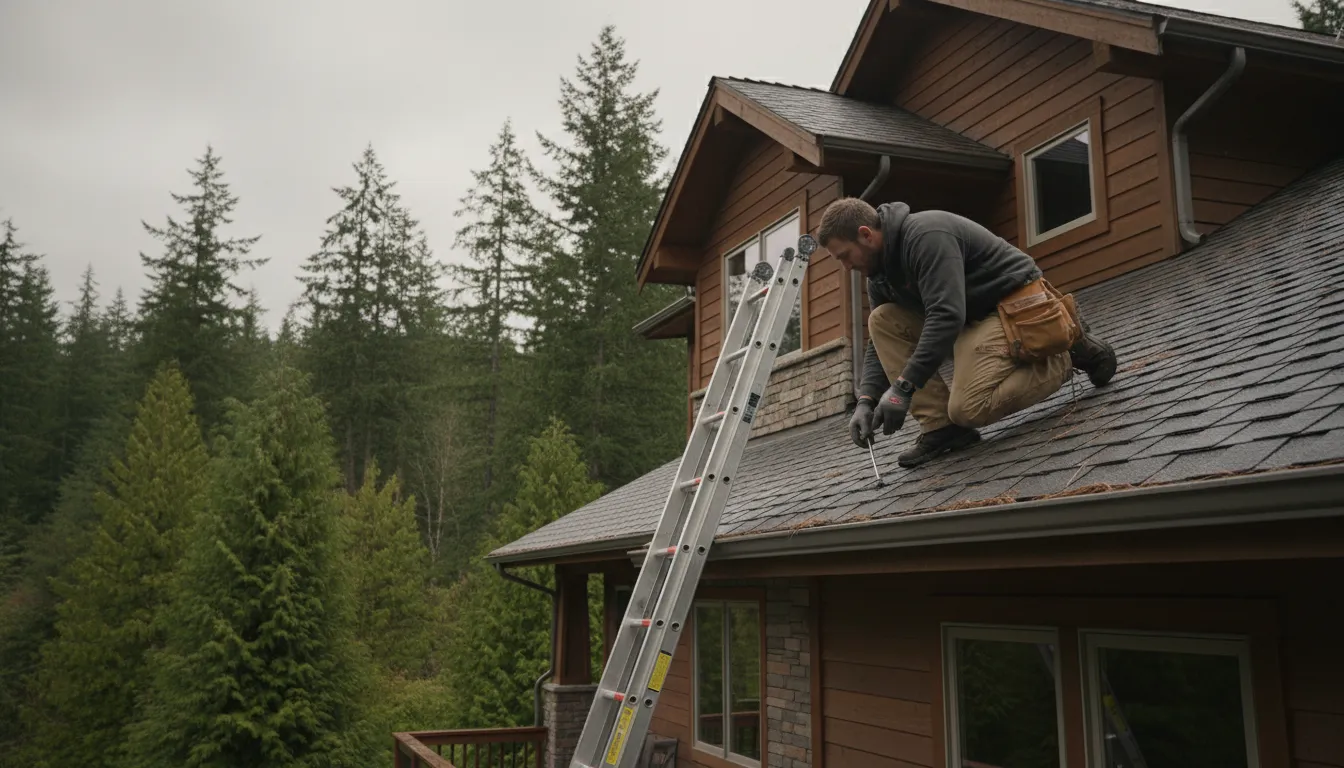
A steep roof, multi-story elevation, narrow side yard, or limited equipment access changes how a crew plans the work. Safe access and fall protection are essential parts of professional roofing. A simple-looking defect on a difficult roof may require more setup and labor than a larger issue on an accessible roof.
Flashing and roof penetrations
Chimneys, skylights, vents, plumbing penetrations, valleys, and wall-to-roof intersections rely on flashing to direct water away. A durable repair may require removing nearby roofing, replacing the flashing assembly, and reinstalling compatible materials. Applying sealant alone is not always an adequate correction.
Hidden moisture damage
Puget Sound homes experience long periods of rain and damp conditions. If water has entered for some time, the visible problem may be only one part of the repair. Damaged decking or other affected materials may not be confirmed until the roof covering is carefully removed. A detailed proposal should explain how unforeseen conditions will be documented and approved.
Urgency and weather conditions
An active leak during severe weather may call for temporary protection before permanent work can be scheduled safely. That emergency response is different from the final repair. Ask what temporary work covers, what permanent solution is recommended, and whether the temporary measures affect the later estimate.
Common roof repairs in the Puget Sound area
The region’s recurring rain, seasonal wind, shaded properties, and evergreen debris can expose weak points in a roof assembly. The cause still varies by home, so an inspection should come before a repair recommendation.
Missing, lifted, or damaged shingles
Wind can loosen shingles or expose fasteners, while foot traffic and falling debris can damage individual areas. A contractor should check adjacent shingles and the surface below them, not just replace the visible piece. The repair must preserve the surrounding roof’s ability to shed water.
Leaks around flashing
Flashing protects changes in direction and openings through the roof. If it is loose, corroded, improperly layered, or separated from surrounding materials, water can enter during sustained rain. Correcting the detail may require careful removal of nearby roofing so new flashing can be integrated rather than surface-patched.
Vent and penetration problems
Roof vents, plumbing boots, and other penetrations can deteriorate or separate over time. Because these components create openings through the system, small defects can allow repeated moisture entry. An inspection can determine whether the penetration, its flashing, or adjacent roofing needs attention.
Moss, debris, and drainage concerns
Moss and accumulated debris can hold moisture against roofing and interfere with drainage. They may also hide worn materials. Removal methods must be appropriate for the roof type because aggressive cleaning can cause damage. Keeping gutters and drainage paths clear helps water leave the roof as intended.
Storm-related damage
Wind and falling branches can cause obvious damage, but some storm effects are easier to miss from the ground. If you notice displaced materials, debris impact, or an interior leak after a storm, document what you can see safely and arrange an assessment. Do not climb onto a wet or damaged roof.
Landmark Roofing & Siding provides professional roof repair services for homeowners and property owners across the Puget Sound area. A qualified inspection is the right starting point when the cause or extent of damage is unclear.
Should you repair or replace your roof?
A repair is often practical when damage is limited and the surrounding roof remains serviceable. Replacement may offer better long-term value when defects are widespread, leaks keep returning, or much of the assembly has reached the end of its useful condition. The decision should come from the roof’s overall condition, not a single age number or a glance at one spot.
When a repair may make sense
- The problem is confined to a defined section.
- The surrounding roofing remains sound.
- The source can be corrected without disturbing other weak areas.
- Compatible replacement materials are available.
- The proposed repair addresses the cause, not only the symptom.
When replacement deserves consideration
- Damage or wear appears across multiple sections.
- Leaks have recurred despite earlier repairs.
- Decking or underlying components show broader deterioration.
- A large repair would leave many near-term concerns unresolved.
- An inspection finds replacement is the more reliable long-term approach.
If replacement becomes the better option, use Landmark’s roofing cost calculator as an early planning resource. You can also review the roof replacement cost guide to understand the factors involved.
Ask the contractor to explain both paths when appropriate. A useful comparison describes what a repair solves, what risks remain, and how replacement changes the long-term outlook. That makes it easier to evaluate value instead of defaulting to the cheapest immediate option.
How to request a roof repair estimate
A well-prepared estimate process helps the contractor understand the problem and gives you clearer proposals to compare. Follow these steps without putting yourself at risk.
- Document visible signs from a safe location. Take photos of ceiling stains, dripping, displaced materials visible from the ground, or storm debris. Note when you first saw the issue. Never walk on a wet or damaged roof.
- Protect the interior if it is safe. Move belongings away from an active drip and use a container to limit damage. If water is near electrical equipment or conditions feel unsafe, leave the area.
- Schedule a professional inspection. Share the history of the issue, including previous repair work and recurring patterns. Ask the contractor to inspect the surrounding roof, not only the obvious symptom.
- Review the recommended scope. A proposal should identify the affected area, planned materials, work steps, and how unforeseen damage will be handled. Ask whether the work is temporary or permanent.
- Compare written proposals carefully. Check whether each contractor proposes the same solution. One estimate may appear lower because it excludes flashing, decking, disposal, or another necessary part.
- Choose the solution that addresses the cause. The right repair should stop water entry, integrate with the existing roof, and leave you with a clear understanding of remaining concerns.
Be cautious about accepting a firm price based only on a phone description. Photos help with early triage, but they rarely reveal every layer involved. A site assessment provides a stronger basis for scope and pricing.
Why should you avoid delaying roof repairs?
A small opening can admit water repeatedly during Puget Sound rain. Delaying an inspection may allow moisture to affect a larger area and can make the eventual repair more involved. Prompt action does not always mean immediate replacement. It means identifying the cause early enough to preserve your options.
Watch for signs inside the home
New ceiling stains, bubbling paint, damp insulation, musty odors, or visible dripping can indicate moisture entry. The absence of a drip does not always mean the roof is dry because water may remain concealed above finished surfaces. Record changes and share them during the inspection.
Know when the situation is urgent
An active leak, visible opening, fallen branch, or rapidly changing interior damage deserves prompt attention. Keep people away from affected areas and avoid attempting rooftop work yourself. A roofing professional can advise whether temporary protection is needed before permanent repair conditions are available.
Frequently asked questions about roof repair costs
Can a roofer estimate repair cost from photos?
Photos can help a contractor understand the visible symptom and prepare for an inspection, but they usually cannot confirm the complete scope. Roofing layers, flashing details, and concealed moisture may need an on-site assessment before a reliable estimate is possible.
Does homeowners insurance cover roof repair?
Coverage depends on your policy and the cause of damage. Sudden covered events may be treated differently from wear, maintenance issues, or gradual deterioration. Document the condition, review your policy, and contact your insurer for guidance. A contractor can document damage but does not determine coverage.
Is it cheaper to repair or replace a roof?
A focused repair generally requires less immediate work than replacement, but the best value depends on the entire roof’s condition. If repairs are likely to recur or leave widespread deterioration unresolved, replacement may provide a more dependable long-term outcome.
How long does a roof repair take?
Timing depends on the repair scope, access, material availability, weather, and whether concealed damage is found. Ask the contractor to explain the expected schedule and what could change it after the affected area is opened.
What should a roof repair estimate include?
A clear estimate should describe the repair area, planned work, materials, related components, cleanup, and the process for handling unforeseen conditions. It should also clarify whether temporary work is separate from the permanent repair.
Request a roof repair consultation
The only reliable way to understand the cost to repair roof damage on your property is to identify the cause and define the right scope. Landmark Roofing & Siding serves homeowners and property owners throughout Redmond, Bellevue, Kirkland, Seattle, and surrounding Puget Sound communities.
Contact Landmark Roofing & Siding to request a roof repair consultation and take the next step toward a durable solution.