
Date
Wed Aug 5An aging sliding patio door can quietly make a Washington home colder and costlier to heat. Worn weatherstripping, difficult operation, fogged glass, and water intrusion are practical signs that a repair may no longer solve the underlying problem.
Sliding patio door replacement WA can improve year-round comfort when an older glass door leaks air or heat. Especially when the new unit uses multiple glass layers, low-E coatings, or insulating gas fills. The U.S. Department of Energy notes that sliding glass patio doors lose more heat than many other door types because glass is a poor insulator: energy.gov.
The right choice depends on the door’s condition, the opening, and the performance you need through Puget Sound’s cool, wet seasons. Start by comparing the signs that call for a focused repair with the problems that justify a full replacement.
When to Repair vs. Replace Your Sliding Patio Door
A sliding patio door usually needs replacement when several performance problems point to a failing unit, not one worn component. Drafts around the frame, condensation between sealed glass panes, a door that is hard to slide. Or water damage and rot near the sill can indicate that the door is no longer protecting the opening properly.
Signs replacement is the better choice
Glass is a poor insulator, so older sliding glass patio doors can lose more heat than other door types. The U.S. Department of Energy notes that replacing older exterior doors may lower heating and cooling costs when the new door fits and insulates more effectively. Energy.gov explains patio door energy performance, including why glass quality and fit matter.
Broken seals are another strong replacement signal. Fogging or moisture trapped between panes means the insulating seal has failed, even if the glass has not cracked. Replacement is also worth considering when the frame is warped, the track is damaged beyond adjustment, or repeated leaks have caused wood rot. If the new unit will not fit the existing opening. The project can require structural modifications beyond a typical DIY repair, so accurate measurement and an on-site inspection matter before ordering.
Do not treat persistent drafts as a cosmetic issue. Weatherstripping wears down with years of use, and air leakage increases as the door ages. A replacement can address the frame, glass, seals, and threshold together instead of leaving one weak point behind.
When a repair makes more sense
Repair is often the practical choice when the frame and glass remain sound. New weatherstripping can reduce drafts caused by worn seals. A technician may also clean and adjust the track, replace worn rollers, realign the panels, or repair the lock and handle. These targeted fixes can restore smooth operation without replacing a door that still fits the opening and keeps water out.
Compare the likely repair scope with the full project before deciding. Our guide to the labor cost of door installation can help you understand the installation portion of a replacement estimate. If repairs have been needed repeatedly, or if water, rot, failed seals, and poor insulation appear together, replacement is usually the more durable path.
Schedule a free sliding patio door consultation with Landmark Roofing & Siding by requesting an estimate online.
Sliding Patio Door Materials: Vinyl, Fiberglass, and Aluminum
Frame material affects insulation, durability, maintenance, and how well a patio door handles a wet Washington climate. The right choice depends on your home’s exposure, design, budget, and the performance of the glass package.
| Material. | Insulation. | Durability. | Maintenance. | Cost. | Best fit for PNW. |
|---|---|---|---|---|---|
| Vinyl. | Good thermal insulation. | Resists moisture and everyday wear. | Low; clean periodically and inspect seals. | Often the most budget-friendly. | Value-focused homes needing efficient, low-maintenance performance. |
| Fiberglass. | Good insulation. | Strong, durable, and stable. | Low; resists common exterior wear. | Mid-range to premium. | Homes prioritizing long service life and demanding weather exposure. |
| Aluminum. | Lower insulation unless thermally improved. | Rigid and lightweight. | Low to moderate; inspect finish and drainage. | Varies by system and finish. | Contemporary designs with slim sightlines and moderate exposure. |
Vinyl is a practical option for many Washington homeowners. The U.S. Environmental Protection Agency notes that vinyl frames are low maintenance and provide good thermal insulation. That combination can make vinyl a sensible choice for a replacement where dependable efficiency matters more than a premium frame profile.
Fiberglass is worth considering when strength and long-term stability are priorities. Fiberglass frames provide good insulation while offering high strength, durability, and low maintenance, according to ENERGY STAR guidance. Some premium systems use pultruded fiberglass, such as Marvin’s Ultrex material, to pursue added performance in demanding environments.
Aluminum can suit a modern home that calls for narrow frame lines, but the frame’s thermal design matters. Ask whether the system includes a thermal break and review the complete door’s certified ratings rather than judging the frame alone.
Glass often has as much effect on comfort as the frame. Multiple panes, low-E coatings, and low-conductivity gas fills generally improve energy performance, as explained by the U.S. Department of Energy. For product-specific options, compare Milgard patio doors and Anderson patio doors with your home’s orientation, rain exposure, and existing opening. A careful comparison helps ensure your sliding patio door replacement WA project delivers more than a new appearance.
Why a Washington-Rated Replacement Beats an Older Door
Older sliding doors can make a Washington home feel colder, louder, and less comfortable even when the heating system is working normally. Worn weatherstripping allows more air leakage as the door ages, while older glass provides limited insulation. A properly selected replacement can reduce that heat loss and help the room feel more stable during wet, chilly weather.
Read the U-factor before comparing doors
The U-factor measures how readily heat moves through the door assembly. A lower U-factor means the door does a better job keeping indoor heat inside, which matters in a heating-dominated climate. Look at the rating for the complete unit, not just the center of the glass, because the frame, spacer, and edge details affect real-world performance. The U.S. Department of Energy recommends looking for a low U-factor when selecting patio doors.
NFRC certification makes those performance numbers easier to compare. NFRC ratings account for the door’s glazing level, meaning the amount of glass in the unit. Two doors that look similar can have different ratings because of their glass area, frame design, or construction. Ask to see the certified rating for the exact model being considered rather than relying on a general product label.
Low-E glass and gas fills limit heat transfer
High-performing glass packages typically combine multiple glass layers, a low-emissivity coating, and a low-conductivity gas fill between the panes. Low-E coatings help manage radiant heat, while argon or krypton fills slow heat movement through the insulated space. Together, these features improve the separation between indoor and outdoor conditions without making the door look different.
Some insulated glass units use a warm-edge spacer to reduce heat transfer around the perimeter of the glass. One documented product example uses a 1-inch insulated glass unit with a warm-edge spacer system to reduce the transfer of heat and cold and save energy year-round. Treat that as a product-specific feature, then compare the full NFRC rating for the door you plan to install.
Design choices affect drafts and rain noise.
A configuration with one fixed panel typically has less air leakage than one with two operating panels because it has fewer moving meeting points to seal. That can make a meaningful difference in a room exposed to winter wind and steady rain. Good glass and a sound frame also help soften the outside noise that often comes with heavy weather.
Energy ratings are only part of the result. Correct sizing, flashing, drainage, and integration with the surrounding wall are essential in Washington’s wet climate. Explore modern glass patio doors for design and glass options, then compare efficiency ratings with the installation details that protect the opening.
The Sliding Patio Door Replacement Process in WA, Step by Step
A careful installation protects the performance of the new door long after the crew leaves. The sequence matters in Washington, where wind-driven rain can expose weak transitions around the frame.
- Measure the opening and choose the design. The crew measures the existing rough opening, checks the operating direction, and discusses frame material, color, hardware, glass, and screen options. Measurements also show whether the replacement can fit the existing opening or whether the project needs a different size. Changing the opening requires structural work beyond a typical DIY project, so that condition should be identified before ordering.
- Order the correct replacement unit. The selected door should match the verified dimensions and the home’s performance needs. Review NFRC-certified ratings at the appropriate glazing level, then select glazing suited to the Pacific Northwest, such as insulated glass and low-E options where appropriate. A lower U-factor generally indicates better heat retention. The goal is a door that fits the opening and performs as specified, not simply the closest unit available.
- Remove the old door and inspect the rough opening. The installers protect nearby finishes, remove the panels and frame, and examine the sill, framing, and surrounding materials. They look for deterioration, gaps, or evidence of previous water intrusion. Any issue that could compromise the new installation should be addressed before the replacement is set in place.
- Build the water-shedding transition. Flashing and sill preparation direct water away from the opening and tie the door into the adjacent weather-resistant parts of the wall. This is a critical Washington step. Research on fenestration performance identifies rainwater leakage as a leading cause of owner dissatisfaction and stresses that the unit’s water-shedding surfaces must integrate with the building envelope. Proper fenestration integration helps control rainwater leakage.
- Install, level, and weatherstrip the door. An in-house, licensed and bonded crew sets the unit plumb and level. Secures it without distorting the frame, and adjusts the rollers so the panels glide and latch correctly. The team also verifies weatherstripping and operating clearances. Professional fitting supports smooth operation and long-term durability, while reducing the risk that a poorly aligned door creates air or water problems.
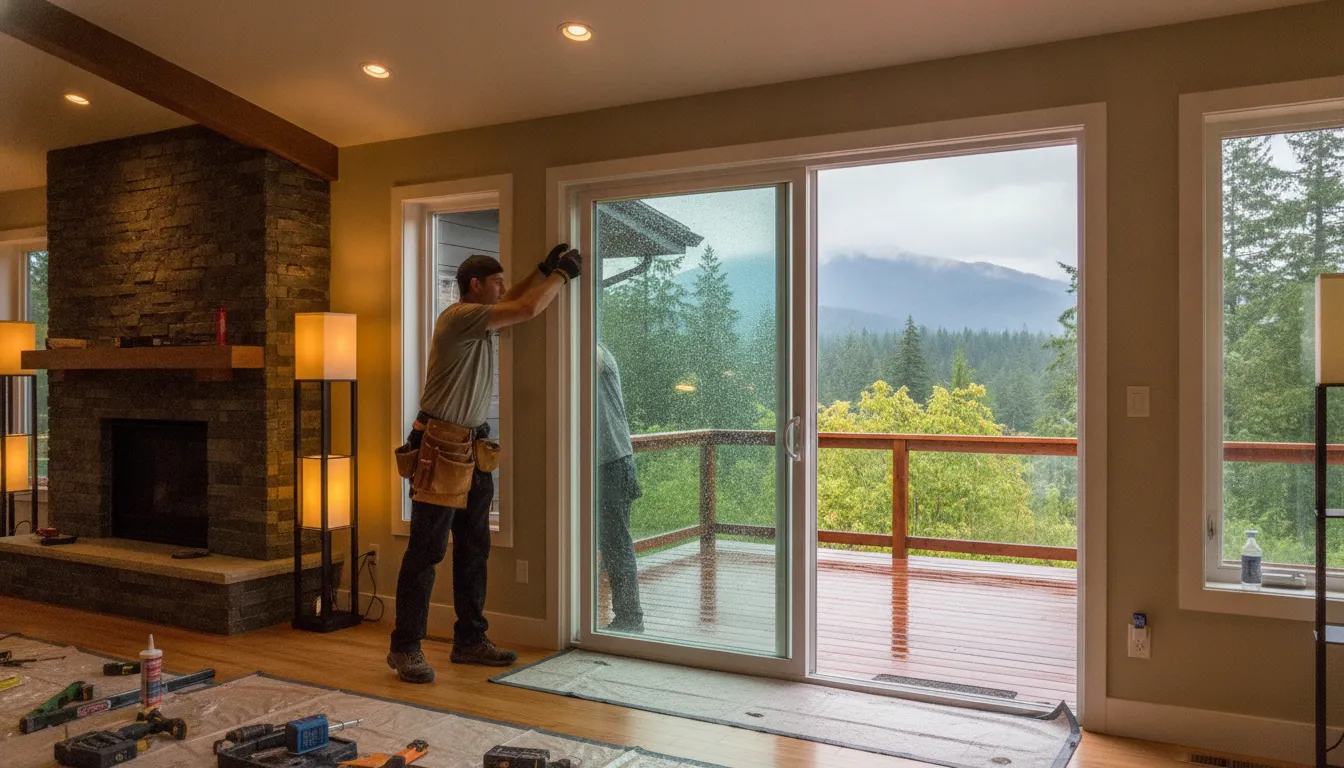
- Seal, clean up, and walk through the result. The final stage includes sealing the perimeter, checking the lock and screen, confirming drainage paths, and testing the door through its full operation. The crew removes installation debris and explains basic care, adjustment, and warranty information. A walkthrough gives the homeowner a clear opportunity to ask questions before the sliding patio door replacement is complete.
How a New Sliding Patio Door Improves Comfort and Home Value
A properly fitted replacement can change how the room feels every day. Older patio doors may allow drafts, transmit outdoor noise, and show moisture damage around the sill. Modern doors fit and insulate more effectively, which can help lower heating and cooling costs, according to the U.S. Department of Energy.
More comfort in the rooms beside the door
A tight frame and effective weather seals reduce cold air movement near the opening. That matters in Puget Sound homes, where a living room, dining area, or bedroom may sit directly beside a large glass panel. Better insulated glass also makes the surface feel less cold during winter, so the space is more comfortable without constantly adjusting the thermostat.
Glass selection can improve sound control as well. A modern multi-pane unit can dampen more street activity, wind, and rain noise than an older single-pane or poorly sealed door. The result is not complete silence, but a room that feels calmer and easier to use throughout the day.
Natural light, appearance, and moisture protection
A clear, well-designed door brings useful natural light deeper into the home and creates a stronger visual connection to the yard or patio. Slimmer, cleaner profiles can also make an older exterior look more current without changing the home’s basic layout. Strong construction details matter here. Mitered and fusion-welded joints add strength and durability while supporting a clean, finished appearance, and quality hardware keeps the panels sliding smoothly for years of regular use.
Installation protects more than the door itself. Proper flashing, sill preparation, and integration with the surrounding wall help direct water away from the opening. That reduces the risk of moisture reaching the wall below the door, where concealed damage can become expensive to repair. A professional review should address the existing opening, drainage path, trim, and adjacent siding rather than treating the door as an isolated component.
A practical improvement for resale
Home value is influenced by condition, appearance, and how confidently buyers expect major exterior components to perform. A smooth-operating door, brighter room, quieter interior, and dry, well-finished threshold can strengthen that impression for Puget Sound buyers. The improvement is most credible when the replacement is sized correctly, installed cleanly, and supported by clear documentation.
Review Landmark’s windows and door replacement services to compare options for your home. Before work begins, ask what is included in the installation and how future service is handled. Landmark also provides information about warranty coverage, which can give homeowners added confidence in the completed project.
Get a free estimate for your sliding patio door replacement by scheduling a no-obligation consultation with a Landmark specialist.
Frequently Asked Questions
Can you replace just the sliding patio door?
Often, yes. A replacement can use the existing opening when the frame, sill, and surrounding structure are sound and the new unit matches the opening dimensions. A contractor should inspect for hidden water damage, rot, failed flashing, and operating problems before recommending a door-only replacement. If the opening size must change, the project may require structural work beyond a typical DIY installation.
How much should it cost to replace a sliding patio door?
The price depends on the door size, frame material, glass package, hardware, removal and disposal, trim, and any repairs needed around the opening. An accurate estimate requires measurements and an inspection rather than a generic online price. Ask whether the quote includes weatherproofing, interior and exterior finishing, cleanup, and warranty coverage so you can compare proposals fairly.
Are patio doors easy to replace?
The basic swap may look straightforward, but successful installation requires accurate measurement, level tracks, secure anchoring, and careful integration with the home’s water-shedding layers. Poor installation can lead to rainwater leakage, a leading cause of dissatisfaction with fenestration installations. Professional installation is especially valuable in Washington’s wet climate.
Is a fixed or operating panel better for energy efficiency?
A door with one fixed panel typically has less air leakage than a door with two operating panels, according to the U.S. Department of Energy. Choose the configuration that fits how you use the opening, then compare the unit’s U-factor and glazing options. A lower U-factor indicates that the door keeps heat in more effectively.
Schedule Your Sliding Patio Door Consultation
A conversation can help you compare replacement options, clarify the right fit for your Washington home, and plan the next step with confidence.
Schedule a free sliding patio door consultation: contact Landmark Roofing & Siding.