
Date
Thu Jul 30Roof damage can worsen quickly in Washington’s wet, windy weather, especially when a missing shingle or damaged flashing lets water into the home. Start by documenting what you can safely see, protecting the interior from additional damage, and contacting your insurer promptly. Avoid permanent repairs until the property has been inspected and the repair scope is understood.
A roof insurance claim WA typically starts with photos or video, prompt notice to your insurance company, and temporary measures that limit further damage. Coverage depends on the policy and the cause of loss. Washington’s insurance office says homeowners policies usually cover damage from wind, wind-driven rain, falling trees, and snow or ice, while gradual leaks are generally treated differently (Washington Office of the Insurance Commissioner).
The next step is understanding which types of roof damage may fall within typical homeowners insurance coverage and which conditions can affect the claim.
What Washington Homeowners Insurance Typically Covers for Roof Damage
A roof insurance claim in Washington usually depends on the cause of the damage, how quickly you report it, and the coverage terms in your policy. Homeowners policies typically cover roof damage from wind, wind-driven rain, falling trees, and snow or ice. Coverage can apply to both the roof and resulting interior water damage when the loss comes from a covered, sudden event. Review your policy and confirm the details with your insurer, because exclusions and deductibles vary.
The Washington State Office of the Insurance Commissioner identifies several common covered causes, including wind, wind-driven rain, falling trees, and snow and ice damage. A contractor can document visible storm damage, but the insurance company determines coverage under your policy.
Sudden damage is different from gradual deterioration
Insurance generally treats a sudden, accidental leak differently from a leak that develops over time. For example, a storm can damage shingles and allow water into the attic or living space. A sudden plumbing leak may also be covered when it is reported quickly and the homeowner has followed policy requirements. Prompt reporting matters because your insurer may recommend specific steps to stop the leak.
Gradual leaks are typically excluded. Long-term seepage from a deteriorating roof, an unrepaired opening, a leaking foundation, cracks, or gaps between building materials may not qualify as a covered loss. Normal wear, poor maintenance, and damage that existed before the storm can also affect a claim. If a storm damages your roof, take reasonable temporary steps to prevent additional water intrusion. Delaying repairs can lead to denied coverage for resulting water damage, according to Washington’s insurance regulator.
ACV and RCV policies affect the payment
Your policy may settle roof damage using Actual Cash Value (ACV) or Replacement Cost Value (RCV). ACV generally accounts for depreciation based on the roof’s age and condition, so the payment may be less than the cost of installing a new roof. RCV coverage is designed to pay the covered replacement cost after the applicable deductible and policy conditions are met. Although insurers may initially withhold depreciation until repairs are completed and documented.
Ask your insurer whether your roof is covered at ACV or RCV before you authorize work. Keep inspection records, photographs, invoices, and communication related to the loss. For a practical overview of what to document and how the process typically unfolds, review the storm damage roof repair process.
Immediate Steps to Take After Roof Damage
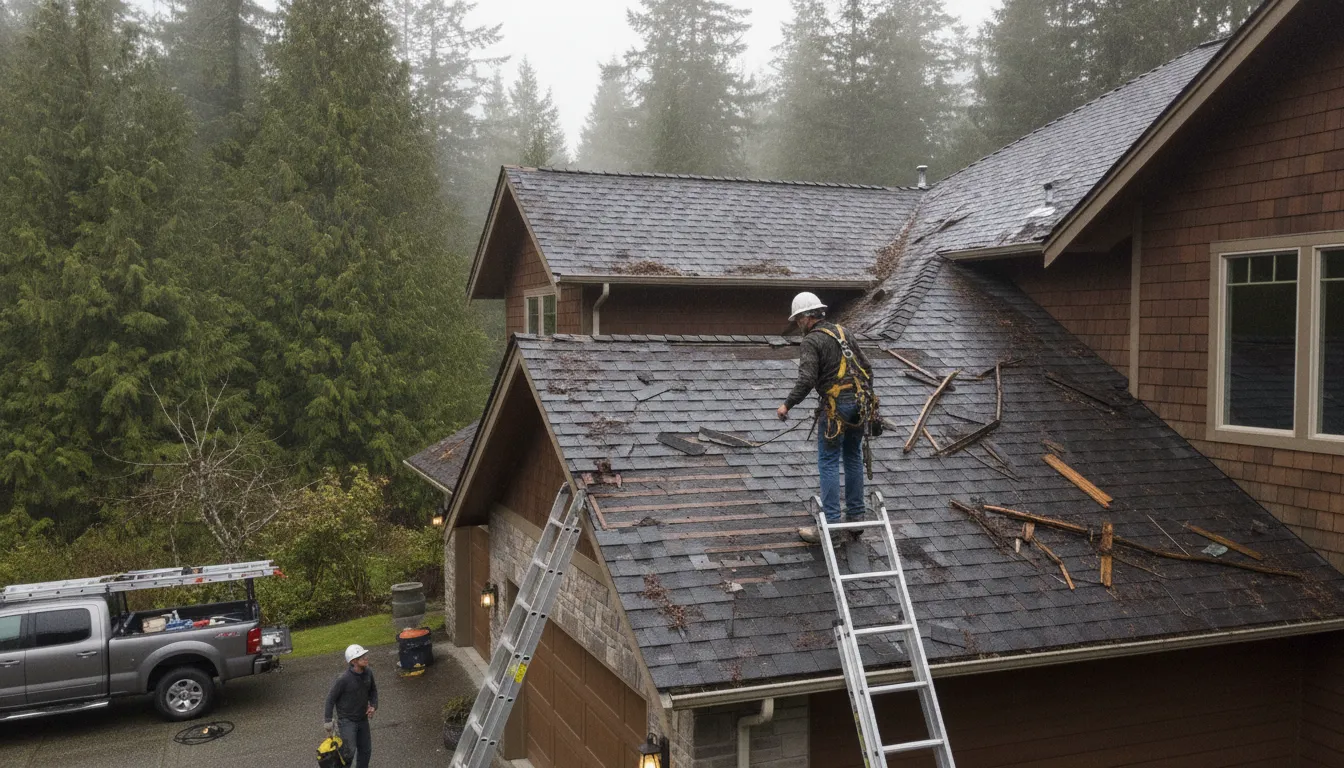
Storm damage can worsen quickly, especially when rain reaches exposed decking, insulation, or interior finishes. Take these steps in order to protect your home and create a clear record for your insurer.
- Make the area safe. Keep people away from sagging ceilings, fallen branches, exposed electrical components, and unstable roof areas. Do not climb onto the roof or enter a damaged section if conditions are unsafe. If water is entering the home, move furniture and belongings away from the leak when you can do so safely.
- Document the damage from a safe location. Take clear photos and video of the roof, gutters, siding, visible leaks, damaged rooms, fallen trees, and affected belongings. Capture wide views as well as close-ups, and record the date if your device does not do so automatically. Do not remove damaged materials before documenting them.
- Contact your insurance company as soon as possible. Report the loss promptly and ask what documentation, temporary repairs, and inspection steps your policy requires. The Washington State Office of the Insurance Commissioner advises homeowners to call their insurer or agent quickly and photograph or record the damage. These steps can help establish when the loss occurred and what happened afterward. You can review the state guidance alongside Landmark’s emergency roof repair services information.
- Stop additional damage with temporary mitigation. If the roof is open or water is still entering, arrange a safe temporary measure such as a tarp or plywood covering. Do not wait for permanent work if delay would allow more water into the home. Landmark provides emergency storm damage response and same-day tarping in the Puget Sound region, subject to site conditions and crew availability.
- Save every receipt and record. Keep invoices and receipts for tarps, plywood, water extraction, emergency labor, and other temporary measures. Also save copies of emails, claim numbers, inspection appointments, and notes from calls. The state insurance office specifically recommends retaining receipts for temporary repairs because your insurer may need them when reviewing the loss.
- Wait for the inspection before permanent repairs. Avoid replacing roofing, removing major damaged materials, or starting permanent repairs until the insurer has inspected the property and you have agreed on the repair scope. Emergency work needed to prevent further damage is different from rebuilding the roof. Keep damaged materials available when practical, and ask the adjuster what must be preserved.
Landmark can help organize photos and damage documentation for a storm-related claim, but the insurer and its adjuster determine coverage and the final claim decision. Keep the process factual, preserve your records, and ask questions before authorizing permanent work.
Working With Your Insurance Adjuster: What to Expect
The adjuster visit gives your insurer an opportunity to document the loss, identify the likely cause, and evaluate the repair scope. The adjuster may inspect the roof, attic, ceilings, walls, insulation, and other areas where storm-related water entered. They may also ask when you first noticed the damage, what weather occurred, and what temporary steps you took to protect the home.
Prepare your claim file before the appointment
Keep your information organized and easy to review. Have these items ready:
- Photos and video taken before temporary work, if it was safe to document the damage.
- Photos of tarps, plywood, interior staining, fallen branches, and other mitigation work.
- The date you noticed the problem and a brief timeline of what happened.
- Receipts for temporary repairs, materials, emergency service, and related expenses.
- Your roofer’s written inspection findings, repair estimate, and photographs, if available.
- A copy of relevant policy correspondence and your claim number.
A professional inspection before or alongside the claim can help document visible damage and give you a second repair perspective. It does not replace the insurer’s inspection or guarantee that a claim will be covered.
What should you say to a roof insurance adjuster?
Answer questions truthfully and stick to what you personally observed. Describe the date of the storm, the damage you saw, and the steps you took to prevent additional damage. Avoid guessing about the roof’s age, the cause of damage, or the cost of repairs. Do not speculate that a problem existed before the storm, promise that every issue is storm-related, or agree to a repair scope you do not understand. If you are unsure, say that you do not know and offer the documentation you have.
Do not authorize permanent repairs before the insurer has inspected the property and you have agreed on the repair scope. Washington’s Office of the Insurance Commissioner advises homeowners to wait before making permanent repairs, while taking reasonable temporary action to limit additional damage. Keep the receipts for that work and preserve damaged materials when practical. Read the state’s guidance on documenting storm damage and insurance claims for additional preparation details.
Understanding Deductibles, Depreciation, and Your Insurance Payout
Your deductible is the portion of an approved claim that you pay before your insurance coverage contributes. For example, if covered repairs cost more than the deductible, the insurer may pay the eligible balance according to the limits and terms of your policy. The estimate, deductible, exclusions, and policy type all affect the amount you ultimately receive. So an approved claim is not necessarily a promise to pay the entire roofing invoice.
ACV and RCV policies handle depreciation differently
Most roof policies use one of two valuation methods: Actual Cash Value (ACV) or Replacement Cost Value (RCV). An ACV settlement accounts for the roof’s age and expected wear by subtracting depreciation from the covered repair or replacement cost. That can make the initial payment lower for an older roof.
An RCV policy is designed to account for the cost of replacing damaged property with similar materials, subject to the policy’s conditions, limits, and deductible. Some RCV policies issue an initial payment based on the depreciated value, then release recoverable depreciation after the work is completed and the required documentation is submitted. Confirm the process and deadlines with your insurer before signing a contract or ordering materials.
| Feature | Actual Cash Value (ACV) | Replacement Cost Value (RCV) |
|---|---|---|
| What it pays | Replacement cost minus depreciation for age and wear | Full cost to replace with similar materials, minus deductible |
| Depreciation treatment | Subtracted from payout, generally non-recoverable | May be withheld initially, recoverable after repairs documented |
| Best suited for | Newer roofs or budget-conscious premiums | Older roofs or homeowners wanting fuller coverage |
| Premium cost | Lower monthly or annual premium | Higher premium for broader coverage |
Compare the claim decision with the full project scope
Ask for a written explanation of what the insurer included, what it excluded, and whether depreciation is recoverable. Compare that information with the contractor’s inspection and estimate. Differences may reflect material selections, code requirements, hidden damage, or items the policy does not cover. A contractor can help organize photos and documentation, but the adjuster and insurer determine coverage under the policy.
Washington’s Office of the Insurance Commissioner warns that filing a claim may increase premiums or lead to non-renewal, even when the payment is small. For minor damage, ask about the likely repair cost and consider whether paying out of pocket makes more sense than filing. Do not delay urgent mitigation, however, because postponing repairs after storm damage can allow additional water damage to occur. If the approved amount does not cover the full project cost, roof replacement financing may be an option to review.
How a Roofing Contractor Supports Your Roof Insurance Claim in WA
A qualified roofing contractor can make the documentation and repair process easier without making the insurance decision for you. The contractor’s role is to identify visible damage, record the condition of the roofing system, explain needed repairs, and communicate technical details clearly when questions arise.
Build a clear record of the damage
Start with a professional roof inspection after you have reported the loss to your insurer. A contractor can take detailed photos, note affected roof components, and prepare a damage assessment or repair estimate for your records. This documentation can help you and the adjuster compare the observed damage with the proposed scope of work.
That support is especially useful after wind, falling-tree, or other storm damage, when conditions may change quickly. Temporary protection may be necessary to limit additional water intrusion. But permanent repairs should wait until the insurer has inspected the property and you have agreed on the repair scope. The Washington State Office of the Insurance Commissioner also advises homeowners to document damage and retain receipts for temporary repairs. Review the state’s guidance on documenting storm damage for additional context.
Explain the roofing details to the adjuster
Roofing systems include more than shingles. An assessment may address flashing, underlayment, ventilation, decking, skylights, gutters, siding, and related exterior components. A contractor can answer questions about the observed condition and provide a written scope that uses clear, specific terminology. Landmark can also assist with insurance claim documentation and communicate with adjusters about the repair details. The adjuster and insurer still determine coverage, exclusions, depreciation, and the final claim amount.
Choose a registered, qualified contractor
Before signing an agreement, verify that the contractor is registered with the State of Washington. The state recommends checking registration even when an insurance agent refers you to a contractor. You can also review the company’s experience, written warranty terms, and relevant manufacturer certifications.
Landmark Roofing & Siding is a family-owned Puget Sound contractor with certifications for CertainTeed, Malarkey, DaVinci, Duro-Last, Nu-Ray, and James Hardie products. Those certifications do not guarantee an insurance outcome, but they can help you select a contractor familiar with established installation requirements and product systems. A documented inspection and straightforward communication give you a stronger foundation for discussing the repair plan with your insurer.
Frequently Asked Questions
Does homeowners insurance cover roof replacement in Washington State?
Coverage depends on your policy and the cause of the damage. Washington policies typically cover sudden events such as wind, wind-driven rain, falling trees, and snow or ice damage, but gradual leaks and neglected maintenance may be excluded. Review your policy and confirm the cause with your insurer. Washington’s Office of the Insurance Commissioner explains common weather-related coverage.
How do I file a roof insurance claim in Washington?
Contact your insurer or agent as soon as possible, describe what happened, and ask about the inspection and claim process. Photograph or video the roof and interior damage from safe locations. Take reasonable temporary measures to prevent additional damage, but do not make permanent repairs until the insurer has inspected the property and you agree on the repair scope. The Washington OIC recommends prompt notice and damage documentation.
What documentation is needed for a roof insurance claim?
Keep dated photos and videos, a written description of when and how the damage occurred, your policy information, inspection reports, contractor estimates, and communication with the insurer. Save every receipt for temporary work, including tarps or plywood. The Washington OIC specifically advises homeowners to retain receipts for temporary repairs. See the agency’s documentation guidance.
What is the difference between ACV and RCV coverage?
Actual Cash Value, or ACV, generally accounts for depreciation when valuing covered roof damage. Replacement Cost Value, or RCV, generally bases payment on the cost to replace the damaged property, subject to your policy terms, deductible, and claim requirements. Ask your insurer which valuation applies before making decisions about repairs or replacement, because the initial payment and any recoverable depreciation can differ.
Ready to Start Your Roof Insurance Claim?
A professional inspection can help you document visible damage and understand the next steps before moving forward with your insurer. Schedule a free roof inspection and claim assistance consultation at landmarkroof.com/contact-us. Landmark Roofing & Siding can help you organize the information needed for a productive claims conversation.