
Date
Wed Jul 29Rain, wind, and persistent moisture can expose weakness along a home’s roofline long before a leak appears indoors. In Seattle and across the Puget Sound, damaged soffits and fascia may allow water and pests into vulnerable areas, while blocked ventilation can contribute to heat and moisture buildup in the attic.
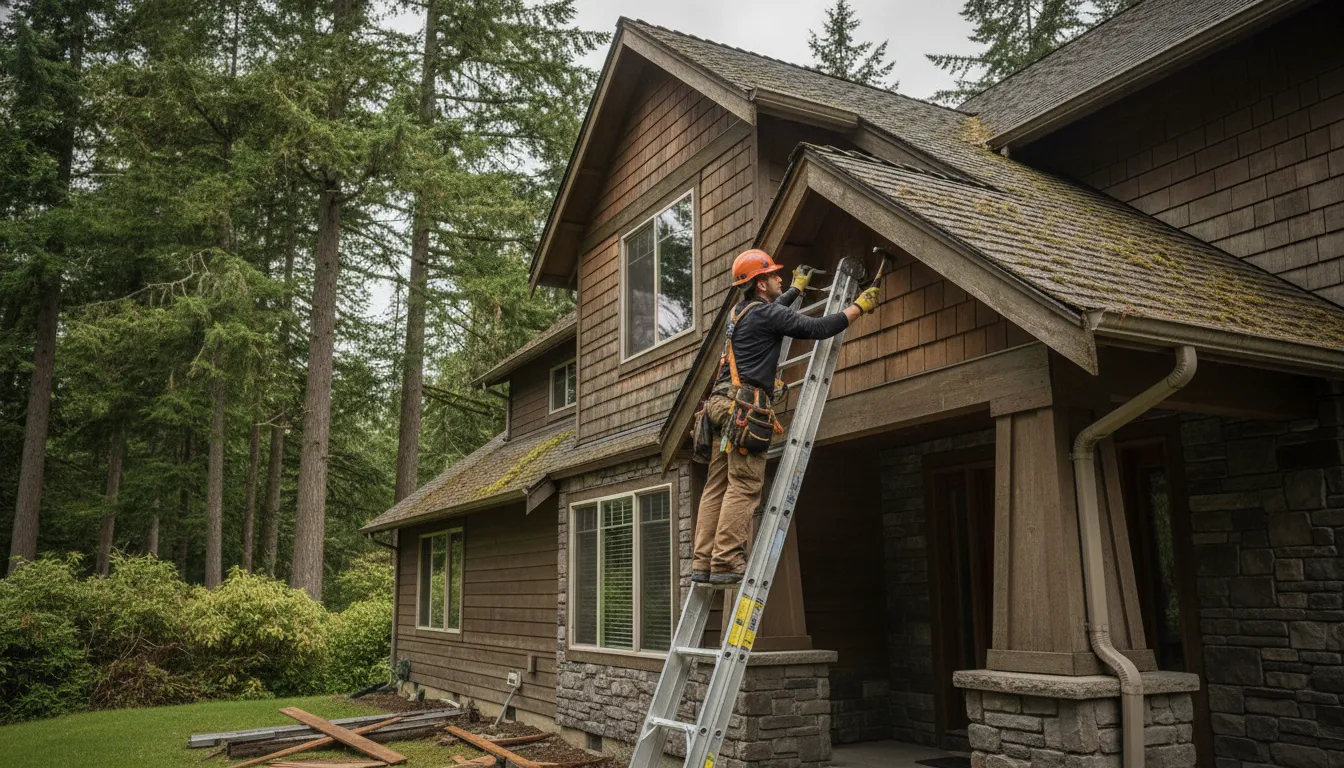
Soffit repair Seattle homeowners can rely on begins with a careful inspection of the roofline, eaves, ventilation openings, and adjacent fascia. A professional can determine whether localized damage can be repaired or whether replacement is needed to protect the roof system and exterior from further moisture intrusion.
Schedule a free soffit and fascia inspection today to identify damage before it spreads to your roofline and attic.
Understanding how these components work together makes it easier to recognize early damage and choose the right solution. The terms are often used interchangeably, but soffits and fascia serve different roles at the edge of your roof.
What Are Soffits and Fascia?
The roofline includes several parts that work together to direct water away from your home and protect the attic. Two of the most visible are the soffit and fascia. Although they sit next to each other along the eaves, they serve different purposes.
Soffits help protect and ventilate the eaves
An eave is the projecting edge of a roof that overhangs an exterior wall, according to the architectural terminology guide from the City of Columbia. The soffit is the finished underside of that projection. Viewed from the ground, it is the surface beneath the roof overhang, often made from aluminum, vinyl, or wood.
Beyond giving the roofline a finished appearance, soffits can support airflow into the attic when they include properly designed vents. That airflow helps manage heat and moisture. Damaged, blocked, or poorly ventilated soffits can contribute to moisture buildup and affect roof performance. For Washington homes, where frequent rain and persistent damp conditions are common across the Puget Sound region. Keeping this part of the roofline open and sound is especially important.
Fascia finishes the roof edge and supports gutters
Fascia is the outward-facing horizontal member or molding at the edge of an eave. It creates the finished vertical face of the roofline and helps protect the edge of the roof structure from weather. Gutters are typically fastened to the fascia, so the board must remain solid enough to hold the system securely.
When fascia absorbs repeated moisture, paint may peel and wood can soften or rot. A weakened fascia board may no longer provide dependable support for gutters, allowing them to pull away, sag, or drain improperly. Homeowners planning roofline maintenance should therefore consider how fascia and gutter systems work together, rather than treating the gutter as an isolated component.
Soffits and fascia form a connected transition between the roof, attic, walls, and drainage system. In Seattle and surrounding Washington communities, regular inspections can catch moisture-related deterioration before it spreads into roof-edge framing or interior areas. A professional assessment can determine whether the issue is limited to the visible finish or involves the underlying structure.
Signs Your Soffits or Fascia Need Repair
Washington’s wet climate puts the roofline under regular moisture stress. Repeated rain, damp conditions, and slow drying can allow water to work beneath paint, into joints, and behind trim. Rot often begins where a small leak or damaged edge goes unnoticed, then spreads through the wood around the eaves.
Peeling or blistered paint is an early warning sign, especially when it appears along the fascia or at soffit seams. Visible darkening, crumbling wood, or soft spots indicate that moisture has already affected the material. Water stains on an interior wall or ceiling near an exterior corner can also point to a roofline problem, although the source may be higher on the roof. A careful inspection should trace the moisture rather than treating the stain alone.
Watch for gaps, holes, or insects entering the soffit. Bees or other insects moving in and out may indicate an opening behind the trim, while animal entry can enlarge the damage and introduce additional moisture. These signs deserve prompt attention before the problem reaches roof framing or attic insulation.
Visual inspection checklist
- Look for peeling, cracked, or swollen paint on fascia boards and soffit panels.
- Press gently on accessible wood to identify soft or spongy areas. Do not force damaged material.
- Check corners, seams, and areas beneath gutters for staining, gaps, or deteriorated joints.
- Inspect interior walls and ceilings near exterior roof edges for unexplained water marks.
- Look and listen for bees, insects, birds, or other animals entering the soffit.
Some homeowners also use a simple nail-probe test on an exposed wooden rafter tail. If a nail can be pushed into the wood more than about one-half inch, the rafter tail is likely compromised and should be evaluated by a professional. Use caution around ladders and elevated roof edges, and never probe electrical wiring or concealed areas.
Because soffits and fascia connect directly to the roof edge, damage should not be evaluated in isolation. A roofing professional can check whether failed flashing, gutter overflow, or another roof issue is feeding the rot. Landmark’s comprehensive roofing system services help assess the roofline as a whole, so repairs address the source as well as the visible trim.
Soffit Repair vs. Full Replacement: What’s the Right Choice?
The right solution depends on how far the damage extends and what caused it. A small, isolated defect can often be repaired without disturbing the rest of the roofline. Widespread rot, recurring moisture problems, or pest damage usually calls for a more complete replacement.
| Choose repair when… | Choose full replacement when… |
|---|---|
| Damage is limited to one small area, such as a single rotted board or a small hole. | Rot extends across multiple boards, sections, or adjoining parts of the roofline. |
| The surrounding material is firm, dry, and properly attached. | Moisture has caused widespread deterioration, soft wood, or repeated failures. |
| The source of the problem can be corrected at the same time, such as a minor leak or loose trim. | Pests have entered the soffit, or damage has compromised the underlying framing. |
| The existing installation is sound and replacement material can match its appearance. | The original installation was poorly ventilated, incorrectly fitted, or unable to protect the roof edge. |
When a localized repair makes sense
Replacing one rotted board or patching a small hole may be enough when the surrounding soffit remains structurally sound. A professional should still inspect the area for concealed moisture, loose fasteners, and damage behind the visible surface. Treating the symptom without correcting the source can allow rot to return.
Repairs should also fit into broader exterior maintenance. Soffit and fascia work can help limit moisture intrusion and support proper attic ventilation. So the repair should not block existing airflow or create a new path for water.
When replacement is the safer long-term option
Full replacement is more appropriate when rot is extensive, pest damage is present, or the original installation was not protecting the roofline effectively. Replacing the affected system allows the crew to address hidden deterioration, improve fit and ventilation, and use materials suited to the home and local weather.
If rotted fascia is discovered during a roof replacement, having the same roofing crew repair it immediately keeps the roof and roof-edge work coordinated. This can prevent delays and reduce the chance that damaged fascia will continue contributing to structural problems. If the project also involves adjacent exterior materials, review Landmark’s soffit and siding repair services to plan the work as one connected improvement.
Why Proper Ventilation and Moisture Protection Matter
Soffits do more than finish the underside of your roof overhang. They are a key part of the attic ventilation system. Intake vents in the soffits allow fresh air to enter at the lower edge of the roof. While exhaust vents near the ridge allow warm, humid air to escape. That continuous movement helps manage heat and moisture before they damage the roof assembly.
Blocked soffits can trap moisture in the attic
When soffit vents are clogged with insulation, covered by paint, or obstructed by debris, the intake side of the system cannot work as designed. Damaged panels can create a similar problem by restricting airflow or allowing water and pests into the roofline. In either case, heat and moisture may build up in the attic. Over time, that can contribute to mold growth, damp insulation, wood deterioration, and premature roof aging.
These risks deserve particular attention in Seattle and other Washington communities, where extended rain and damp conditions can keep exterior materials wet. Ventilation cannot stop every moisture problem, but it helps the roof assembly dry and perform more reliably when the intake and exhaust paths remain open and properly balanced.
Ventilation and structural repairs should be evaluated together
A soffit inspection should not stop at the visible panel. A professional needs to look for rot, damaged framing, blocked vents, signs of water intrusion, and conditions around the fascia and eaves. Replacing a damaged section without addressing the underlying airflow or moisture issue may leave the same problem in place.
Landmark Roofing & Siding takes a comprehensive roof system approach, evaluating ventilation alongside soffit, fascia, and other structural repairs. This helps connect a localized repair to the performance of the full roofline rather than treating each component in isolation. Maintaining related drainage components also matters. Read Landmark’s guide to protecting the full roofline with properly planned gutters when reviewing your home’s exterior maintenance needs.
If you notice stained soffit panels, peeling finishes, musty attic odors, or unexplained moisture, schedule an inspection before the damage spreads. Prompt attention can help preserve the roof’s structure and reduce the likelihood of more extensive repairs later.
Material Options for Soffit and Fascia Replacement
Material selection affects how your roofline handles moisture, maintenance, and seasonal wear. In the Seattle area and throughout Puget Sound, repeated rain makes rot resistance especially important. The right choice also needs to complement your home’s exterior and work with the existing roof and siding system.
| Material | Advantages | Considerations |
|---|---|---|
| Aluminum | Low maintenance, strong resistance to rot, and dependable performance in wet conditions. Aluminum is the most popular choice for many Washington homeowners. | Its appearance may feel less traditional than wood, and damaged panels can need matching for color and finish. |
| Vinyl | A budget-friendly option that resists moisture and does not require regular painting. It is available in several common colors and profiles. | Vinyl is generally less durable than aluminum and can become brittle or deform after prolonged exposure to severe weather or impact. |
| Wood | Provides a traditional, natural appearance and can be shaped or painted to match detailed architectural trim. | Wood requires more maintenance in a wet climate. Without thorough sealing and regular upkeep, it is more vulnerable to moisture damage and rot. |
How to choose the right option
Aluminum is often a practical fit when long-term maintenance and moisture resistance are priorities. Vinyl may make sense for a straightforward replacement where budget and basic moisture protection guide the decision. Wood can be appropriate when preserving a home’s original character matters and the owner is prepared for ongoing maintenance.
The material should also match the condition of the underlying roofline. If water has reached the framing, replacing the visible soffit or fascia alone may not address the source of the problem. An inspection can identify hidden rot, ventilation issues, and transitions that need to coordinate with the rest of the exterior. Landmark partners with multiple certified manufacturers, giving homeowners access to quality material options suited to the home’s design and performance needs. You can also review related soffit and siding repair services when planning a coordinated exterior project.
How Much Does Soffit Repair Cost in Seattle? A Washington Homeowner’s Guide
The cost of soffit or fascia work depends on how much damage is present and how easily the crew can reach the roofline. A small, localized fascia repair may fall in the general range of $500 to $2,000, while replacing a larger soffit section may range from $1,000 to $4,000. These figures are broad planning estimates, not guaranteed prices. The condition of each home must be evaluated before a contractor can provide an accurate proposal.
What affects the final price?
Several site conditions can move a project toward the lower or higher end of a range:
- Extent of rot: Surface damage may require a limited repair. Rot that reaches the fascia board, soffit framing, or rafter tails can require more extensive removal and reconstruction.
- Material selection: Wood, vinyl, and aluminum have different material costs, appearances, and installation requirements. Matching an existing profile or color can also affect sourcing and labor.
- Roof accessibility: A straightforward, single-story roofline is usually easier to access than a steep, tall, or complex roof. Additional safety equipment and setup time may affect the estimate.
- Gutter removal: Gutters are often attached near the fascia. If they must be removed and reinstalled to reach the damaged area, that added work should be included in the project scope.
Water damage can also extend beyond the visible trim. During an inspection, a contractor may check nearby roof edges, ventilation openings, sheathing, and framing before recommending a repair. Addressing moisture entry early can help prevent a small defect from becoming a larger roofline or interior problem. Washington homeowners can also review this guide to protecting your home’s soffit and fascia when gutter condition is part of the concern.
Getting a useful estimate
A reliable estimate should explain which sections need work, what material is proposed. Whether gutters or adjacent components are included, and how the finished repair will be protected from future moisture. Landmark Roofing & Siding provides free inspections and estimates, with transparent pricing based on the home’s actual condition. Schedule an assessment before relying on a broad online cost range, especially when you see soft wood, staining, sagging, or recurring leaks.
Request a free soffit and fascia inspection from Landmark Roofing & Siding today and get a transparent estimate based on your home’s actual condition.
Frequently Asked Questions
How do I know if fascia or soffit needs repair?
Inspect the roofline for peeling paint, visible rot, soft spots, water stains, sagging, or openings where animals or insects can enter. Water stains or bees entering the soffit area deserve prompt attention because they can indicate moisture intrusion or damage behind the visible surface. A professional inspection can also check the rafter tails and surrounding framing.
Who do I call to fix a soffit?
Call a qualified roofing or exterior carpentry contractor with experience repairing soffits, fascia, trim, and the roof edge as a connected system. The right contractor should identify the source of moisture, inspect adjacent materials, and explain whether a localized repair or broader replacement is appropriate.
Can soffits be repaired, or do they need replacement?
Localized damage can often be repaired when the surrounding material remains sound. Replacement is more appropriate when rot, moisture damage, pest entry, or deterioration extends across multiple sections. The repair should also address the underlying water or ventilation problem so new materials are not exposed to the same damage.
Do roofers also repair soffits and fascia?
Many roofing contractors handle soffit and fascia work, particularly when roof repairs or replacement expose related damage. Coordinating the work with one experienced crew can help connect roof drainage, ventilation, flashing, fascia, and soffit repairs instead of treating each component in isolation.
How much does soffit repair cost in Seattle?
Cost depends on access, material, the number of damaged sections, and whether hidden framing or moisture problems require attention. As a general competitor-reported reference, soffit replacement in the Seattle area may range from $1,000 to $4,000, while fascia repairs may range from $500 to $2,000. An on-site inspection is needed for an accurate estimate.
Schedule Your Soffit and Fascia Inspection
A professional assessment can clarify whether targeted repairs or replacement is the better way to protect your roofline and home exterior. Landmark Roofing & Siding brings straightforward guidance and careful craftsmanship to homeowners throughout Washington. Schedule a free soffit and fascia inspection by contacting Landmark Roofing & Siding to discuss the condition of your soffits and fascia and determine the next practical step.