
Date
Thu Aug 6Rain, moss, and freeze-thaw cycles put every roofing material through a demanding test in the Puget Sound. Slate can meet that challenge, but its durability depends on choosing the right material and confirming that the home can support the system before installation begins.
A slate roof can last 60 to 125 years or longer when properly installed, according to the National Park Service. Natural slate typically costs about $20 to $30 per square foot for the material. So homeowners should weigh its long service life against a higher initial investment and possible structural work.
Schedule a free roof assessment in Washington to get a site-specific slate estimate for your home.
The best decision starts with the basics: what slate is, how natural and synthetic options differ, and which characteristics affect appearance, performance, and maintenance. Those details provide a practical foundation for evaluating whether slate fits your Washington home.
What Is a Slate Roof?
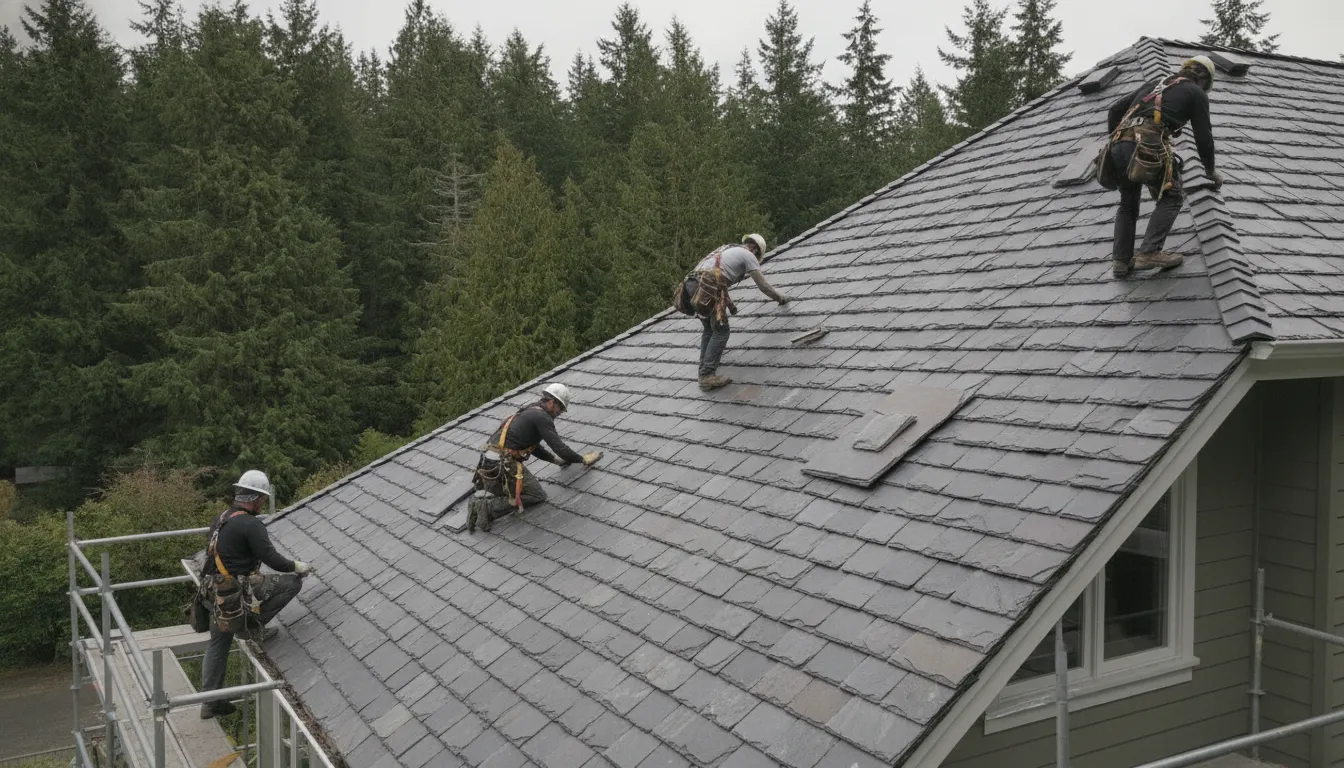
Slate roofing uses thin pieces of stone, or a slate-style manufactured product, installed in overlapping courses to shed rain. Natural slate has protected homes and public buildings in North America for more than 400 years, and its cleft surface gives each roof a distinct texture. In a wet area such as Woodinville or the broader Puget Sound, the material choice and installation details matter as much as the appearance.
Natural vs. synthetic slate
Natural slate is quarried stone split into roofing units. It varies in texture, thickness, and color because it comes from a natural geologic formation. A standard system commonly uses square-cut slates that are 1/4 to 3/8 inch thick, although other formats support different patterns and design goals. The National Slate Association describes standard, patterned, random-width, multicolored, and graduated-length installation styles.
Synthetic slate is manufactured to resemble natural slate while reducing weight and upfront cost. It can be a practical alternative when a home’s framing cannot support the load of natural stone or when the budget does not support a full natural-slate installation. The tradeoff is a shorter expected service life than natural slate. Homeowners comparing options should evaluate the roof structure, product warranty, replacement timeline, and appearance together rather than treating synthetic slate as an identical substitute. A related material discussion can be found in this guide to cedar shake roof replacement.
Slate grades, colors, and patterns
Natural slate is often described as hard or soft. Hard slate is denser and generally selected for longer service life. Soft slate can still be suitable when its expected performance matches the roof design and maintenance plan. A qualified roofer should identify the slate type and intended service conditions before installation or repair.
Color stability is another important distinction. Fading slate changes shade or develops streaking after exposure to the atmosphere. Unfading slate holds its original color more consistently. Those changes are not necessarily defects, but they should be considered when selecting a roof color and planning a blended design.
Patterns range from uniform courses to random-width layouts and multicolored blends. Standard slate commonly uses one length and width with square-cut butts, while patterned or graduated installations create more visual variation. A blend may use two to four colors, allowing the roof to complement siding, masonry, and trim without looking manufactured. The right choice depends on the home’s architecture, the desired maintenance approach, and whether the existing structure is suitable for slate.
How Much Does a Slate Roof Cost in Washington?
Natural slate is a premium roofing material, and national cost guides commonly place installation at about $20 to $30 per square foot. HomeAdvisor reports an average project cost near $13,348. This Old House estimates roughly $30,000 for a 1,500-square-foot home, and project totals can range from about $7,500 to $45,000 or more. These figures are national averages, not a quote for a specific home in Washington.
The final price depends on more than the visible slate. A roof with multiple planes, dormers, steep slopes, complicated valleys, or difficult access takes more time to prepare and install. The existing roof assembly also matters. Before pricing a replacement, a contractor should evaluate the roof deck, underlayment, flashing, ventilation, and framing.
Labor is a major part of the investment
Labor commonly represents 40% to 50% of a slate roofing project’s total cost because the material requires specialized handling and experienced installation. Slate pieces can crack if handled incorrectly, and the installation details must manage water at seams, valleys, penetrations, and wall transitions. Skilled local labor affects pricing in the Puget Sound area. Contractors must account for regional demand, weather exposure, site conditions, and crew availability.
That regional assessment is especially important in Washington, where extended wet weather makes sound flashing, drainage, and underlayment details essential. A low initial bid may not represent the same scope of preparation or workmanship as a higher bid. Ask each contractor to identify the slate type, fastening method, tear-off assumptions, structural review, and warranty terms in writing.
Removal, disposal, and structural work
Removing and disposing of the old roofing typically adds about $1,000 to $5,000 to a slate re-roofing project, according to HomeAdvisor. The existing roof may also need structural reinforcement. Slate weighs approximately 7 to 14 pounds per square foot depending on thickness, and reported reinforcement costs can range from $1,000 to $10,000. A structural review should happen before the material is selected, not after the project begins.
For homeowners comparing premium slate with a lighter roofing system, composition roofing services may provide another path with different installation requirements and budget considerations. The right comparison should account for expected service life, maintenance, structural demands, and the home’s design, not just the material price.
A detailed assessment is the most reliable way to turn national averages into a Washington-specific budget. Request an itemized scope that separates materials, labor, tear-off, disposal, structural work, flashing, and permitting so you can compare proposals accurately.
Schedule a free roof assessment in Washington to get a site-specific slate estimate for your home.
How Long Does a Slate Roof Last?
A properly installed slate roof can last 60 to 125 years or longer. The National Park Service notes that service life depends on the slate type, roof configuration, and geographic location. A Puget Sound home needs more than a material choice alone. The roof’s slope, drainage details, installation quality, and exposure to persistent rain all deserve attention during planning.
That lifespan can make slate a long-term alternative to roofing systems that require several replacement cycles. One slate application may outlast three or four lesser roofs during the same period, according to Vermont Slate Company. Homeowners comparing materials can review this guide to the lifespan of different roofing materials before deciding which service life fits their property and budget.
Slate type determines the upper end of the range
Not all slate performs identically. The National Park Service reports that Vermont and New York slates generally last about 125 years. Some specific slates have lasted more than 200 years. Those figures are useful reference points, not guarantees for every installation. Quarry quality, thickness, fasteners, flashing, roof design, and workmanship all affect how long the finished system remains dependable.
For a home in Seattle, Bellevue, Redmond, or another Puget Sound community, local weather exposure becomes part of the evaluation. Rain does not automatically rule out slate, but it makes water-shedding details and ongoing inspections especially important. A qualified assessment should examine valleys, penetrations, flashing, drainage, and the condition of the roof structure before an installer promises a service-life estimate.
Long life can support resale value
Natural slate also contributes to a home’s premium appearance and long-term value. HomeAdvisor estimates a typical resale return on investment of 60% to 70% for slate roofing, tied to its longevity and curb appeal. That return varies with the property, installation quality, local market, and buyer expectations, so it should be treated as a planning estimate rather than a guaranteed payout.
The most useful comparison is total ownership over time. A higher initial investment may be reasonable when the roof is structurally suitable, the slate is selected carefully, and the owner plans to maintain it. If the existing roof has slate that is still serviceable, targeted repairs may preserve more value than replacing the entire system prematurely.
What a Slate Roof Weighs: Structural Requirements
Natural slate adds substantially more dead load than a typical asphalt roof. Depending on thickness, slate weighs about 7 to 14 pounds per square foot, while asphalt shingles generally weigh about 2.5 to 3.5 pounds per square foot. The difference can affect whether an existing home is ready for a slate installation, particularly on older homes throughout the Puget Sound region. Slate weight varies by thickness, so the material selection and the roof assembly must be evaluated together.
Why the existing framing matters
A certified roofer should inspect the trusses, rafters, sheathing, and supporting walls before recommending natural slate. The evaluation should account for the roof’s span, pitch, configuration, existing layers, and any signs of deflection or deterioration. A roof that has carried asphalt shingles for decades may not have been designed for the additional load of slate.
Reinforcement is not automatic, but it is sometimes necessary. When structural work is required, reinforcement can add approximately $1,000 to $10,000 to the project, depending on the home’s framing and the work involved. That cost should be identified during planning, not after slate has been delivered to the property. Published slate roofing cost guidance lists structural reinforcement as a potential added expense.
Slate thickness and quality standards
Standard slate roof systems commonly use slates that are 1/4 to 3/8 inch thick with square-cut butts. Thicker pieces generally weigh more, but thickness alone does not determine performance. The slate’s grade, durability, installation details, fasteners, underlayment, and flashing all matter.
Ask for documentation showing that the selected product meets the appropriate performance requirements. Modern slate products are often tested to meet or exceed ASTM C-406 S1 standards, which address slate roofing quality and service expectations. ASTM C-406 S1 information can help homeowners understand what product documentation to request.
A structural review is especially important before replacing an existing roof on a home in Seattle, Bellevue, Redmond, or another Puget Sound community. A qualified roofer can determine whether the framing can support natural slate, needs reinforcement, or is better suited to a lighter roofing material.
Maintaining a Slate Roof in the Puget Sound Climate
Rain, moss, flashing, and roof valleys deserve close attention on homes in Redmond, Bellevue, and Seattle. A maintenance and repair program helps extend the service life of an existing slate roof. Annual inspections can identify small defects before water reaches the underlayment, sheathing, or interior finishes. The National Park Service notes that slate longevity depends not only on the material, but also on roof configuration and geographic location. Read the preservation guidance for the underlying maintenance principles.
Seasonal care for wet winters
Schedule an inspection before the wettest part of the season and another review after extended winter rain. The inspection should examine cracked, slipped, or missing slates, exposed fasteners, and areas where water could collect. Flashing around chimneys, walls, skylights, and roof penetrations needs particular care because failed metalwork can allow leaks even when the surrounding slates appear sound.
- Clear leaves and debris from valleys, gutters, and drainage paths twice a year.
- Have a professional inspect flashing at chimneys, walls, skylights, and penetrations before winter.
- Document cracked, slipped, or missing slates for a targeted repair plan.
- Schedule a follow-up review after extended winter rain to catch new defects.
Moss should not be scraped or pressure-washed from slate, since aggressive cleaning can break the stone or disturb the fasteners. A qualified professional can determine whether growth is affecting drainage and recommend a method that protects the roof. Avoid walking on slate unless the person has the right equipment and training. Individual slates can fracture under concentrated weight, creating damage that is difficult to see from the ground.
Do not treat every leak as evidence that the entire roof needs replacement. A repair plan may include replacing damaged slates, correcting flashing, improving drainage, or addressing a localized failure in a valley. The National Park Service recommends repairing slate rather than replacing it whenever possible, especially when the existing roof has important detailing or craftsmanship.
When to call a professional
Call for an assessment when you see slate pieces in the yard. Dark stains on ceilings, recurring leaks, loose flashing, or moss near valleys and shaded sections also warrant a call. A professional should first identify why the roof is failing instead of replacing visible slates without addressing the cause. That diagnostic step helps prevent repeated leaks and supports targeted repairs before deterioration becomes advanced.
Roof shape matters as much as weather exposure. Steep sections, intersecting slopes, valleys, dormers, and areas with complicated flashing create different drainage and wear conditions. A documented annual inspection gives homeowners in Puget Sound a record of changes over time. It also helps the contractor match replacement slate, fasteners, and flashing details to the existing system. Consistent care cannot eliminate the effects of rain, but it can preserve sound slate and extend the useful life of the roof.
When Does a Slate Roof Make Sense for Washington Homes?
A slate roof makes the strongest case for a Washington home when the owner values long service life, distinctive architectural character, and long-term ownership. These priorities can outweigh the lowest initial price. Natural slate typically costs $20 to $30 per square foot. A typical 1,500-square-foot home may cost about $30,000 to roof, with totals varying widely by size and complexity. National cost figures should be treated as planning ranges, not a Puget Sound estimate. Asphalt shingle roof replacement usually offers a lower starting budget, while metal roofing gives homeowners another long-life option to compare.
| Material | Lifespan | Weight | Cost per sq ft | Best for |
|---|---|---|---|---|
| Natural slate | 60 to 125 years or longer when properly installed. | 7 to 14 lb per sq ft, depending on thickness. | $20 to $30. | Estate homes, long-term owners, and historic or architectural requirements. |
| Synthetic slate | Shorter than natural slate; varies by product. | Lighter than natural slate. | Lower than natural slate; varies by product. | Homeowners who want a slate appearance with less structural demand. |
| Asphalt shingles | Shorter than slate; varies by product and installation. | Lighter than natural slate. | Generally lower than slate. | Budget-conscious replacement projects and straightforward roof designs. |
| Cedar shake | Varies with species, exposure, and maintenance. | Generally lighter than natural slate. | Varies by product and installation. | Homes where a natural wood appearance fits the architecture. |
Natural slate can provide long-term value when the roof structure can support its 7 to 14 pounds per square foot. Its potential 60 to 70 percent resale return reflects durability and curb appeal, but resale value should not be treated as a guarantee. Structural reinforcement can add $1,000 to $10,000, and specialized labor accounts for roughly 40 to 50 percent of installation cost. A roof assessment should confirm the framing, slope, flashing details, and overall configuration before material selection.
Synthetic slate is often the practical middle ground. It is lighter and less expensive than natural slate, although its service life is shorter. Landmark is certified for DaVinci Roofscapes synthetic slate. This gives Puget Sound homeowners a way to pursue slate-style character without accepting the full weight and cost of quarried slate.
Slate deserves serious consideration for an estate home, a property intended to remain in the family for decades, or a home subject to HOA or architectural requirements. It may also suit owners who prefer one durable installation over multiple lower-cost replacements. For a standard replacement where budget, weight, or simpler maintenance leads the decision, asphalt shingles, cedar shake, or metal roofing may be a better fit.
Call Landmark Roofing and Siding to ask whether natural or synthetic slate fits your Puget Sound home.
Frequently Asked Questions
Is slate roofing expensive?
Yes, natural slate is a premium roofing material. National cost guides place installation around $20 to $30 per square foot, with total projects often ranging from roughly $7,500 to $45,000 or more. Labor can represent 40% to 50% of the total because installation requires specialized skill.
What are the disadvantages of a slate roof?
The main drawbacks are high upfront cost, substantial weight, and the need for experienced installation and maintenance. Slate can weigh about 7 to 14 pounds per square foot, so an assessment should confirm the roof structure can support it. Reinforcement may add $1,000 to $10,000, and individual slates can crack if handled improperly.
Why are slate roofs not used more often in the United States?
Slate requires a larger initial investment, a structure designed for its weight, and installers who understand slate-specific details such as fastening, flashing, and valley work. Many homeowners choose lighter materials with lower installation costs, even though properly installed slate can last 60 to 125 years or longer.
Is a slate or tile roof cheaper?
Neither material has one universal price because roof pitch, access, underlayment, structural capacity, and labor all affect the estimate. Natural slate is generally a premium option, while synthetic slate is a lighter, lower-cost alternative with a shorter expected lifespan. Compare complete, itemized proposals and confirm the structure can support the selected system before choosing.
Schedule a Free Roof Assessment
A slate roof decision should account for the home’s structure, the material’s long service life, and the maintenance needs of a wet Puget Sound climate. A professional assessment can help you compare those factors with practical roofing options for your home.
Schedule a free roof assessment through Landmark Roofing & Siding’s contact page.