
Date
Fri Jun 26A standard home roof in Washington faces unique threats from heavy rain and constant moss growth. That exposure is a major reason Puget Sound homeowners can face repair costs sooner than expected.
Schedule a professional roof inspection with Landmark Roofing & Siding.
In Washington, asphalt shingle roofs typically last 15 to 30 years, while well-maintained metal roofs can last 40 to 70 years. Actual service life depends on installation quality, ventilation, tree cover, moss control, storm exposure, and routine maintenance in the Puget Sound climate.
Local homeowners often wonder if their specific roof type is built to handle the heavy rain and wind common in the Puget Sound area. You can find the exact service life for your home by looking at How long does a roof last in Washington by material? The breakdown below explains what Washington homeowners can expect from each common roofing type.
How long does a roof last in Washington by material?
Choosing the right roof for your home in the Puget Sound area depends on the type you pick. Washington weather brings unique tests like heavy rain and moss growth. Most other life spans by roof type are tied to how well they handle wet days and wind.
Common asphalt and shingle life spans
Asphalt shingles are the most common choice for homes in cities like Redmond and Bellevue. A basic 3-tab shingle roof usually lasts between 15 and 20 years. These roofs are low-cost but may need more care to reach their full age in our damp air. Owners often find that shingle wear and attic air flow issues can shorten this time.
Modern architectural shingles offer better value for many local owners. These roofs can last 25 to 30 years or more because they are thicker and stand up to wind better. Based on data from the Utah State University Extension, the average life of an asphalt roof is about 25 years. This assumes the roof has good air flow and stays free of things like wet leaves.
Metal and high-strength roofing choices
Metal roofs are becoming a top pick for people who want a long-term fix. A lifespan of metal roofing systems can reach 40 to 70 years. Our metal roof installation guide covers what Washington homeowners should know before switching to metal. This strength makes them a smart choice for Washington owners. They are best if you plan to stay in your home for a long time. They are tough enough to handle our rainy winters without rot or moss.
These roofs stand up well against the high winds and heavy snow found in the Pacific Northwest. Facts from the University of Oregon show that metal is very strong against many weather types. While they might need some checks for loose bolts due to heat changes, they need very little work compared to other types.
Standing seam metal roofing
Standing seam metal roofs offer a key upgrade over traditional exposed-fastener metal roofing. Instead of visible screws or nails, standing seam panels use hidden clips that create a clean, watertight surface. This design gives standing seam roofs an expected lifespan of 40 to 70 years in the Pacific Northwest climate. They are especially effective on steep Washington roofs where heavy snow can slide off naturally without causing ice dams. The hidden fastener system eliminates the common leak points found in screw-down metal roofs, reducing maintenance needs over time. Homeowners in areas like Bellevue and Kirkland choose standing seam for its clean look and superior weather resistance. For more details on metal roofing options, visit our metal roofing services page.
Climate impacts on roof life
In the Pacific Northwest, our area plays a huge role in how long your roof stays in good shape. Moss and algae can trap wetness against your shingles, which leads to rot over time. Heavy winds can also pull at the edges of your roof. This causes leaks if the metal strips at the edges fail. Regular checks help find these issues early before they cause big leaks in your home.
The table below shows how different materials compare in our local air. While asphalt is well-known for its cost, metal and other top materials offer more years of use. Keep in mind that local conditions like tree cover and sun exposure will change these numbers for your house.
| Roofing Material | Likely Lifespan | Main Benefit |
|---|---|---|
| 3-Tab Asphalt | 15-20 Years | Lowest upfront cost |
| Architectural Shingle | 25-30+ Years | Great value and wind strength |
| Metal Roofing | 40-70 Years | Longest life and low work |
| Synthetic Slate | 40-60+ Years | Lightweight slate look and low maintenance |
| Standing Seam Metal | 40-70 Years | Best snow shedding, no exposed fasteners |
| Stone-Coated Steel | 40-60 Years | Wind and impact resistant dimensional look |
Other types like cedar shake and tile are also used in Washington. Cedar adds a natural look but needs moss care to stop rot in the Puget Sound rain. Tile roofs can last a very long time but are much heavier and cost more to set up. Flat roofs are common for modern homes and business sites. These often use a waterproof skin that lasts for many years with good care.
Synthetic slate roofing
Synthetic slate offers the classic look of natural slate without the weight or cost. Made from engineered polymers, synthetic slate tiles weigh far less than real stone while providing a similar dimensional appearance. In the Pacific Northwest, these roofs deliver an expected lifespan of 40 to 60-plus years with very little moss or moisture issues. Because synthetic slate does not absorb water like natural stone, it resists the freeze-thaw damage that can crack real slate in Washington winters. Landmark Roofing and Siding is a certified DaVinci Roofscapes contractor, offering premium synthetic slate products that combine beauty with long-term durability for Puget Sound homes.
Stone-coated steel roofing
Stone-coated steel roofing blends the dimensional look of tile or shake with the strength of metal. Steel panels are coated with stone granules and a protective acrylic layer, creating a roof that can last 40 to 60 years in Washington weather. These roofs offer exceptional wind resistance, often rated for winds over 100 miles per hour, which is critical during Pacific Northwest winter storms. Stone-coated steel is also lighter than clay tile or concrete, reducing the structural load on your home while still providing impact resistance against hail and falling debris. The stone coating adds natural insulation value, helping regulate home temperatures through the rainy season. If you are interested in comparing roofing material options, use our roofing cost calculator to get a personalized estimate for your home.
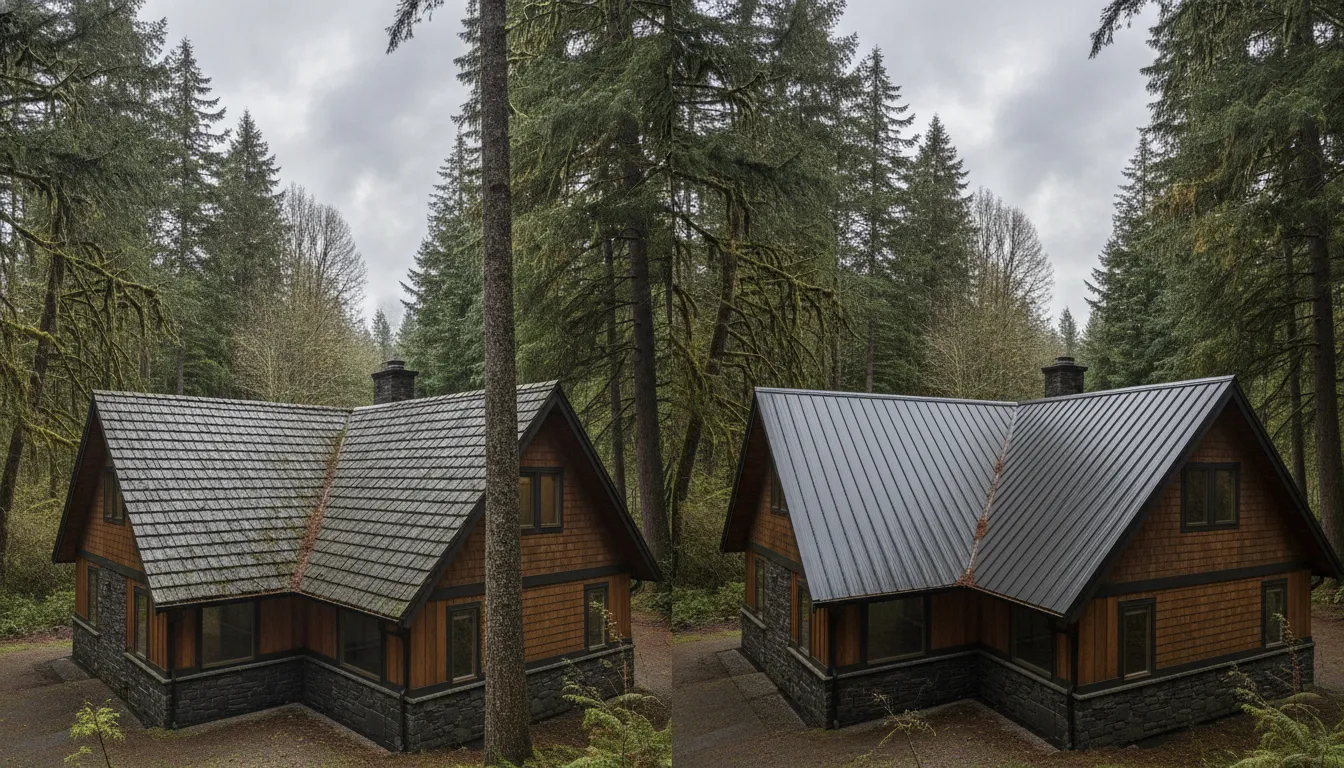
Why Washington weather changes a roof’s lifespan
The weather in the Puget Sound area is tough on homes. Rain and cool days change how roofs wear out over time. Many people want to know how long does a roof last in Washington before they need a new one. Most roofs are built to be strong, but the local climate adds stress every day. Knowing how wind, water, and moss work can help you plan for the care of your home.
Constant moisture and moss
Water is the main threat to any home in Seattle or Redmond. Rain falls for many months of the year, and roofs rarely get dry. This wetness creates a place where moss and algae can grow fast. Moss is more than just an eyesore. It acts like a wet sponge and keeps water against your shingles for a long time. This can rot the wood deck under the roof and lead to leaks. Based on data from Utah State University, most shingle roofs last about 25 years. In a wet spot, moss can make that life much shorter.
Moss also grows in the gaps between shingles. As it gets bigger, it can lift the edges of the shingles up. This makes it easy for wind to blow rain under the roof. Cleaning off debris and moss is a key part of roof maintenance for Washington homes. If you leave the moss to grow, it will eat away at the seal that holds the shingles down. Once that seal is gone, the roof can fail during the next big storm.
Wind and falling debris
High winds often hit towns like Kirkland and Sammamish during the winter. These gusts can pull at any shingle that is not flat. If a shingle is loose, the wind can tear it off and leave a hole. This lets rain get straight to the wood. Falling tree branches are also a big risk in the wooded parts of the state. Many homes in the Puget Sound have tall trees nearby that drop leaves and twigs. These items can pile up and block the flow of water.
- Wind can lift or tear away old shingles.
- Branches can crack or dent the roof surface.
- Leaves and needles trap water in the roof valleys.
When debris piles up, it leads to standing water that can seep into the house. Small breaks might not leak right away, but they get worse over time. You should check your roof after any big wind storm. Look for new damage or piles of trash. Knowing the PNW climate impact on roof durability can help you choose the right parts for repairs.
Heat shifts and air flow
Washington weather changes a lot between the seasons. Even in the summer, the sun can be quite hot on your roof. This heat makes the shingles grow slightly. At night, as it cools down, they shrink back. These tiny moves can cause cracks over many years. Proper air flow in your attic is vital to stop this from going on too fast. If your attic is too hot, it bakes the shingles from the bottom up. This can make them dry and prone to breaking.
Vents and fans help to move heat and damp air out of your home. This keeps the roof at a safe heat. In the winter, good air flow also stops ice dams from forming. When heat stays in the attic, it melts the snow on the roof. That water then freezes again at the cold edge of the roof. This ice block can force water back under the shingles and into your walls. Keeping your vents clear is a simple way to help your roof last a long time.
What are the signs a Washington roof is nearing the end?
Knowing when to replace your roof can save you from big repair bills. In the Pacific Northwest, rain and moss can hide damage until it is too late. Most homeowners ask how long does a roof last in Washington, and the answer is mostly about 25 years for asphalt shingles. But your roof might show signs of wear much sooner. You should check both the outside and the inside of your home for clues. Frequent checks help you find small issues before they turn into major leaks.
Check for outside shingle wear
The first place to look is at your shingles. Old shingles often curl or cup at the edges. This happens when the base dries out or takes too much heat. You may also see granules in your gutters that look like coarse sand. These small rocks cover the shingle from sun damage. When they wash away, the roof loses its shield and can fail fast. A good roof warranty can cover these issues if they happen too soon.
Missing or broken shingles are also a major sign of trouble. Strong winds in places like Redmond and Issaquah can tear them loose. If you see bare spots, your home is at risk. You should also look for thick moss or algae. While some moss looks nice, it holds water against the roof. This can rot the wood below. If the roof line looks wavy or saggy, the wood may already have deep water damage.
Spot inside warning signs
You should check your attic during a heavy rain. Look for dark spots or wet streaks on the beams. These are signs of slow leaks that can lead to mold. Even if you do not see water, a musty smell can mean moisture is trapped inside. This often happens if the attic does not have enough air flow to stay dry. Poor air flow makes the wood soft and weak over time.
If you find a leak, you may need emergency roofing services to stop the water right away. Peeling paint or stains on your ceiling are also clear signs of a failing roof. Do not wait for a drip to start in your living room. Catching these signs early keeps your home safe and stops mold growth in your walls. It is better to act fast before the damage spreads to other rooms.
Look at the flashing and gutters
Check around your chimney, vents, and skylights. The metal seals, or flashing, can rust or crack as they age. If the flashing fails, water will find its way into your home. Old roofs often have flashing made of tar or cement. Newer roofs use metal that lasts longer. If you see cracks or gaps in these areas, your roof is nearing the end of its life. You may notice small drips near the walls when it rains hard.
Gutters also tell a story about your roof. If they sag or pull away from the house, they cannot drain water well. This can lead to water backup that rots the edge of your roof. Look for rust or holes in the metal. If your gutters are full of shingle bits and moss, it is a sign that the roof is breaking down. Keeping these parts of your home in good shape is vital for a dry home.
How can you extend your roof’s life in Washington?
Washington weather puts a lot of stress on your home in Seattle or Bellevue. The damp air and heavy rain in the Puget Sound region can cause fast wear. You might ask how long does a roof last in Washington when the rain never seems to stop. While a standard roof can last about 25 years, the local climate often cuts that short. Proper care is the best way to get the most from your home.
Daily and seasonal care
You can do many tasks from the safety of the ground. It is best to avoid walking on your roof. Steep slopes and wet surfaces are risky for people. Instead, use a ladder or binoculars to get a clear view of your shingles. Look for parts that look loose or moss that has started to grow.
Keeping the surface clean is a top goal. Plant matter like pine needles can trap water and cause rot. This is a common issue for homes near the big trees of Redmond or Sammamish. If you let old leaves sit, they turn into soil. This gives weeds a place to grow on your roof. This growth can lift shingles and let water in.
- Remove debris twice each year. Use a soft brush or leaf blower to clear away sticks and leaves.
- Clean out your gutters and downspouts. Water must flow freely away from your house.
- Control moss growth right away. Moss acts like a wet sponge on your shingles.
- Look for damage after big storms. Check your yard for bits of roofing after a heavy gale.
- Inspect the flashing around vents. If the caulk is dry or cracked, it needs a quick fix.
- Check that your attic ventilation is clear. This stops heat from building up and baking your shingles.
Warning signs to watch
You should check your gutters for shingle granules often. These tiny stones protect the shingle from the sun. When they wash away, the roof loses its shield. This leads to brittle shingles that crack in the cold. If you see a lot of grit in your downspouts, your roof is likely near the end of its life.
Leaks are the most clear sign of a problem. But you do not have to wait for a drip. Check your attic for dark spots or damp wood. Catching these early can save you a lot of money. Expert roof maintenance for Washington homes can keep these issues under control.
Metal roof care is not the same. These systems can last up to 70 years. But they still need care. Metal can expand and shrink when the heat changes. This movement can loosen the screws that hold the panels down. You can read more about the lifespan of metal roofing systems and how they handle our weather. Checking these parts every few years stops leaks before they start.
Should you repair or replace an aging roof?
The role of roof age
Age is a main factor when you choose between a roof fix or a new roof. To make the best plan, you must know how long does a roof last in Washington state. Most asphalt roofs last about 25 years in our wet climate. If your roof is older than 20 years, a small fix may not be enough. You might spend money on a patch only to have a new leak start next month.
The type of shingle also matters for the life of your roof. Basic 3-tab shingles often fail after 15 to 20 years. Modern architectural shingles are thicker and can last 25 to 30 years or more. Metal roofs are even stronger and can last 40 to 70 years. If your roof is near these limits, a new roof is usually the better path. A new system will give you a fresh start and a long warranty.
Visible signs of failure
You can find clues about your roof’s health by looking for damage. Check for shingles that are curled, cracked, or missing. Look for small grit in your gutters, as this shows the shingles are wearing out. You should also look in your attic for water stains or damp spots on the wood. In the Puget Sound area, moss and algae can grow fast and rot the roof parts. Moss holds water against the roof, which can cause the shingles to break down sooner.
The state of the wood boards under your shingles is also vital. If the wood is soft or wet, a simple repair will not work. A pro must check the roof deck to see if it is still strong. If the damage is in just one small area, a patch might be fine. But if you have leaks in many spots, you likely need a new roof to protect your home. A new roof now can stop more damage to your walls and ceilings.
Long-term value of a new roof
A new roof costs more now but often saves you money in the long run. New parts are better at stopping leaks and keeping heat inside your home. They can also stand up to the high winds and heavy rain we see in Washington. Choosing the best roof parts for our region can stop moss from growing. This means you will spend less on cleaning and fixes later.
A new roof also adds value to your house. It is a big plus for buyers if you ever want to sell. If you keep fixing an old roof, those costs can add up fast. In five years, you might spend more on patches than the price of a new roof today. It is often smarter to spend on a new system that will last for a long time. A full fix makes sure every part of the roof works together to keep your home safe.
Making the final choice
You should weigh the cost of the fix against the age of the roof. If the damage is from a storm and the rest of the roof is new, a repair is a good choice. But if you have had many leaks in the same spot, the roof may be failing. If you plan to move soon, a repair might be enough. But if this is your forever home, a new roof provides the best safety.
- Choose repair for: small leaks, minor storm damage, or roofs under 15 years old.
- Choose a new roof for: roof age over 20 years, loss of many shingles, or rotting wood decks.
- Choose a new roof for: leaks that keep coming back or when you want better parts.
An expert check is the only way to be sure. A pro can check the flashing and the vents to see if they are still doing their job. Getting a clear report will help you make a choice that fits your budget and your needs.
Planning a longer-lasting replacement roof
Choosing a new roof for your home is a big choice that affects your house for years. You want to know how long a roof lasts in Washington before you spend any money. Most people in the Puget Sound area pick asphalt shingles because they work well for a fair price.
Experts at Utah State University say these asphalt shingle roofs last about 25 years on average. But you can make your new roof last even longer with a good plan from the start. Taking the time to pick high grade parts and expert help will pay off in the long run.
Pick the right parts for the PNW
The first step is to pick the best parts for our wet and windy climate. You can look at varying lifespans by roofing material to see what fits your needs. Basic shingles may only last 15 to 20 years in our heavy rain. Modern shingles with a thick build can last 30 years or more because they resist wind better.
If you want a roof that stays for your whole life, think about metal. A metal roofing system can stay strong for 40 to 70 years with basic care. These roofs also stand up well to snow and hail in towns like Redmond or Issaquah. Choosing metal can save you from needing another new roof in twenty years.
Use expert setup and parts
How you set up the roof is just as vital as the shingles you pick for the job. In Washington, moss and heavy rain are common risks for every roof. A good system needs more than just shingles to keep your home dry and safe. You must have the right metal flashing and vents to stop mold and leaks from starting.
Good air flow in the attic stops heat from building up under the roof deck. Proper drainage also helps move rain away so it does not rot the wood at the edges of your house. High quality sealants and underlayment add more layers of safety against the wet weather. These extra steps help your roof stay strong for a long time.
Set up a simple care plan
Even the best roof needs a little help to stay in top shape as the years go by. You should have an expert check your roof once or twice a year to look for moss or small signs of wear. Metal roofs are great because they need less care over time than other roof types.
But even metal parts can get loose when the heat changes and moves the metal. This movement can lead to leaks if you do not check the fasteners. Finding small leaks early can save you from big fix costs later on. A simple plan for roof maintenance for Washington homes keeps your house dry for many decades.
Request a roof assessment before recurring leaks turn into larger repairs.
If you are planning a roof replacement, ask about our flexible financing options to make your new roof more affordable.
Frequently Asked Questions
How long does an asphalt shingle roof last in Washington?
Most asphalt shingle roofs in the Pacific Northwest last between 15 and 30 years. A basic 3-tab shingle roof usually lasts 15 to 20 years. However, modern architectural shingles are stronger and can protect a home for 25 to 30 years or more. These shingles offer better protection from weather for homeowners in Redmond and Seattle. This makes them a top choice for local houses.
What factors affect the lifespan of a roof in Washington?
The local climate is a big factor that affects how long a roof lasts. Washington homeowners deal with heavy rain, high winds, and moisture that can lead to moss and algae growth. These conditions can wear down roofing materials over time if they are not cared for well. According to Landmark Roofing & Siding, special materials and regular checks are key. These steps help protect roofs from the unique weather patterns found in the Puget Sound.
How long do metal roofs last in the Pacific Northwest?
Metal roofs are known for their long life and can last between 40 and 70 years with proper care. They are very tough against weather like high winds, hail, and heavy snow. Research from the University of Oregon shows that metal roofs need very little work after they are installed. This makes them a great long-term choice for homeowners in Bellevue and Kirkland who want a roof that lasts.
What are the warning signs that a roof needs to be replaced?
There are several warning signs that a roof may be near the end of its life. Common signs include curled shingles, leaks, and failing flashing. Homeowners should also look for too much moss or debris buildup on the surface. According to Landmark Roofing & Siding, issues with attic air flow can also signal that a new roof is needed. Catching these signs early helps prevent water damage to homes in the Washington area.
Ready to protect your home with a new roof?
Waiting too long to fix an old roof often leads to huge costs from wood rot and leaks. These small issues can quickly damage your home and lead to high repair bills if you do not act fast. By starting your project now, you can avoid the rush of the rainy season and keep your family dry. A new roof also boosts your curb appeal and helps you save on power bills over time. Our local team in the Puget Sound will help you find the best shingles for our unique climate so your house remains safe for decades. Do not let another storm put your home at risk when a quick check can save you so much stress.
Ready to request a roof inspection and estimate? Call 855-908-7663 to talk to a roofing expert today.