
Date
Wed Aug 12A flat or low-slope roof can look sound from the ground while water slowly works through seams, insulation, and decking. Washington’s frequent rain makes drainage and membrane condition especially important for homeowners in Redmond, Bellevue, Seattle, Kirkland, and nearby Puget Sound communities.
Flat roof replacement is usually the right choice when recurring leaks, ponding water, damaged seams, or deteriorated decking make repairs temporary rather than protective. The best solution depends on the roof’s size, slope, drainage, structural condition, and the membrane system selected.
Schedule a free roof inspection to identify the source of water intrusion and compare repair and replacement options before damage spreads. Start by looking for the warning signs that indicate your roof needs more than another patch.
Signs Your Flat Roof Is Ready for Replacement
Flat and low-slope roofs can show trouble differently than steep-slope roofs. In Washington’s heavy rain, a small drainage problem or membrane defect can keep exposing the roof assembly to moisture. The visible symptom may be a ceiling stain, but the underlying issue can be much larger. Look for these warning signs before a seasonal leak becomes interior damage.
Water remains on the roof after rain
Some moisture may remain briefly after a storm, but standing water that lasts more than 48 hours is considered ponding. Ponding puts repeated stress on the membrane and can damage its seams. It may point to blocked drains, inadequate slope, or areas of the roof that have settled.
Do not assume ponding is harmless because the roof has not leaked yet. A contractor should check the drains, scuppers, membrane, and underlying structure. Correcting drainage during a replacement can help prevent the same problem from returning.
Leaks keep returning or appear in unexpected places
A recurring leak is a reason to schedule an inspection, especially if temporary patches only provide short-term relief. Water entering a flat roof can travel between the membrane and insulation before it reaches the interior. That means a ceiling stain may appear far from the actual breach.
For homeowners, this makes do-it-yourself leak tracing unreliable. The location of the stain does not necessarily identify the repair area. Multiple wet areas, soft spots, or damage around seams and penetrations may indicate that the membrane has reached the end of its useful service life.
What does an inspection reveal?
A professional inspection evaluates the membrane, insulation, and roof deck. The goal is to determine whether the damage is localized enough for a durable repair or whether replacement is the more practical solution. An inspection should also consider the roof’s drainage performance and the effects of repeated moisture exposure.
If replacement is recommended, removing the existing layers may add labor, but it allows the deck to be inspected thoroughly. Hidden deterioration can then be addressed before the new roof is installed instead of being covered and left to worsen. This is particularly important when long-term leaks may have affected the roof’s structural base.
Visible ponding, recurring leaks, and widespread membrane wear do not automatically mean a full replacement is necessary. They do mean the roof deserves a timely, hands-on evaluation. Acting before another period of heavy rain can give you more options and a clearer repair-versus-replace recommendation.
How Much Does a Flat Roof Replacement Cost in Washington?
Flat roof replacement pricing varies widely because two roofs with similar dimensions can have very different drainage, decking, access, and material requirements. Angi reports a typical range of $3,328 to $11,541, with a national average of about $7,417. Its broader reported range runs from roughly $1,200 to $24,000, depending on the roof’s size, style, and material. These figures provide context, not a Washington quote. Local labor conditions, permitting, weather exposure, and the condition of the existing assembly all affect the final price.
The most useful starting point is a roof evaluation that separates visible wear from hidden conditions. A contractor should review the roof area, membrane, insulation, deck, drains, scuppers, and penetrations. That inspection helps determine whether the project needs a straightforward membrane replacement or additional structural and water-management work.
What drives the price of a flat roof replacement?
- Square footage and layout: A larger roof requires more membrane, insulation, fasteners, flashing, and labor. Multiple roof levels, tight access, and numerous penetrations can also increase installation time.
- Material selection: Membrane systems differ in material cost, installation method, expected service life, and warranty requirements. The right choice depends on the home’s design, exposure, drainage, and how the roof will be used.
- Deck and structural repairs: Leaks can damage decking or framing below the membrane. Replacing compromised sections adds labor and materials, but it addresses the source of the problem instead of covering it.
- Drainage upgrades: Poor drainage can leave water standing on a low-slope roof. Corrective work may include improving slope, repairing drains, adding scuppers, or installing tapered insulation.
Removing old roofing layers usually costs more than a roof-over because tear-off is labor-intensive. It can still be the more responsible option because it exposes the deck for a thorough inspection and reduces the risk of concealing damaged materials. A permit review may also require project details such as roof square footage, roof drain size, and pitch, as shown in the flat roof permit checklist. Washington requirements can vary by jurisdiction, so your contractor should confirm the applicable local process.
Energy-efficient insulation or reflective roofing upgrades may qualify for utility rebates or other programs, depending on the product, project, and current program rules. Ask for eligibility details before assuming a rebate will reduce your budget. For an early planning range, use Landmark’s roof cost estimator, then request a site-specific proposal. Homeowners comparing payment approaches can also review roof financing options for Washington homeowners.
Flat Roof Materials Homeowners Should Consider
Flat roofs are not completely level. Most have a slight pitch of about 1/4 to 1/2 inch per foot so rain can move toward drains or scuppers. That low slope changes how the roof manages water and makes the membrane, seams, flashing, and drainage details especially important. The best material for a home in Redmond, Bellevue, Seattle. Or another wet Washington community should be chosen for the roof’s design, exposure, insulation needs, and expected foot traffic.
EPDM rubber membrane
EPDM is a synthetic rubber membrane with strong resistance to weather. It is installed as a single layer, commonly in thicknesses from 30 to 60 mils. The material can handle repeated exposure to rain and changing temperatures, making it a practical option for many low-slope residential roofs. Its performance still depends on careful seam work, secure edges, properly detailed penetrations, and routine inspections.
EPDM can offer roughly 20 to 30 years of service when it is correctly installed and maintained. Homeowners should ask how the installer will address ponding water, perimeter edges, roof-to-wall transitions, and any existing deck or insulation damage before selecting this option.
Modified bitumen multi-ply systems
Modified bitumen uses multiple layers to create a robust roof assembly. The added plies provide extra durability and puncture resistance, which can be useful where maintenance access, equipment service, or other foot traffic is likely. This material may be a strong fit for a low-slope roof that needs a tougher surface. But the installation method and substrate preparation matter as much as the product choice.
Removing worn layers can reveal wet insulation or damaged decking that would otherwise remain hidden. A complete evaluation helps determine whether the roof can support a new system and whether drainage improvements should be included in the replacement plan.
Built-up roofing and reflective single-ply options
Built-up roofing is a traditional multi-layer approach that combines reinforcing plies with waterproofing material. Its layered construction can provide dependable protection when the assembly is designed for the building and installed with attention to seams, edges, and drainage. It may be considered when a homeowner wants a durable, multi-ply system rather than a single membrane.
Reflective single-ply membranes are another general category to discuss with a qualified contractor. Their reflective surfaces can support energy efficiency while providing durable water protection. Landmark also provides information about single-ply roofing systems for low-slope applications.
Washington’s prolonged wet periods make moisture resistance and reliable water shedding essential selection criteria. Material cost alone should not decide a flat roof replacement. Compare the membrane or multi-ply system with the roof’s pitch, drainage, insulation, deck condition, and maintenance plan so the finished assembly is suited to the local climate.
What to Expect During a Residential Flat Roof Replacement
Drainage is the most important durability factor in a flat roof system. A new membrane cannot solve recurring ponding if water still has nowhere to go. During a replacement, the crew should address the roof assembly from the structural deck upward, creating a continuous path for rainwater to reach drains or scuppers. That approach helps protect the membrane, insulation, and framing through the wet seasons common in Washington.
While every home is different, a thorough flat roof replacement typically follows these steps:
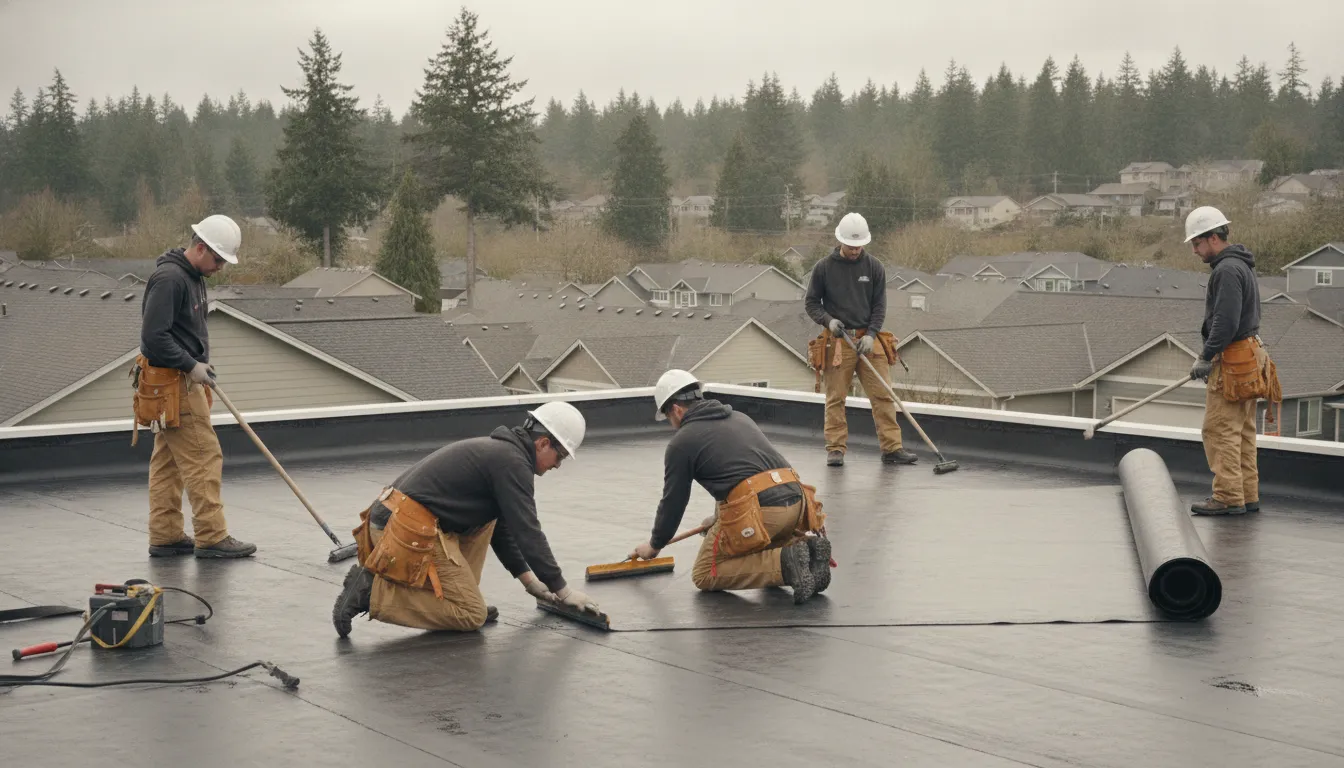
- Remove the existing membrane and inspect the roof structure. The old roofing membrane is removed so the contractor can examine the framing and decking directly. Any rot, moisture damage, weak areas, or other deficiencies should be corrected before the new roof work begins. Removing existing layers takes more labor than covering them, but it exposes hidden problems that could otherwise compromise the replacement.
- Create positive slope toward drains or scuppers. A flat roof is not truly level. The deck or roof assembly needs a designed slope that moves rainwater toward its drainage points. Tapered insulation is one common way to create that slope without rebuilding the entire structural system. The layout should account for existing drains, scuppers, roof edges, and areas where water has collected in the past.
- Install or upgrade the insulation. With the substrate prepared, the crew installs the specified insulation within the roof assembly. This layer helps improve the building’s energy efficiency and supports consistent indoor temperatures. The insulation plan should also work with the drainage design and existing framing, rather than creating uneven areas or trapping moisture.
- Apply the selected membrane correctly. The membrane may be adhered or mechanically fastened, depending on the system and project requirements. Installation must follow the roofing manufacturer’s specifications, including fastening, adhesive use, seam treatment, and substrate preparation. Following those requirements is important for performance and warranty compliance. Seams and transitions deserve careful attention because they are common points of water entry.
- Flash every roof penetration and transition. The final water barrier must integrate with chimneys, vents, skylights, HVAC equipment, walls, edges, and other penetrations. Proper flashing around chimneys and roof vents creates a watertight seal where the membrane cannot simply run uninterrupted. The crew should also check drain assemblies, parapet edges, and termination details before cleanup and final inspection.
Ask for the proposed drainage layout, insulation specification, membrane installation method, and flashing plan before work begins. A clear scope makes it easier to understand what the replacement includes and gives you a useful record for future maintenance.
How Long Does a Flat Roof Replacement Last?
A properly installed flat roof replacement can protect a Washington home for many years, but the expected service life depends on the membrane, installation quality, drainage, and maintenance. Two common options illustrate the range. EPDM rubber membrane systems typically last about 25 to 30 years when installed correctly and maintained. SBS modified bitumen systems often have a shorter expected lifespan of roughly 10 to 15 years, although site conditions and workmanship can affect the result.
Material choice sets the starting point
EPDM is a synthetic rubber membrane valued for weather resistance and long-term performance on low-slope roofs. Its lifespan depends on more than the product itself. Seams, flashing, penetrations, edge details, and attachment must all be installed correctly so water cannot work beneath the membrane.
SBS modified bitumen uses multiple layers and can provide useful durability and puncture resistance. It may be a practical choice for some homes, especially where the roof has equipment or areas that receive occasional foot traffic. A roofing professional should compare the existing assembly, drainage pattern, access needs, and condition of the decking before recommending a system.
Washington weather makes maintenance important
Rain is a normal part of roof life in Redmond, Bellevue, Seattle, and communities throughout the Puget Sound region. A low-slope roof must move that water efficiently. Leaves and other debris can obstruct drains, while ponding water that remains for more than 48 hours can place extra stress on membrane seams. Drainage problems should be corrected rather than treated as routine wear.
Regular inspections help preserve the useful life of a new roof. Inspections can identify small tears, loose seams, damaged flashing, or other defects before water reaches the insulation and decking. High-quality membrane materials can also reduce maintenance needs over the life of the roof, but no membrane eliminates the need for periodic care.
For broader regional context, review how long roofs last in Washington. If a flat roof is approaching the end of its expected service life. An inspection can distinguish normal aging from hidden moisture or structural damage and help you plan the replacement before a small problem becomes an interior leak.
Repair or Replace: Choosing the Right Flat Roof Fix
A small, isolated defect does not automatically mean you need a new roof. A repair may restore protection when the surrounding membrane, insulation, and roof deck remain sound. Replacement becomes more practical when damage is widespread, recurring, or hidden below the visible surface.
That distinction is difficult to make from the ground. Flat-roof leaks can travel between the membrane and insulation, so the interior stain may be far from the actual entry point. A professional inspection evaluates the membrane, insulation, and deck integrity before recommending the most cost-effective solution. Flat roof repair services can address localized problems, but a repair should not conceal broader deterioration.
| Signs repair may work | Signs replacement is better |
|---|---|
| One small tear, puncture, or seam defect can be located and isolated. | Leaks are widespread, recurring, or appearing in several areas. |
| The membrane is aging but remains flexible and attached around the repair. | The membrane has extensive cracking, separation, brittleness, or failed seams. |
| Insulation and the roof deck are dry, stable, and free from apparent deterioration. | Insulation is saturated, or the deck has rot, soft areas, or other structural damage. |
| Drainage works as intended and the problem is not caused by persistent ponding. | Standing water remains after rain, or drainage deficiencies affect broad roof areas. |
Persistent ponding deserves particular attention. Standing water that remains for more than 48 hours after rain can damage membrane seams. Repeated patching may also become a poor investment if each repair addresses a symptom while moisture continues to affect the assembly.
Replacement does involve more disruption and labor. Removing old roof layers is labor-intensive, but it allows the crew to inspect the deck thoroughly and identify hidden issues before installing the new system. That added visibility can prevent a new membrane from being placed over wet insulation or damaged decking.
Regular inspections can keep the decision from becoming urgent. Finding small tears or loosening seams early may allow a targeted repair before water intrusion reaches the insulation and decking. If the roof has recurring leaks or concealed moisture. A documented inspection is the right starting point for deciding whether repair or flat roof replacement will provide better long-term value.
Schedule a free roof inspection
Frequently Asked Questions
What is the average cost of flat roof replacement?
There is no reliable one-size-fits-all price. The total depends on roof size, selected material, deck or structural repairs, drainage work, insulation, and removal of existing layers. An inspection and written estimate are the best way to understand your home’s actual cost.
Can you reroof over an existing flat roof?
Sometimes, but adding a new layer should not replace a proper assessment. Removing the existing membrane allows the roof deck and framing to be inspected and deficiencies to be corrected before installation. A contractor should confirm whether the existing assembly can support another system and whether a roof-over would conceal moisture or structural damage.
How long does a flat roof replacement take?
The schedule depends on the roof’s size, material, weather, access, permitting, and the condition of the deck. Hidden damage or drainage corrections can extend the work. Your contractor should provide a project schedule after inspecting the roof and defining the replacement scope.
What is the cheapest way to do a flat roof?
The lowest initial bid is not always the least expensive option over the roof’s life. Choosing a suitable membrane, correcting drainage, and addressing damaged decking during the project can help prevent repeat repairs. Compare complete scopes, warranties, installation methods, and maintenance requirements rather than material price alone.
What should I do if I cannot afford a full replacement?
Request an inspection to determine whether targeted repairs can safely extend the roof’s service life. A professional assessment evaluates the membrane, insulation, and deck before recommending repair or replacement. Ask for clearly separated repair and replacement options so you can weigh immediate costs against longer-term risk.
Ready to Plan Your Flat Roof Replacement?
A professional inspection can clarify whether your Washington home needs targeted repairs or a complete replacement. It also gives you a practical starting point for discussing the roof’s condition and next steps. Schedule a free roof inspection through Landmark Roofing & Siding’s contact page.