
Date
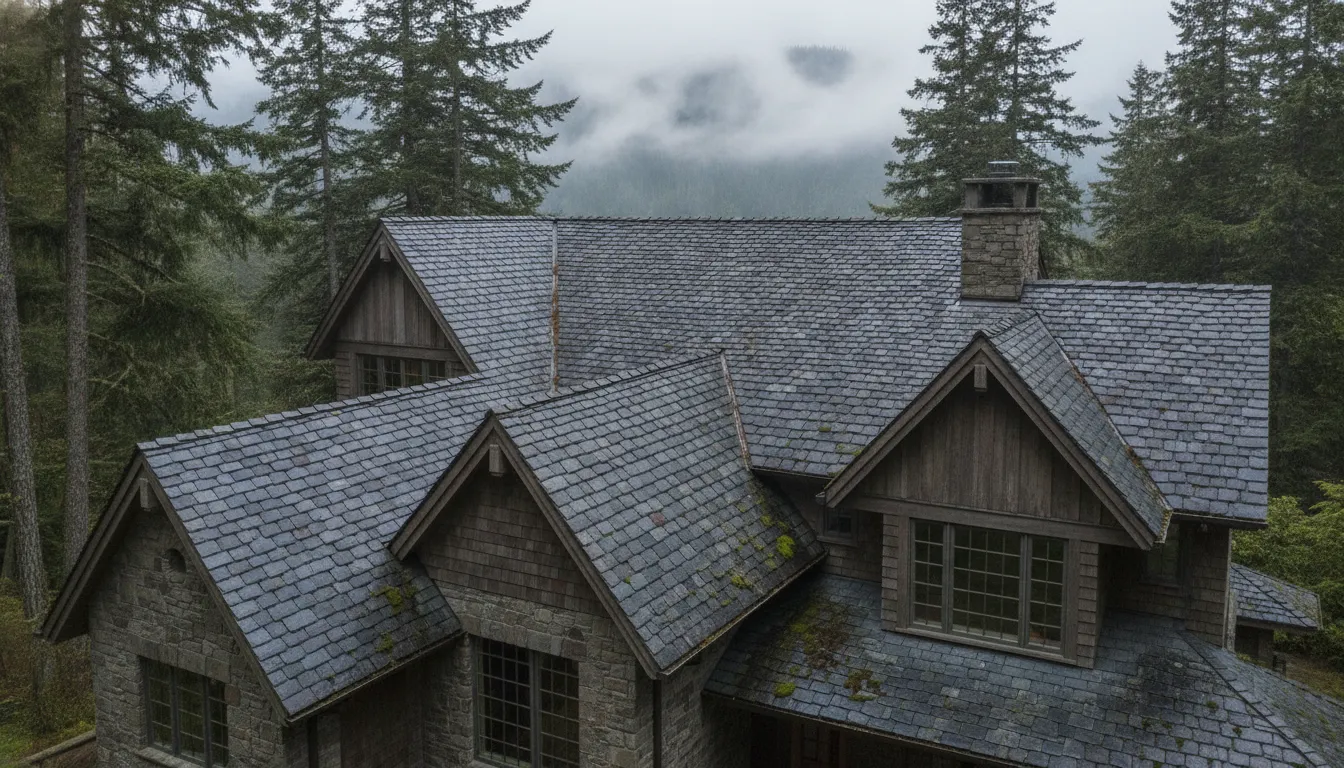
Fri Aug 7A slate roof can bring exceptional longevity and a distinctive, natural appearance to a Washington home, but it demands more planning than many common roofing systems. Homeowners need to weigh the material’s grade, weight, installation requirements, cost, and response to persistent rain and winter freeze-thaw cycles before choosing it.
Schedule a free slate roofing consultation and estimate through our contact page.
Slate roof tiles are thin pieces of naturally foliated metamorphic rock that can provide a durable, fire-resistant roof for 60 to 125 years or longer when properly selected and installed. Their performance depends on the slate’s quality, the roof structure, detailing, and local exposure, so a professional evaluation matters before committing to the material.
The story begins with how slate forms and splits into usable layers. That geology helps explain why different grades perform differently, why careful handling matters, and how installers evaluate the material for a long-lasting roof.
What Are Slate Roof Tiles, and How Are They Made?
Slate roof tiles are thin pieces of natural stone cut and prepared for use as a roof covering. Their defining quality begins underground. Slate is a fine-grained metamorphic rock formed when shale, clay, or volcanic ash changes under heat and pressure over time. The process alters the original material without melting it completely, creating a dense stone with a distinctive layered structure.
The National Park Service describes slate as a foliated rock. Foliation means the stone contains repetitive layers created during metamorphism. Those layers can be very thin, which allows suitable slate to split into flat, sheet-like pieces. This natural cleavage is the reason a quarry can produce roofing units rather than only irregular chunks of stone. Geologic properties of slate also influence how a particular piece performs during cutting, handling, and installation.
From quarry stone to roofing material
Production starts with extracting large blocks from a slate quarry. Workers examine the blocks for their grain, consistency, color, and soundness before reducing them into smaller pieces. Skilled splitting follows the rock’s foliation. The goal is to create tiles with a flat face, dependable thickness, and edges that can be shaped without excessive breakage.
After splitting, the pieces are cut or dressed to consistent dimensions. They may then be sorted into grades based on characteristics such as thickness, size, surface quality, color, and the presence of natural flaws. Roofing specifications matter because a tile must be strong enough for handling while still fitting the intended layout. The final product is not simply any flat stone. It is a selected and prepared piece that can be coursed across a roof with suitable overlap, fastening, and drainage.
Why grade and source matter
Slate from different geological formations can vary in color, texture, thickness, and durability. Even within one quarry, grades may serve different applications. A roofing professional should evaluate the proposed slate, not assume every tile has the same service characteristics.
That evaluation is especially important for homeowners in Redmond, Bellevue, Seattle, and other Puget Sound communities. A slate roof must be matched to the home’s structure, roof design, exposure, and installation requirements. Homeowners comparing premium roofing materials can review high-end slate roof tiles alongside other options before choosing a system that fits the property.
What Is the Difference Between Natural Slate and Slate-Look Roofing?
Natural slate and engineered slate can both give a Washington home the layered, distinctive appearance associated with slate roof tiles. They are not interchangeable materials, however. Natural slate is quarried stone split into individual pieces, while slate-look composite roofing is manufactured to recreate that appearance with a lighter, more uniform product.
| Consideration | Natural slate | Slate-look composite |
|---|---|---|
| Lifespan | Properly selected and installed slate can serve a home for many decades. Its service life depends on stone quality, detailing, ventilation, and maintenance. | Quality engineered slate is designed for long-term residential use. Review the specific product warranty, installation requirements, and expected service life before choosing it. |
| Cost | Quarrying, sorting, transporting, and hand-installing stone usually make natural slate a premium roofing investment. Structural preparation can add to the project scope. | Material and labor costs may be more predictable than natural slate, although premium profiles and complex roof designs can still require a substantial budget. |
| Weight | Natural slate is heavy. A contractor must confirm that the roof framing, decking, and supporting structure can safely carry the completed assembly. | Slate-look composite is generally lighter than natural stone. That can expand material options for homes that cannot support a full natural-slate assembly, subject to an evaluation. |
| Appearance | Every piece has natural variation in color, texture, thickness, and edge. That variation creates an authentic, highly individual roof. | Manufactured pieces offer more consistent dimensions and color control. Many profiles include staggered edges and blended tones that capture a traditional slate effect. |
| Pacific Northwest fit | Stone can suit the region’s wet climate, but correct flashing, underlayment, ventilation, and freeze-thaw-conscious installation remain essential. | The lighter material and consistent installation pattern can be practical for many Puget Sound homes. The product still needs proper drainage, moss-conscious maintenance, and manufacturer-approved details. |
Natural slate is often the better match for homeowners who value geological variation, longevity, and a roof that develops its character from individual stone pieces. It also requires a contractor familiar with slate-specific cutting, fastening, flashing, and repair methods. Walking on the finished roof or replacing a damaged piece without the right technique can cause unnecessary breakage.
Engineered slate may make more sense when a homeowner wants a slate appearance with lower structural demands, more consistent sizing, or a simpler replacement process. The category includes products with different compositions, profiles, warranties, and installation rules, so comparing samples and specifications matters more than relying on the word “synthetic” alone. Landmark’s guide to synthetic slate roofing options provides additional background on this category.
For either choice, start with the existing roof structure and the home’s drainage details. A professional assessment can determine whether natural stone or a slate-look system better suits the roof’s slope, framing, exposure, and maintenance expectations.
What Are the Pros and Cons of Slate Roof Tiles?
Slate offers a distinctive combination of longevity, resilience, and natural character. It can suit established homes in Bellevue, Seattle, and other Puget Sound communities, especially when the roof structure and installation plan are evaluated before work begins.
The Long-Term Performance Advantages
Properly installed slate roofs can last 60 to 125 years, and some remain serviceable for more than 200 years. The National Park Service notes that service life depends on the slate type, roof configuration, installation quality, and geographic location. Read the National Park Service guidance on slate roof longevity.
That lifespan can reduce the frequency of full roof replacements over a home’s ownership. Slate also requires relatively little maintenance when the tiles, flashing, underlayment, and drainage details are installed correctly. Routine inspections still matter, particularly after severe weather or nearby construction.
Natural slate is inherently fire-resistant and highly durable against weathering. Its dense stone surface also gives a home a substantial, tailored appearance that manufactured materials may not replicate exactly. Color variation, texture, and the clean lines of properly laid courses contribute to premium curb appeal without relying on painted finishes.
For homeowners comparing materials, the right question is not simply whether slate looks attractive. It is whether the material’s service life, maintenance profile, and appearance justify the structural and installation requirements. A thorough review of residential roofing services can help frame that decision around the home’s condition and long-term goals.
The Trade-Offs to Plan For
Slate is heavy. A home must have adequate structural support for the roof assembly, and an older property may need an engineer or qualified roofing professional to assess framing before installation. Skipping that review can create problems that are more serious than a material choice.
The upfront cost is also higher than many common roofing systems. Quarrying, transporting, sorting, cutting, and carefully installing natural stone all require more labor and specialized handling. The initial investment may make sense for a long-term home, but homeowners should compare the complete installed cost rather than the tile price alone.
Individual slate tiles can be fragile under concentrated foot traffic. Walking directly on the roof or performing repairs without proper access equipment can crack or dislodge tiles. Future work around vents, skylights, chimneys, and flashing should be planned with the same care as the original installation.
Installation requires experienced crews who understand slate layout, fastening, flashing, ventilation, and replacement methods. A general roofing approach may not protect the material or preserve the roof’s intended service life. Ask prospective contractors how they handle structural review, tile selection, repairs, and safe access before signing a contract.
How Much Do Slate Roof Tiles Cost per Square?
Roofing contractors use a “square” to describe 100 square feet of roof area. Cost per square helps compare materials, but it is not a complete project price. Natural slate usually costs more than slate-look or synthetic roofing because the stone is heavier, more specialized to install, and often requires additional preparation.
Typical Cost Ranges for Natural and Synthetic Slate
As a broad planning guide, natural slate roofing can run roughly $10 to $30 or more per square foot installed, depending on the material and project conditions. That translates to approximately $1,000 to $3,000 or more per square. Slate-look systems generally offer a lower installed cost, although the final price still depends on the product, roof design, removal work, and installation requirements.
These figures are not a quote for any Washington home. This Old House reports typical total slate-roof project costs in the general range of $10,000 to $30,000. With structural reinforcement potentially adding about $1,000 to $10,000 when the existing framing cannot support the roof’s weight. See its slate roof cost guide for additional context on those planning ranges.
What Drives the Final Price?
Material grade and hardness: Slate varies in quality, thickness, durability, color, and expected service life. Higher-grade stone can cost more per square, but the right choice depends on the roof design and the homeowner’s long-term goals.
Roof size and slope: A larger roof needs more material, while steep slopes increase fall-protection, staging, and handling requirements. Complex rooflines also create more cutting and waste.
Labor complexity: Valleys, dormers, skylights, chimneys, hips, and detailed flashing require additional layout and installation time. Tear-off and disposal costs also affect the estimate when an existing roof must be removed.
Structural reinforcement: Natural slate weighs significantly more than many modern roofing systems. An evaluation may identify the need for reinforced rafters, trusses, or decking before installation begins.
In Washington, a reliable estimate must account for roof dimensions, slope, existing materials, site access, flashing conditions, and structural capacity. A roof inspection can separate the material cost from the labor and preparation work that determine the actual project investment.
What Should Homeowners Know About Slate Roof Installation?
Slate rewards careful installation and exposes shortcuts quickly. The tiles are thin, rigid, and naturally layered, so improper handling can cause cracking, uneven courses, or premature water entry. A knowledgeable Puget Sound roofer should understand both slate itself and the conditions around it, including heavy rain, freeze-thaw cycles, and moss growth.
Start with the structure and roof design
Natural slate is substantially heavier than many common roofing materials. Before installation, the roofing contractor should assess the roof framing, decking, slope, and overall condition. The structure must be able to support the finished roof system, not just the individual tiles. This assessment also helps identify repairs that should happen before new material covers the deck.
Roof geometry matters as well. Valleys, penetrations, eaves, ridges, and transitions require a deliberate layout. A skilled crew plans tile courses around these areas instead of forcing pieces into place after the field installation is complete.
Underlayment, flashing, and valleys protect the home
Slate tiles are only one part of the roof assembly. A suitable underlayment provides an additional water-shedding layer beneath the slate. Flashing must be correctly integrated around chimneys, skylights, walls, and other penetrations. Valleys deserve especially close attention because they collect and direct a large volume of runoff.
These details should be installed with compatible materials and careful sequencing. Small gaps, exposed fasteners, or poorly formed transitions can undermine an otherwise attractive slate roof. The finished courses should be straight, consistently spaced, and securely fastened without damaging the tiles.
Choose a crew that performs the work directly
Slate installation is not a project where experience can be separated from the outcome. Ask who will perform the work, how the crew is trained, and who supervises the job. Landmark Roofing & Siding uses in-house installation crews rather than handing the project to unknown subcontractors. The company also maintains direct, factory-connected relationships and multiple manufacturer certifications, including certification for composite slate systems.
That direct involvement creates clearer accountability from the initial assessment through final cleanup. It also gives homeowners a better opportunity to discuss tile selection, flashing details, ventilation, and maintenance with people who understand the complete roof system. Review Landmark’s roofing materials for the Pacific Northwest and ask for a project evaluation from a team familiar with homes across Washington’s Puget Sound region.
How Do Slate Roof Tiles Perform Through Pacific Northwest Winters?
Puget Sound winters test every roof with long periods of rain, damp air, occasional freezing temperatures, and wind-driven moisture. Properly installed slate handles these conditions well because the material is highly durable and naturally resistant to weathering. The National Park Service notes that a correctly installed slate roof can last 60 to 125 years, depending on the slate, roof design, and location. See how durable slate roof tiles compare with other options for Washington’s rainy climate.
Heavy Rain and Wind
Rain resistance depends on more than the tile itself. Slate must be installed over sound sheathing with suitable underlayment, correctly lapped courses, and carefully detailed flashing. Valleys, wall transitions, chimneys, and roof edges deserve particular attention because wind-driven rain can find weaknesses in those areas.
Slate tiles are durable, but they are not a substitute for precise installation. A loose tile, exposed fastener, or damaged flashing can allow water beneath an otherwise sound roof. After major wind or rain events, homeowners in Seattle, Bellevue, Redmond, and surrounding communities should watch for displaced tiles, staining in the attic, or new ceiling marks.
Freeze-Thaw Cycles
Puget Sound does not experience constant deep freezes, but temperatures can move above and below freezing during winter. Water that enters a crack or vulnerable roof detail can expand as it freezes and create additional damage during repeated cycles. Sound slate, proper fastening, and effective drainage reduce that risk.
Roof access also matters. Slate can crack under concentrated foot traffic, especially when someone walks directly on the tiles during an inspection or repair. Use a roofing professional familiar with slate rather than treating the surface like a standard asphalt roof.
Moss, Algae, and Seasonal Maintenance
Damp, shaded areas around Kirkland, Snohomish, and other Washington communities can encourage moss and algae growth. Moss can hold moisture against the roof and interfere with drainage, particularly in valleys and along areas shaded by trees. Do not pressure-wash slate or scrape it aggressively. Those methods can damage the tiles and shorten the roof’s service life.
Seasonal inspections should clear leaves and organic debris from valleys, check flashing, examine visible tiles, and confirm that gutters and downspouts drain freely. Addressing small issues before the wet season is usually safer and less disruptive than waiting for an interior leak.
Request a free slate roof inspection and winter-readiness assessment through our contact page.
Frequently Asked Questions
How long do slate roof tiles last?
A properly installed slate roof can last 60 to 125 years, and some roofs last more than 200 years. Service life depends on the slate type, roof design, installation quality, and local conditions. The National Park Service documents these ranges for historic slate roofs: NPS slate roof guidance.
Are slate roof tiles expensive?
They usually cost more upfront than common roofing materials because the tiles are heavy, the roof may need structural review, and installation requires specialized experience. Total expense also depends on slate grade, roof complexity, flashing, underlayment, access, and removal of the existing roof. A roof assessment provides a more useful estimate than a generic price per square.
Slate roof tiles vs clay: which is better?
Neither material is automatically better for every home. Natural slate offers a distinctive stone appearance, long service potential, and natural fire resistance. Clay can provide a different architectural look and may suit homes designed for tile weight. The right choice depends on structural capacity, roof pitch, weather exposure, design goals, and access to qualified installers.
What are the benefits of natural slate roof tiles?
Natural slate provides a durable, fire-resistant roof with variations in color and texture that give each installation a distinctive appearance. It can also reduce replacement frequency when properly selected and installed. Slate is a foliated metamorphic rock that splits into thin layers, which makes it suitable for roofing tiles. See the National Park Service preservation brief for its durability and fire-resistance characteristics.
Schedule Your Slate Roofing Consultation
Slate roof tiles can be a strong fit for a Washington home when the roof structure, materials, and installation plan are evaluated together. A professional consultation can help you compare natural slate with slate-look options and understand the right next steps for your property.
Schedule a free slate roofing consultation and estimate through our contact page.