Date
Thu Jun 11Pacific Northwest rain exposes weak shingles, poor fasteners, and rushed installation before their warranties matter. The best roofing shingles Pacific Northwest homeowners can choose must manage steady moisture, seasonal wind, and the home’s budget without trading away long-term protection.
Request a roof inspection and practical shingle recommendation from Landmark Roofing & Siding.
For most Pacific Northwest homes, algae-resistant architectural asphalt shingles offer the best balance of durability, appearance, and cost. SBS-modified shingles add flexibility and impact resistance. Either option needs sound flashing, ventilation, drainage, and manufacturer-approved installation to perform well through Washington’s long wet seasons.
What are the best roofing shingles for Pacific Northwest homes?
For most Puget Sound homes, architectural asphalt shingles are the best starting point. Choose a line with SBS modification and algae resistance when the roof site calls for those features. This mix balances wet-weather performance, curb appeal, and cost without pushing every homeowner toward a premium roof.
The right choice still depends on roof pitch, shade, wind exposure, budget, and the existing roof deck. This decision guide focuses on how to compare shingle features. For a wider look at metal and synthetic choices, see the best roofing materials for the Pacific Northwest.
Why architectural asphalt is the practical baseline
Architectural shingles use a layered profile that gives the roof more depth than a basic 3-tab shingle. They are a practical baseline for Washington homes because they balance strength, wind resistance, looks, and cost. Water shedding matters here, so roof details must move water away with few weak points.
When SBS-modified shingles make sense
SBS-modified shingles add rubber-like flexibility to the asphalt blend. That can make them worth considering on roofs exposed to changing temperatures, wind, or falling debris. Compare each product’s published wind rating, impact rating, warranty terms, and approved installation method before choosing.
Landmark installs composition systems from CertainTeed and Malarkey. Available Malarkey lines use polymer-modified asphalt and include options with Class 3 or Class 4 impact ratings. CertainTeed systems can offer material coverage up to 50 years when eligibility and installation requirements are met. The precise coverage, exclusions, and transfer terms vary by selected system, so review the written warranty rather than relying on the headline term.
Do not treat an SBS label as a substitute for sound roof design. Valleys, flashing, ventilation, underlayment, and fasteners still shape how the full system handles rain. Our guide to the best composition shingles for Pacific Northwest homes explains these product features in more detail.
Algae resistance for shaded, damp roofs
Algae-resistant shingles are a useful option for roofs that stay shaded or damp for long periods. Their built-in protection can help limit dark streaking, but it does not remove the need for roof care. Nearby trees, debris buildup, and poor drainage can still keep the surface wet.
Ask how long the algae warranty lasts and what exclusions apply. Also check whether nearby branches can be trimmed and gutters can drain freely. Shingle selection is only one part of moisture control. Proper nailing, flashing, and manufacturer-approved details help preserve the roof and its warranty coverage.
How does Washington weather change the shingle decision?
The best roofing shingles for Pacific Northwest homes must fit the roof’s setting, not just the home’s style. Rain, wind, shade, cold snaps, attic airflow, and installation details all shape how well a shingle system performs.
Rain, shade, and roof drainage
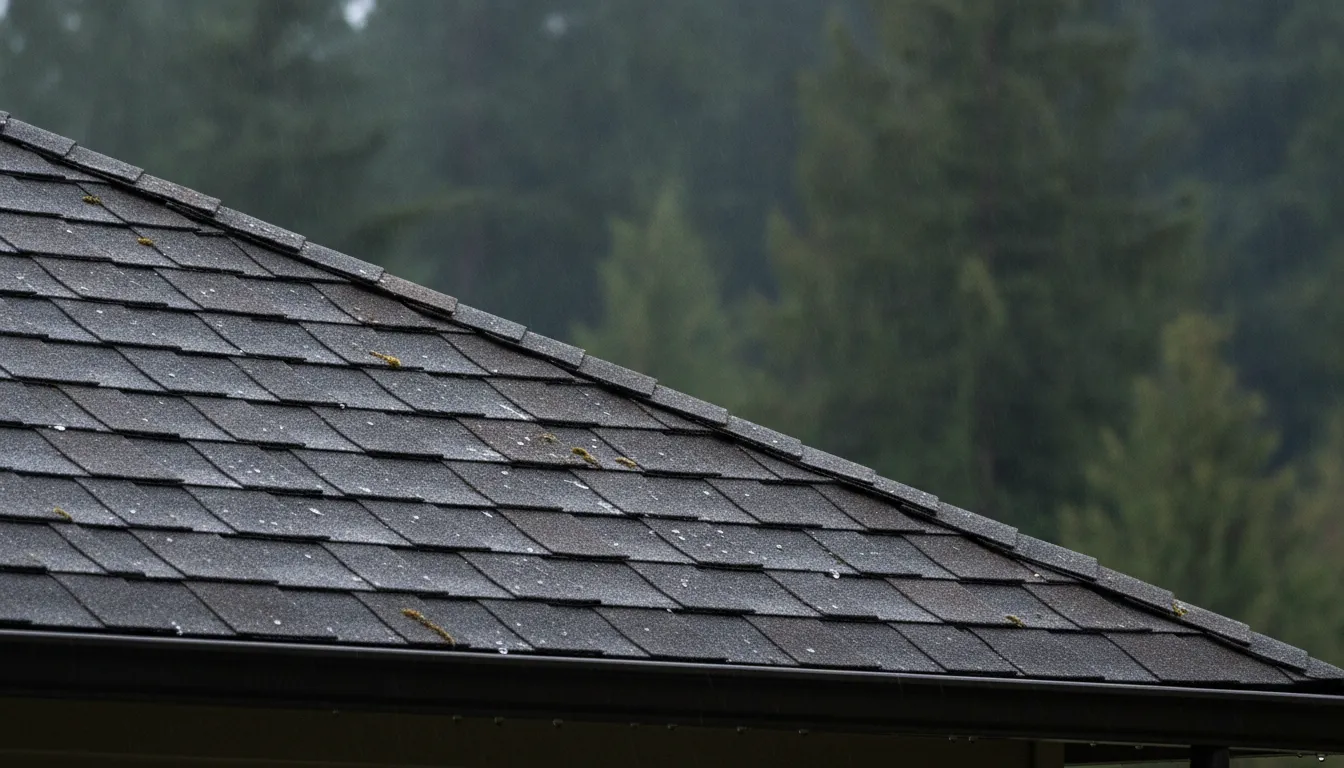
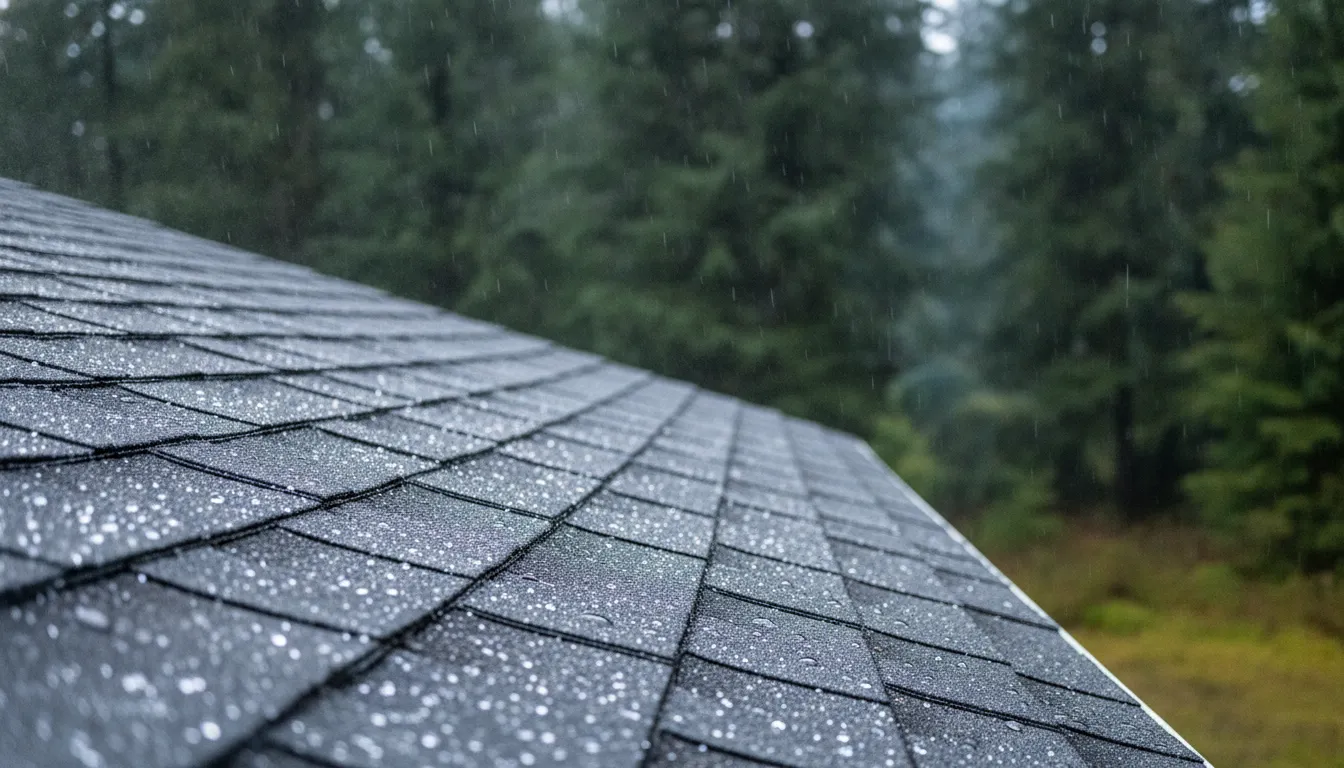
Reliable water shedding belongs near the top of the checklist. Look for shingles made to resist algae growth, especially on shaded roof slopes. Moss and debris can hold moisture against the surface, while clogged valleys and gutters can slow drainage. A shingle alone cannot correct poor drainage or heavy tree cover.
- Check which roof slopes stay shaded after rain.
- Look for moss, dark streaks, lifted tabs, and debris-filled valleys.
- Ask how the proposed shingle system handles algae and wet conditions.
Wind exposure and cold-weather risks
Wind exposure can change from one Washington property to the next. Open hills, waterfront areas, and exposed roof edges may face stronger gusts than sheltered lots. Ask whether the shingle’s wind rating fits the home’s location and roof shape.
Cold spells add another concern. Repeated freezing and thawing can stress wet roof areas, while snow and ice may expose weak drainage details. Proper air sealing, insulation, and attic ventilation can reduce ice-dam risk.
- Note exposed eaves, ridges, corners, and slopes facing common storm winds.
- Ask the roofer to explain the required wind rating and fastening plan.
- Check the attic for damp insulation, blocked vents, or signs of past leaks.
Ventilation and installation quality
Good shingles still depend on a sound roof system. Intake and exhaust vents help manage attic heat and moisture. Decking, flashing, underlayment, and fasteners must also work together to keep water out. Before choosing a product, ask the contractor to inspect the deck and ventilation path. Request the fastening method, flashing plan, and warranty terms in writing.
Pacific Northwest roofing shingle options compared
There is no single best roof for every Puget Sound home. The right choice depends on roof shape, exposure, appearance, upkeep goals, and budget. A useful comparison starts with how each option manages water and fits the home’s structure.
| Option | Strong fit when | Questions to ask |
|---|---|---|
| Architectural asphalt | You want a balanced, familiar choice | Which wind rating fits the site? |
| SBS-modified asphalt | You value a more flexible asphalt product | How does the system handle local exposure? |
| Luxury asphalt | Dimensional style is a main goal | Does added weight suit the roof? |
| Cedar | Natural character matters most | What upkeep will the roof need? |
| Metal | You prefer a distinct system and appearance | How are seams and penetrations detailed? |
| Synthetic shingles | You want a slate or shake look | Which product approvals apply? |
Architectural asphalt favors balance, while SBS-modified asphalt suits owners focused on flexibility. Luxury asphalt, cedar, and synthetics put more weight on appearance. Metal calls for a separate system-level discussion. Two products in the same group can use different profiles, colors, and system parts, so ask each contractor to state exactly what is included.
Installation and roof details
Product choice is only part of roof performance. Proper nailing, fastener placement, flashing, and water-shedding details all matter. Homeowners should compare options against the actual roof, not a sample board alone. Pitch, valleys, nearby trees, wind exposure, and access can change the sensible choice.
A clear proposal should name the material, system parts, installation steps, and care needs. It should also explain why those choices fit the specific home. This approach gives homeowners a sound basis for comparing options without relying on broad promises.
What should a Washington homeowner compare before choosing?
The best roofing shingles for Pacific Northwest homes depend on the house, site, and installation plan. Washington’s wet seasons make water shedding and sound flashing central to the choice. Use this checklist to compare complete roof systems, not just colors or product labels.
- Ask the roofer to document worn areas, deck damage, flashing needs, and signs of attic moisture. Separate required repairs from optional upgrades before comparing bids.
- Rank your goals before reviewing samples: lower upfront cost, longer service life, a certain look, or easier care.
- Compare published wind, impact, fire, algae, and warranty ratings for each shingle. Match the ratings to your home’s site and exposure rather than choosing by label alone.
- Review attic air sealing, insulation, intake vents, and exhaust vents as one system. Include needed ventilation work in the roofing scope.
- Request itemized bids that name the shingle line, underlayment, flashing, vents, fasteners, disposal, warranty, and repair allowances.
- View sample boards outdoors in sun, shade, and wet conditions before making the final choice. Confirm every selected component and warranty term in the signed proposal.
Get a side-by-side roofing proposal tailored to your home’s exposure, roof deck, and ventilation.
Comparing complete proposals
Compare each proposal line by line before comparing totals. A lower bid may omit deck repairs, upgraded flashing, ventilation work, or disposal. Choose only after the inspection findings, performance needs, full scope, and warranty terms align. Keep the signed proposal, product documents, and warranty records together for future service.
For planning context, Landmark’s documented composition-roofing project range is approximately $8,000 to $30,000, with the final investment shaped by roof size, pitch, access, tear-off requirements, repairs, and selected system. A real inspection is necessary before treating any range as a quote. Ask every contractor to separate known scope from allowances so bids can be compared fairly.
How should you match the shingle to your home and site?
Roof shape and site exposure
Steep roofs shed rain and debris quickly, but their broad slopes can make color and texture more visible. Low-slope sections need close review because water drains more slowly and some shingle products may not suit them. Complex valleys and roof-to-wall joints also require careful flashing and installation.
Tree cover creates shade and drops needles, leaves, and branches onto the roof. A shaded roof may stay damp longer, so easy cleaning and resistance to staining become more useful. Open sites face more wind and sun. Homes near North Bend or Snoqualmie need extra attention to cold-weather roof details.
Home style and curb appeal
Shingle profile and color should support the home’s shape rather than compete with it. Architectural shingles often fit many Puget Sound homes. A stronger slate or shake look may suit homes with more detailed facades. Use samples outdoors because shade, siding color, and changing daylight can alter how a roof looks.
Attic conditions and upkeep
Attic conditions can expose problems that a shingle sample cannot show. Poor air sealing, insulation, or ventilation may lead to heat and moisture issues beneath the roof. Before replacement, inspect the attic for damp sheathing, blocked vents, and uneven insulation.
Maintenance preferences complete the decision. Homeowners willing to clear debris and arrange routine checks may have more choices for shaded or complex roofs. Those seeking less upkeep should favor simple roof details, durable products, and a plan for prompt cleaning after storms.
Get a roof recommendation built for your home
The best shingle is not simply the product with the longest list of features. It is the roofing system that fits your home’s exposure, ventilation, roof shape, appearance goals, and maintenance expectations. Landmark Roofing & Siding has served the Puget Sound since 2005 and holds manufacturer certifications for CertainTeed, Malarkey, DaVinci, and other roofing systems.
If you are planning a residential roof replacement, ask for an inspection and a side-by-side proposal that explains the shingle, underlayment, flashing, ventilation, and installation approach. Contact Landmark Roofing & Siding to discuss your roof and request a quote.
Reviewed for roofing accuracy by Rener Vieira, founder of Landmark Roofing & Siding and a Pacific Northwest roofing professional with more than 20 years of experience.
Frequently asked questions
Are architectural shingles good for the Pacific Northwest?
Yes. Architectural asphalt shingles are a strong all-around option for many Pacific Northwest homes because they balance durability, appearance, and value. Look beyond the style alone: algae resistance, wind rating, installation requirements, ventilation, and the full roofing system all matter in Washington’s wet climate.
Are algae-resistant shingles worth it in Washington?
They can be especially useful on shaded roofs and homes near trees, where surfaces stay damp longer. Algae-resistant shingles help reduce dark streaking, but they do not replace good drainage, ventilation, regular inspections, or safe removal of debris.
Are SBS-modified shingles better than standard asphalt shingles?
SBS-modified shingles use a rubberized asphalt formulation designed to improve flexibility and impact resistance. They may be a good upgrade for homeowners prioritizing resilience, but suitability depends on the specific product, roof design, installation, and budget.
What shingle color works best in the Pacific Northwest?
Choose a color that complements the siding, trim, and surrounding landscape while meeting any neighborhood requirements. Medium and blended tones can disguise organic debris better than very light or very dark roofs. Performance depends more on the complete roofing system than on color alone.
How do I compare roofing proposals?
Compare the exact shingle line, underlayment, flashing, ventilation work, deck-repair assumptions, cleanup, installer qualifications, and written warranty terms. A lower bid may omit system components that matter during years of rain.