
Date
Mon Jun 15Homeowners in the Puget Sound often spend between $3 and $12 per square foot for expert siding work. This cost shields your house from rain and wind while giving your curb appeal a major boost.
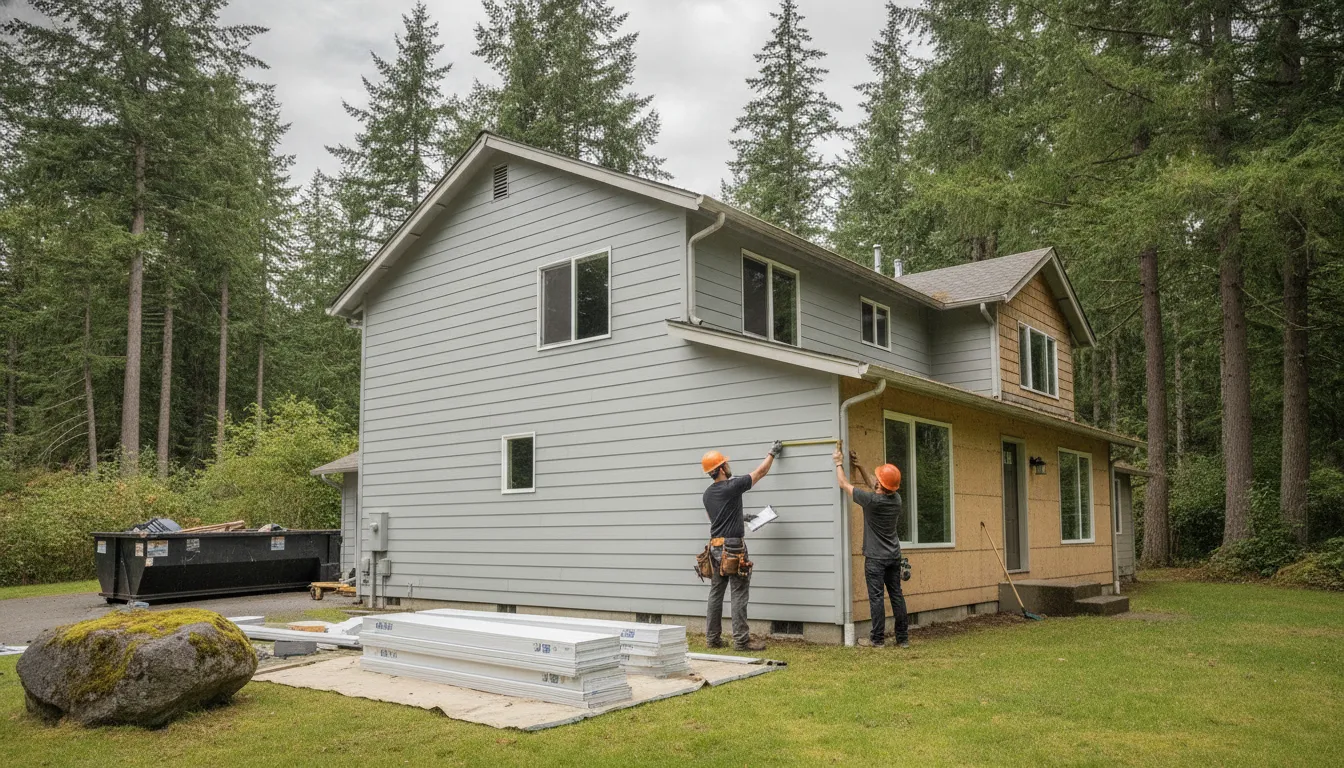
The cost to replace vinyl siding in Washington often stays between $3 and $12 per square foot for most Puget Sound homes. Expert siding jobs in this area cost about $12,221 on average, though your final price will depend on several local factors. According to NerdWallet, total costs usually fall between $6,369 and $18,274 based on house size, material grade, and labor. These prices cover tear-off, wall prep, and the setup of new panels that can last for 30 years or more while keeping your house dry. While house height and wall shape change your final quote, thick vinyl keeps your home safe from the heavy rain and wind found in Washington.
Knowing the exact breakdown of these costs helps you plan a budget that fits your needs. We will look at how local factors and material choices shape the Cost to replace vinyl siding in Washington: what to expect. This guide shows how to get the best value for your project as we explain.
Cost to replace vinyl siding in Washington: what to expect
Replacing the siding on your home is a big step. In Washington, the cost to re-side a house with vinyl depends on your town and home size. Most local projects range from $3 to $12 per square foot.
This price covers both the parts and the labor to put them up. For a standard home, the total often lands between $6,369 and $18,274. While these numbers give you a starting point, Puget Sound prices can shift based on local demand and city rules.
Puget Sound pricing trends
Living in areas like Seattle or Bellevue can change your final bill. Labor rates in the Puget Sound area are often higher than the US average. You also need to think about local fees and site access.
For example, some homes in Snohomish County might have other fees than those in King County. If you own a mobile home in Washington, you may need an alteration permit from the state. These small costs add up, so it is best to get a local quote early on.
Key factors for your project
The type of vinyl you pick is the biggest factor in the cost to replace vinyl siding. Standard panels are thin, but top options offer better strength. Panels that are at least 0.46 mm thick can last for more than 30 years.
Thicker siding costs more at first but saves money over time. Your home’s shape also matters. A house with many stories or complex corners takes more time to wrap. If your old siding is hard to remove, that labor will add to the price as well.
Long term value and savings
Many property managers and HOAs look for ways to manage these costs. We offer 0% APR financing to help make large siding jobs easier to handle. This lets you start the work now and pay over time.
Our team handles the whole siding replacement process without using outside help. This keeps the work good and the timeline clear for every unit in your project.
Vinyl siding has been a top choice for homes since the 1960s. It is well liked because it needs little care and lasts a long time. The National Institute of Standards and Technology says vinyl comes in many colors to fit any home.
Choosing a high grade product helps protect your home from the wet Washington weather. New siding also boosts your home’s value and curb appeal. This makes it a smart move if you plan to sell your home in the future.
What factors change a vinyl siding replacement estimate?
When you look for the cost to replace vinyl siding, the price can vary a lot. Most jobs fall in a wide range, but your home is unique. A small house in Redmond will cost less than a big home in Seattle. Knowing the main cost drivers helps you plan your budget.
Home size and wall area
The biggest factor is how many square feet of wall space your home has. This is not the same as the floor space inside. A tall home with high rooms has more wall area to cover. Crews measure your home in “squares,” where one square is 100 square feet. More squares mean you need more parts and more time for the work.
The number of floors also matters for the cost to re-side a house. Working on a second or third floor is slower and more risky. It needs ladders and extra gear to keep the crew safe. This added work will raise the total price compared to a one-story home.
Siding grade and labor needs
Vinyl siding comes in many colors and thickness levels for some needs. Thick boards cost more now but last much longer. For example, some thick boards can last 30 years or more. Thin boards might save money today, but they can crack or fade faster in the sun.
Labor costs also depend on the detail work. Trim around windows, doors, and corners takes more time to set up. If your home has a complex shape with many peaks, the siding replacement process takes longer. These small details add up and change the price on your final bid.
Site prep and local weather
Taking off your old siding is a big part of the job. If your current boards are old or heavy, the crew needs more time to pull them off and haul them away. Dumping fees for waste also change the price. Some jobs might find rot or water damage behind the old walls once they are open.
Local factors in the Puget Sound area play a role too. Homes in wet cities like Bellevue or Snohomish need strong wraps to block the rain. If your home is hard to reach with a truck, that can also raise the cost. State laws even say your crew must give you a detailed bid in writing for the work.
How much does siding cost by home size?
When you plan a home upgrade, the size of your house is the biggest factor for your budget. The cost to replace vinyl siding depends mostly on the total area of your exterior walls. Every project is unique. Most homeowners in the Puget Sound area can expect to pay between $3 and $12 per square foot for pro work. This price includes both the new parts and the labor to put them on your house.
Measuring your wall area
Many people assume that their home’s floor area is the same as their siding area. But these numbers are not the same. Floor area measures the space inside your house. Wall area measures the upright surface on the outside.
A two-story home with 2,000 square feet of floor space often has more wall area than a single-story house of the same size. This happens because the two-story house has taller walls that need more parts.
To get a rough idea of your needs, you can multiply your floor area by a factor of 1.2 or 1.5. This helps you find the total wall space that needs new siding. Before you start, you should understand the full siding replacement process so you know what to expect from your pro. Knowing how the work moves helps you prepare your yard and home for the crew’s start.
Project estimates by house size
The total price for your project will shift based on the size of your home and the quality of the vinyl panels you choose. Better panels are thicker and last longer, but they also cost more. Here is a look at how project costs often scale for different home sizes.
| Home Floor Area | Est. Wall Area | Estimated Cost Range |
|---|---|---|
| 1,500 sq. ft. | 1,800 – 2,200 sq. ft. | $5,400 – $26,400 |
| 2,000 sq. ft. | 2,400 – 3,000 sq. ft. | $7,200 – $36,000 |
| 2,500 sq. ft. | 3,000 – 3,750 sq. ft. | $9,000 – $45,000 |
These ranges cover the base price for parts and labor. If your home has a complex design with many corners or gables, your price might be at the higher end of the scale. Also, if your existing siding is hard to remove, labor costs will go up. Pros have to spend more time carefully peeling off the old layers without damaging the frame underneath.
Why these ranges vary
While size is the main driver, other things also change the final bill. The thickness of the vinyl matters a lot for both cost and life span. Standard panels are often 0.040 inches thick.
Premium options can reach 0.046 inches or more. Thicker panels resist wind and impact better, which is helpful for homes in Snohomish and King County. They also look more like natural wood because they have deeper textures and richer colors.
The style of the siding also plays a part. Common styles like lap siding or upright panels are usually the low-cost choice. If you want special looks like cedar shakes or scallops made of vinyl, you will likely pay more. These styles take more time to set up and use more parts per square foot.
Most homeowners pick a mix of styles to add visual interest to their front entry or gables. Finally, always make sure your pro is local and licensed. In Washington, the Department of Labor and Industries requires pros to give you a clear, written bid before they start the work. This protects you and ensures that the project stays on budget. It also helps you compare different pros to find the best fit for your home.
Vinyl siding vs. other replacement options
Vinyl vs. fiber cement
Vinyl siding is a top pick for homes in the Puget Sound area. It was first made in the 1960s to offer a range of colors and styles for many buildings. The National Institute of Standards and Technology reports that this type is now the most common finish for new homes. Many owners in Seattle and Bellevue compare it to fiber cement siding. These two types are both strong but have big gaps in price and look.
Fiber cement is heavy and looks more like real wood. It uses a mix of sand and wood fibers to make a thick panel. This makes it very tough but also more costly to set up on your home. The cost to replace vinyl siding is often much lower than fiber cement. Most local people find that vinyl gives them a great look for a fair price. It is also simple to find matching colors if you need to fix a small part later.
Choosing the right product for the Puget Sound
The wet weather in Western Washington can be hard on a home. Constant rain and damp air can lead to rot if your siding is not the right fit. High-grade vinyl panels that are thick can last for 30 years or more in our area. This makes it a smart pick for towns like Redmond or Kirkland where it rains often. Vinyl does not soak up water, so it will not swell or warp like wood can.
In Washington, you may need a special permit to change the siding on some homes. The Department of Labor and Industries says you need a permit for siding work on a mobile home. This rule is for any major change to the home’s outer walls. Working with a local pro helps you follow these state rules and get the job done right. They know which permits are needed for each city in the Puget Sound area.
Long-term value and care
One of the best things about vinyl is that it is easy to keep clean. You do not need to paint it like wood or fiber cement. A simple wash with a hose keeps it looking fresh for a long time. This saves you money on the cost to re-side a house over time. You will not have to pay for new paint or stain every few years. Most owners find this makes vinyl a better deal for the long run.
When you look at different types, think about the total cost for the life of the siding. Vinyl is very light, which makes it fast and easy for teams to install. This helps keep the siding replacement process simple and keeps labor costs down. In cities like Renton or Issaquah, many older homes have wood siding that is hard to care for. Modern vinyl comes in many shapes and colors to fit your home’s style. For most Puget Sound homes, vinyl offers the best mix of low price and long life.
What should HOAs and property managers budget for?
Managing large sites needs a clear plan for the siding replacement process. For HOAs in cities like Bellevue and Kirkland, the cost to replace vinyl siding depends on size. The scope of the whole complex also changes the price. Landmark Roofing & Siding works with local boards to plan these big tasks. We help you set a budget and offer financing options to keep units safe and looking good for a long time.
Phasing and project timing
Large sites often split work into parts to spread out the cost. You might choose to fix the siding on one building this year and another the next. This helps keep cash flow steady for the board. It also means less stress for the people living there. When you plan in steps, you must think about how the new walls will look next to the old ones.
Vinyl siding first became common in the 1960s because it comes in many colors and shapes. But colors can fade from the sun over time. If you wait too many years between steps, the new panels might not match the old ones. We help managers pick styles that will stay in stock for long plans. This keeps the whole complex looking the same even if the work takes a few years.
Selecting durable materials
The makeup of vinyl siding includes two main layers called the substrate and the capstock. The capstock is the outer part that faces the rain and wind. It is made to resist the wet weather we see in the Puget Sound area. Thick panels are often 0.46 mm or more. These thick panels can last for 30 years or even longer. This long life makes it a smart choice for teams that need to protect a big site.
When you look at the cost to re-side a house or a large building, high quality is key. The cost to replace vinyl siding is about $3 to $12 per square foot. Cheap panels might save money now, but they can crack or warp in just a few years. For HOAs, spending a bit more on thick siding is often the best move. It lowers the need for repairs and keeps the home value high for all owners.
Written bids and local rules
In Washington, state rules say that pros must give a written bid for siding work. This is vital for managers who must show their boards exactly where the money goes. A good bid should list the costs for labor, tools, and the siding itself. It should also cover any permits needed for the job. This clear list helps avoid extra fees once the crew starts to work.
Resident safety is another key part of the budget. We set up paths and signs to keep people away from the work site. This keeps the project moving fast and keeps everyone safe. By working with a local team that knows WA rules, you can stay on track. A full bid ensures that the board and the owners know what to expect. This leads to a smoother project with fewer surprises for the residents.
How can you control the cost without cutting corners?
You can lower the cost to re-side a house by making smart choices early in the process. While you should never skip needed repairs, you can save money by planning well and picking the right materials. In many cases, the way you manage the project matters as much as the products you buy.
Steps to manage your siding budget
The first step is to get a clear view of the work needed for your home. You want a firm plan so you do not run into surprise fees later. Also, look into financing options that allow you to pay for the work over time with low monthly rates.
- Get a written bid. In Washington, you should hire a pro who gives you a full written bid for the siding job.
- Check for damage. Fix any wood rot or moisture issues before you put up new panels to avoid big costs in the future.
- Choose standard styles. Using standard panel lengths and colors can help keep your material costs lower than custom orders.
- Plan the timing. Ask your contractor if there are times of year when they offer better rates for local jobs in the Puget Sound.
- Check the thickness. Pick a panel thickness that fits your budget but still offers a long lifespan for your home.
Balance price with long-term value
It is tempting to pick the lowest price for your project. But the siding replacement process has many steps that affect how long your walls will last. High-quality work helps protect your home from the wet weather in areas like Redmond and Bellevue.
Buying cheap materials or skipping a permit can cost more in the long run. If you own a mobile home in Washington, you may need an L&I permit to change your siding. Always work with a team that knows the local rules to keep your home safe and up to code.
What happens during a professional siding estimate?
An expert siding review is more than just a quick look at your house. It is a full check of your home’s exterior to find the real cost to re-side a house. Our team visits your home in Redmond or Bellevue to perform a deep check of your current siding and walls.
Check of current siding and walls
First, we look for signs of age or wear on your current siding. This includes checking for cracks, gaps, or panels that have pulled away from the wall. We also look for moisture or rot that might be hidden under the surface. This step is key because fixing wall rot now prevents bigger costs during the siding replacement process later on.
We then take exact sizes of your home’s exterior. We count the square feet of every wall, gable, and dormer to ensure our bid is right. In Washington, state law says pro teams must give you a full, written bid for this work per the Department of Labor & Industries. This protects you by making sure all costs are clear from the start.
Choosing your siding materials and colors
Once we know the size of the job, we talk about your goals for look and strength. Many people choose vinyl siding because it comes in many colors and styles to match any home. Standard panels are 12.5 feet long, but thick panels can last 30 years or more per data from NerdWallet. We show you samples of different styles so you can see how they will look on your house.
Our team also reviews your payment plans and our lifetime warranty. We handle the project from start to finish with our own in-house staff. This means you do not have to deal with outside crews or sudden delays. We will give you a full plan that lists every part of the work, including permits and clean-up.
Frequently Asked Questions
What is the average cost to replace vinyl siding?
The average cost to replace vinyl siding is about $12,221 for most homes. Prices usually fall between $6,369 and $18,274 according to data from NerdWallet. Most homeowners pay between $3 and $12 per square foot for the project. This price includes new panels and the work to install them. Your total bill will depend on your home size and the siding quality you choose for your Washington property.
How much does labor cost for vinyl siding replacement?
Labor costs make up a large part of your total siding bill. Professional work includes taking off the old boards and preparing the walls. It also covers the cost to put on new siding and haul away the waste. In Washington, the Department of Labor & Industries says contractors must give you a written bid. This bid should show the clear cost for all labor. Hiring a team that uses their own staff ensures the work is done right.
Does vinyl siding replacement cost depend on home size?
Yes, the size of your house is the biggest factor for the total cost. Larger homes need more materials and more hours of work to finish. A two-story home will often cost more than a single-story ranch because of the extra height. The shape of your home also matters. Houses with many corners or complex designs take longer to wrap than simple rectangular buildings. This means you will pay more for the extra time and materials needed to cover every wall perfectly.
Can I save money on vinyl siding replacement?
You can save money by choosing standard vinyl panels instead of premium thick options. Thicker panels often last longer but cost more upfront. Another way to save is to get a few bids from local pros to compare prices. Landmark Roofing & Siding offers financing options like 0% APR to help make the project more affordable. Planning your project during the off-season may lead to better rates. Always check for a lifetime warranty to protect your investment over the long term.
Ready to request a siding replacement estimate?
If you are comparing the cost to replace vinyl siding for a home, HOA, or managed property in the Puget Sound region. Landmark Roofing & Siding can help you move from rough numbers to a clear written scope. Our team can inspect the existing siding, review material options, identify moisture or trim issues, and explain financing and warranty details before work begins.
Request a siding replacement estimate from Landmark Roofing & Siding.