Date
Wed Jun 17Fiber cement siding pros and cons matter in the Puget Sound because rain eventually rots most wood siding while causing vinyl to warp or crack. Choosing the right siding for your Bellevue or Seattle home requires weighing the long-term strength against the upfront price of the job.
Ready to compare siding options for your home? Contact Landmark Roofing & Siding, a trusted Bellevue siding contractor, to request a siding consultation in the Puget Sound area.
Fiber cement siding pros and cons mean testing the upfront cost against the great strength needed for a home in the wet and rainy Puget Sound area climate. This siding stops rot, fire, and pests while staying flat without warping or swelling, which makes it a better choice than wood or vinyl for Seattle area houses. While the heavy boards make the work harder and more expensive, many manufacturers offer warranties that last up to 50 years, as shown by The Spruce. By picking this tough siding, you get a fire-proof shell that looks just like real wood but needs very little care and shields your home for many years.
Understanding how these boards perform in the Pacific Northwest helps you decide if they are the right fit for your next project. We have compiled a list of Fiber Cement Siding Pros and Cons for Puget Sound Homes to show you what to expect from this premium material. Here is how the main trade-offs break down.
Fiber Cement Siding Pros and Cons for Puget Sound Homes
Quick answer: Fiber cement siding pros and cons come down to durability, moisture resistance, repaintable curb appeal, installation cost, and maintenance. For Puget Sound homes, the material is often strongest when a homeowner wants a long-lasting siding system that can handle wet weather without the rot risk of wood or the warping risk of thin vinyl.
For Puget Sound homes, fiber cement siding offers strong moisture resistance, fire resistance, pest protection, and wood-like curb appeal. The trade-offs are higher material cost, heavier installation, and the need for careful flashing and clearance details so the system performs well in wet Washington weather.
Picking the right siding for your home in the Puget Sound region is a big choice. You need a mix that can stand up to damp air and wet soil. Fiber cement is a strong mix of sand, cement, and wood fibers.
These boards look like wood but last much longer. Knowing the fiber cement siding pros and cons will help you see if they fit your home and your plan.
Top Pros for Local Owners
One of the best things about these boards is how well they hold up to rot and pests. In wet towns like Renton or Bellevue, wood can rot fast. Fiber cement does not rot, warp, or swell when it gets wet.
It is also a fire-resistant material that will not burn when it meets flames. This adds a layer of safety to your house.
This siding also gives your home a clean look. You can get boards that look just like real wood lap siding. The paint stays on well, too.
Many factory-applied finishes have a promise that lasts for 15 years. This means you will spend less time and money on upkeep over the years. You can see more about these looks on our page for James Hardie fiber cement siding.
Cons to Keep in Mind
While the pros are great, there are some things to think about. These boards are very heavy. They can weigh 300 pounds for every 100 square feet.
This weight means you need a professional crew to put them on your home. It is not a task you should do on your own. You also need good ways to drain water and keep it out of your walls.
The cost to buy and set up these boards can be more than vinyl. But the long life of the boards often makes up for the price.
If you want to plan your budget, you can use a fiber cement siding cost factors tool to get a clear idea of the price. This will help you see the value of the work over many years.
The Puget Sound Plus
In our part of the state, we have a lot of rain and moss. Fiber cement is a top choice because it keeps its shape and strength in the damp. It also handles needles from pine trees well.
As a James Hardie Preferred contractor, Landmark knows how to set up these boards for local weather. We make sure every board is sealed the right way to keep your home safe for many years.
What are the biggest advantages of fiber cement siding?
Quick answer: The biggest advantages of fiber cement siding are moisture resistance, fire resistance, pest resistance, paint flexibility, and strong curb appeal. It gives Washington homeowners a durable exterior that can look like wood while standing up better to rain, insects, and seasonal temperature swings.
The biggest advantages of fiber cement siding are durability, moisture resistance, pest resistance, fire resistance, and design flexibility. For Redmond, Bellevue, Seattle, and nearby Puget Sound homes, those strengths matter because siding must handle rain, moss, wind exposure, and seasonal dampness without swelling or rotting.
Fiber cement siding is a top choice for homes in the Puget Sound area. Many local homeowners pick it because it lasts a long time and looks great. It blends cement, sand, and wood fibers to make a very strong board for the outside of your house. At Landmark Roofing & Siding, we find that James Hardie fiber cement siding is the best fit for our wet climate.
Built for the Pacific Northwest climate
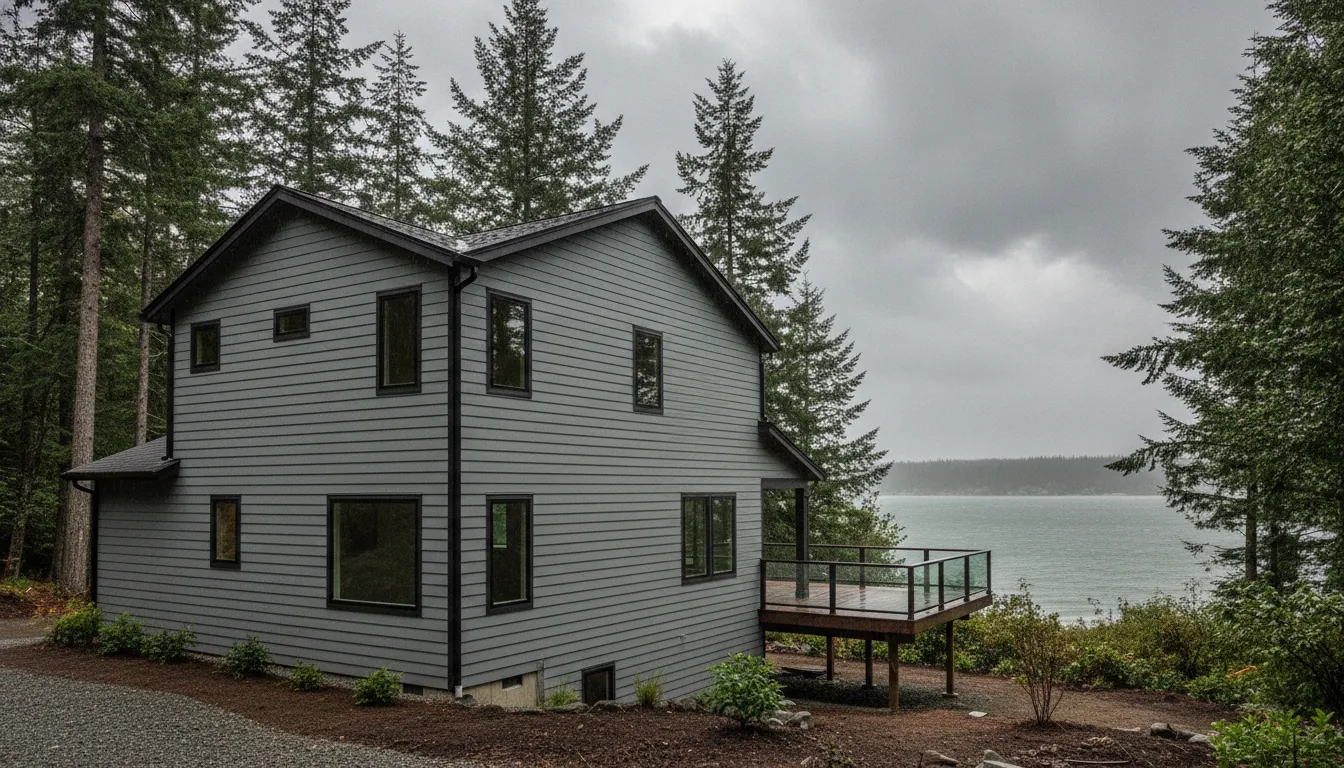
One of the best things about this siding is how it handles rain. In cities like Seattle and Bellevue, wood siding often rots or warps because of the damp air. Fiber cement siding is different because it does not swell or crack when it gets wet. It is made to stand up to the storms we often see in Western Washington. This means your home stays safe and dry for many years to come.
The material also stays stable as the weather changes. It does not shrink or grow much when the air gets hot or cold. This helps keep the paint or finish from peeling off the boards. If you live in Redmond or Kirkland, you know how much moisture can hurt a house. Hiring the right pro ensures your home is ready for the local weather in every season.
High resistance to fire and pests
Safety is a major goal for any homeowner. Fiber cement siding is a non-combustible material that helps protect your house from flames. It does not catch fire or add fuel to a blaze like wood or vinyl might. According to the Pacific Northwest National Laboratory, using such materials can make a wall much safer. This is very helpful for homes near wooded areas in places like Snoqualmie or Issaquah.
Pests are another common problem that this siding solves. Termites and woodpeckers cannot eat through the dense mix of cement and sand. It gives strong protection against insects and damage from hail or wind. This long life means you spend less time and money on repairs over the years. You can rest easy knowing your walls are built to last.
Curb appeal and long-term value
Most homeowners want a house that looks beautiful from the street. Fiber cement boards can look just like real wood lap siding. They have deep grain patterns and come in many colors that stay bright for a long time. This high-end look can help increase the resale value of your property. Many HOAs in Sammamish and Woodinville approve of it because it keeps the whole neighborhood looking the same.
The long-term value is also tied to how little work it needs. You do not have to paint it as often as wood. Factory finishes can last for 15 years before they need a new coat. We stand behind our work with a Lifetime Craftsmanship Warranty to give you peace of mind. Putting money into a quality product now saves you from big costs and stress later on.
What are the main drawbacks to consider?
Quick answer: The main drawbacks of fiber cement siding are higher installation cost, heavy material weight, repainting needs, and the importance of correct flashing. It performs well only when installed by a siding contractor who understands moisture control, clearances, and manufacturer specifications.
The main drawbacks of fiber cement siding are higher upfront cost, heavy boards, more complex installation, and long-term paint maintenance. These issues do not make fiber cement a poor choice, but they do mean the project needs an experienced installer and a realistic budget.
Fiber cement is a tough choice for homeowners in the Puget Sound area. It handles our rain well, but it is not a perfect fit for every house or budget. You should weigh the fiber cement siding pros and cons before you pick your next outside look. While it lasts a long time, the trade-offs are real and deserve a close look.
High weight and labor costs
Fiber cement is much denser than vinyl or wood. It weighs about 300 pounds for every 100 square feet of wall space. This mass makes the boards very strong, but it also makes them hard to move and cut. Workers often need special tools like diamond-tipped saw blades to get a clean edge.
Because the product is so heavy, you cannot install it alone. It takes a larger crew and more hours to put up than lighter siding. This extra work means you will see higher fiber cement siding cost factors on your final bill. You must also make sure your home’s frame can hold the extra weight safely in places like Redmond or Kirkland.
Long term paint and finish care
Most fiber cement comes with a factory finish that looks great for years. These coatings often have a 15-year warranty against peeling or chips. But even the best paint does not last forever. If you buy boards painted on the job site, you may need to repaint every five to ten years to keep them fresh.
Keeping the siding clean is also part of the job. Dirt and mold can build up in our damp Puget Sound climate. You will need to wash the walls once a year with a soft brush and a hose. This keeps the colors bright and stops stains from setting in. While it needs less care than wood, it is not a product you can just ignore for decades.
Need for expert flashing and drainage
Water is the main foe for any siding. Fiber cement needs precise gaps and metal flashing to stay dry. Builders must leave small spaces at the ends of boards so the house can breathe. They also need to put drainage systems behind the wall to stop rot. These steps are a must to keep the inner frame of your home safe from the rain.
If the gaps are too tight or the flashing is wrong, water can get trapped. Fiber cement can hold more moisture than brick or vinyl if it stays wet for too long. This is why you should always vet fiber cement siding contractors before you start your project in Bellevue or Issaquah. A bad job can lead to mold and big repair bills down the road.
Tips for long-term care
To keep your siding in top shape for decades, you should follow a simple care plan. While fiber cement is tough, a little work goes a long way in the wet weather of Snohomish or Everett.
- Wash your siding once a year with a garden hose and a soft brush to remove dirt.
- Check the caulking around windows and doors every few years for any cracks.
- Keep plants and shrubs trimmed back at least six inches from the walls.
- Ensure your gutters are clear so water does not splash onto the siding boards.
How does fiber cement compare with other siding options?
Quick answer: Fiber cement usually costs more than vinyl but offers better impact resistance, repaintability, and a more substantial look. Compared with wood, it typically needs less rot repair. Compared with engineered wood or metal, the best choice depends on budget, style, exposure, and maintenance expectations.
Compared with vinyl, wood, and engineered wood, fiber cement usually offers better fire resistance, stronger moisture performance, and a more premium appearance. Vinyl is often cheaper, wood can look traditional, and engineered wood is lighter, but fiber cement is often the better long-term fit for wet Puget Sound conditions.
Choosing the right siding for your home in the Puget Sound area is a big choice. You must look at how each type stands up to rain, wind, and time. Fiber cement is a top choice, but you should see how it stacks up against other common types like vinyl or wood.
Checking strength and moisture care
In our wet climate, moisture is the main threat to your house. Wood siding can rot or swell if you do not seal it well every few years. Fiber cement does not have these issues because it is made of cement, sand, and wood fibers. This mix helps it resist rot and bugs, which keeps your home safe for many years.
Vinyl is another common pick because it costs less and sheds water well. But vinyl can crack in the cold or melt if it gets too hot. Fiber cement stays stable and does not warp or crack like wood or vinyl often do. If you want the look of wood without the risk, James Hardie fiber cement siding is a great path to take.
Looking at care and fire safety
Fire safety is a huge plus for fiber cement. It is a type that does not burn when it touches a flame. This helps protect your home more than vinyl or wood, which can catch fire or melt fast. Experts suggest using fire-resistant siding to boost your home’s safety.
Upkeep also varies by type. Wood needs paint every three to five years to stay in good shape. Vinyl needs little care but can be hard to fix if a piece breaks. Fiber cement needs some cleaning, but factory-painted coatings can last up to 15 years. Using a certified fiber cement siding installer will help you get the best results.
Look and home value
Fiber cement is a top pick because it looks just like real wood. It has deep grooves and a clean look that gives your home great curb appeal. This can help raise the value of your home in towns like Bellevue or Kirkland. Unlike vinyl, which can look like plastic, fiber cement looks thick and high-end.
Engineered wood is another option that looks like the real thing. It is lighter than fiber cement and easier to put up. But it may still face issues with moisture if the edges are not sealed. Fiber cement is more durable in the long run for the Pacific Northwest. Proper setup will ensure your home stays dry and looks great for a long time.
The table below shows how fiber cement compares to other common siding types. Use this to help you pick the best fit for your home and budget.
| Type | Moisture | Upkeep | Fire | Install |
|---|---|---|---|---|
| Fiber cement. | High. | Low. | Great. | Hard. |
| Vinyl. | High. | Very low. | Poor. | Easy. |
| Wood. | Low. | High. | Poor. | Medium. |
| Stucco. | Medium. | Low. | Great. | Hard. |
Need help weighing material choices? Review Landmark’s James Hardie siding services or request guidance from a local siding specialist.
How to decide if fiber cement is right for your home
Quick answer: Fiber cement is a strong fit when you plan to stay in the home, want a wood-look exterior, and are willing to pay for skilled installation. It may be less attractive if the project budget is tight or if easy, low-cost replacement is the highest priority.
Fiber cement siding is usually right for homeowners who want a durable, low-maintenance exterior and plan to stay in the home long enough to benefit from the investment. It is especially useful when existing siding shows rot, swelling, pest damage, repeated paint failure, or weather exposure.
Picking a siding material is a big choice for any house owner. You must think about the local weather, your plan for the work, and how much time you want to spend on care. While looking at fiber cement siding pros and cons, use these steps to see if it fits your needs.
Check current siding damage
Start by looking at your old siding for signs of rot or mold. In wet areas like Seattle or Bellevue, wood boards often swell or crack from moisture. Fiber cement is a top choice because it is highly resistant to rot and moisture damage. If your current walls show clear signs of water harm, a tough new layer may be the best move for your home.
Think about your budget
Fiber cement costs more than vinyl because of the materials used and the complex work needed to set it up. It is dense and heavy, which means it takes more skill and time to install correctly. You should use a fiber cement siding cost factors tool to see how this fits your total plan. While the start price is higher, the long life of the boards often adds value over time.
Look at your style goals
This material can look like real wood lap siding or even cedar shingles. It offers a clean, uniform look that many local groups and homeowners associations like. If you want a classic look without the risk of fire or pests, this is a strong pick. These boards are non-combustible and do not ignite when exposed to fire, which adds a layer of safety to your design.
- Spot signs of wear. Walk around your home and look for holes, cracks, or soft spots on your old siding. If you see deep rot or pests like termites, you may need a material that resists these common issues.
- Map out your spending. Know that high-quality boards and expert labor will cost more upfront. Get a clear bid that includes taking off your old siding and fixing any hidden water damage in the walls.
- Pick your dream look. Decide if you want a wood grain or smooth finish. Think about colors that fit your street and see if factory-applied paint with a long warranty is the right path for you.
- Plan for upkeep. Be honest about how much work you want to do. While this material is very tough, you will still need to clean it once or twice a year to keep it looking new.
- Get a pro to look. Ask a certified fiber cement siding installer to check your home. They can find wall issues that you might miss and give you a contractor price for the full project.
Why installation quality matters in the Puget Sound climate
Quick answer: Installation quality matters because Puget Sound siding must manage wind-driven rain, shaded walls, roof runoff, and damp seasonal conditions. Even a durable product can fail early if clearances, flashing, seams, and wall preparation are handled poorly.
Installation quality matters because fiber cement performs only as well as the water-management system behind it. Proper flashing, clearances, sealing, fasteners, and ventilation help keep rain out of the wall assembly, which is critical for homes across Redmond, Kirkland, Seattle, and surrounding Puget Sound communities.
Preparing your home for a fresh start
The wet weather in Seattle and Tacoma can be hard on any home. When you look at the fiber cement siding pros and cons, the way it is put in matters most. While there are many fiber cement siding cost factors, poor work can lead to big problems later.
A good job starts with a clean slate by taking off all old boards and trim. This lets a crew find and fix any rot or moisture issues in the walls before the new siding goes up. In towns like Sammamish and Issaquah, hidden water damage is a common find during a tear-off.
When you start fresh, you can be sure the base of your home is solid. This is why pro crews do not just put new boards over old ones. Removing the old layers lets them see the house wrap and the wood beneath.
If they find damp spots, they can dry them out and replace any soft wood. This prep work is the only way to make sure your new siding stays in top shape for years.
Mastering moisture control
Fiber cement is very tough, but it still needs help to shed water. Proper building rules say you must have drainage behind the cladding to keep the wall structure safe.
This air gap lets any dampness dry out fast. Without it, water could get trapped and cause mold or decay in your Puget Sound home. This is a big risk in rainy places like Bothell or Renton where the air is often damp.
A rainscreen system is one way to create this needed gap. It acts as a back-up plan for your home. Even if a small amount of rain gets past the boards, the gap lets it run down and out.
This keeps your wall studs dry and prevents costly repairs later. Good flashing around windows and doors also works to keep rain from getting into small gaps. These thin metal strips guide water away from the house frame and down to the ground.
Sealing the home envelope
Every hole in your siding is a spot where water or air can leak in. This includes vents, pipes, and light fixtures. To vet fiber cement siding contractors in Redmond, ask how they seal these spots.
They should use high-quality caulk and metal trim to block the wind and rain. In Bellevue and Kirkland, wind-driven rain can push into any unsealed crack. This careful work keeps your home energy bill low and your inside rooms nice all year long.
A tight seal also keeps pests like bugs and mice out of your walls. Fiber cement is great because it does not rot or attract pests on its own. But gaps around a window or a door are still an open door for critters.
A professional crew will check every inch of the home. They use the best tools and parts to close every gap. This level of care is what sets a master crew apart from a quick fix.
Frequently Asked Questions
These quick answers cover the questions Puget Sound homeowners most often ask before choosing fiber cement siding. Use them to compare maintenance, cost, pest protection, repainting, and energy performance before scheduling a professional siding consultation.
Can fiber cement siding be repainted?
Yes, you can repaint fiber cement siding if you want to change the look of your home. If your boards have a shop finish, the paint will likely stay in good shape for 15 years. If the siding was painted at your house, you may need to repaint it every five to ten years. Using a high-grade paint will help the color stay bright and keep the boards safe from the sun.
Does fiber cement siding protect against termites and pests?
Fiber cement siding is a great way to keep pests away from your house. Unlike real wood, these boards are made of cement and sand. This means bugs like termites cannot eat them or live inside them. According to Landmark Roofing & Siding, this siding is very strong against pests and rot. This helps keep your home safe from the damage that wood siding often faces in the Puget Sound.
Why is fiber cement siding more expensive to install?
Fiber cement costs more to install because it is a very heavy and dense board. One hundred square feet of siding can weigh up to 300 pounds. A team needs more workers and tools to lift each piece into place. It also needs special blades to cut the cement mix without breaking it. While the price is higher than vinyl, experts say its long life and strength make it a good deal over time.
Is fiber cement siding energy efficient?
Fiber cement siding is not a top choice for saving energy on its own. The boards are very thick, but they do not block heat as well as siding with foam on the back. To keep your home warm in the cold Puget Sound winters, you should have a professional crew put a good warm layer behind the boards. A field report shows that this siding works best when paired with other ways to save heat.
Ready to request a siding consultation?
If you want durable siding that fits Puget Sound weather, the next step is a local inspection and product discussion. Landmark Roofing & Siding can review your current exterior, explain fiber cement options, and help you compare cost, appearance, and long-term performance.
Waiting to fix old siding can lead to costly water damage and mold in our damp Puget Sound air. If you let cracks or gaps stay open, you risk rot in your home’s frame. Starting your project now protects your home’s value and ensures your walls stay dry before the next rainy season begins. Our team can help you pick the right colors and textures to give your house a fresh look that lasts for decades. We are a James Hardie Preferred Contractor with twenty years of work in your local area. We know how to handle the needs of homes in cities like Bellevue and Kirkland. You can trust our crew to do the job right the first time with great products and care.
Ready to request a siding consultation? Contact us to request a siding consultation.