Date
Fri Aug 21Seattle Roofing Company: How to Choose the Right One
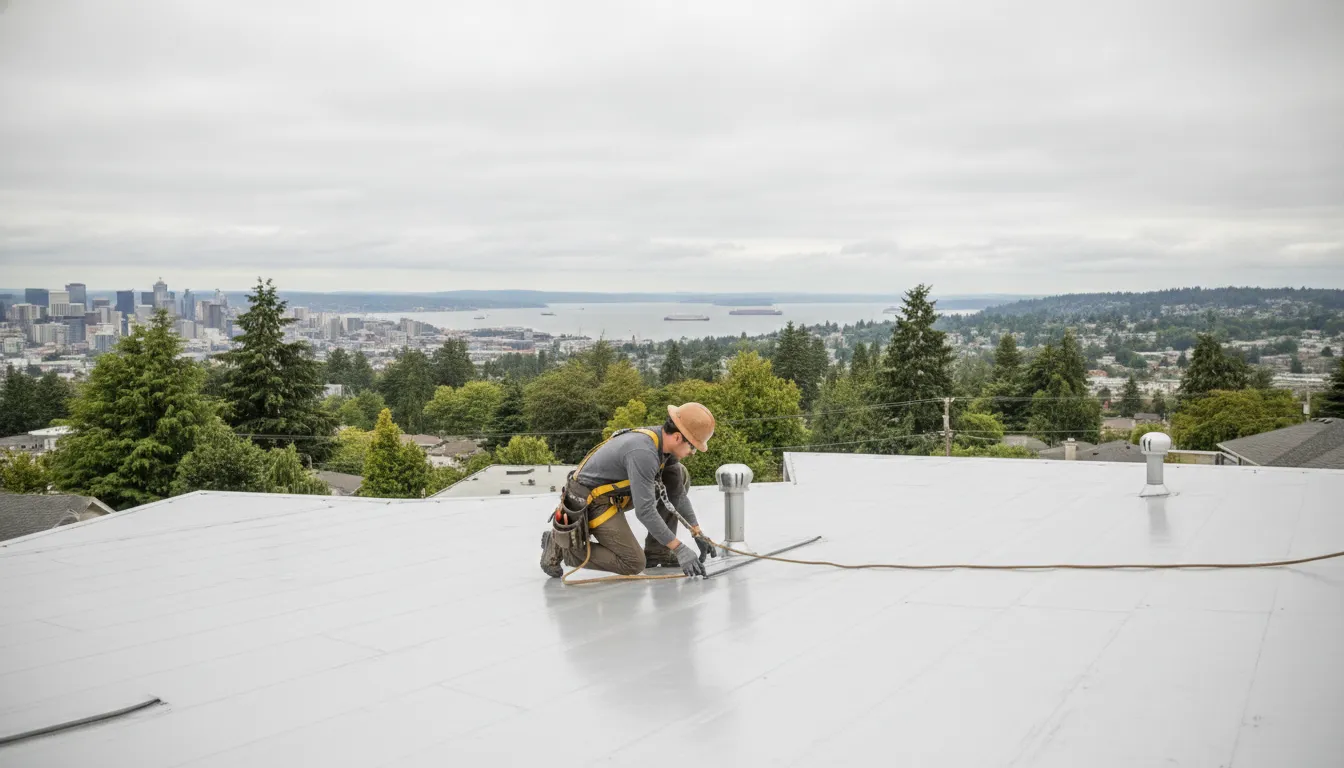
Choosing a Seattle roofing company requires more than comparing the lowest estimate. Look at documentation, workmanship, and follow-through. Seattle homeowners should compare Washington registration, insurance, local weather experience, the written scope, reviews, and warranty terms before authorizing a repair or replacement.
Request a roofing inspection from Landmark Roofing & Siding before comparing proposals.
The right Seattle roofing company can show current Washington registration, clear insurance information, a detailed scope of work, relevant local reviews, and understandable warranty terms. Compare those details with the written estimate. Do not judge the contractor by advertised price alone. Clear records keep responsibilities defined from inspection through cleanup and follow-up.
Landmark Roofing & Siding has served the Puget Sound region since 2005, according to its company information. The same practical questions should be asked of any contractor you consider. Start with records you can verify, then evaluate how clearly the company explains your roof’s condition and proposed work.
What Should You Look For in a Seattle Roofing Company?
Look for a Seattle roofing company that combines verifiable Washington registration and current insurance with relevant Puget Sound experience. The contractor should provide a detailed proposal, consistent reviews, clear communication, and understandable warranty terms. It should explain what the roof needs and who remains accountable after you sign.
A dependable contractor makes the hiring decision easier by giving you information you can check. Use the same checklist for every company so a polished sales presentation does not outweigh missing details.
Verify Washington registration
Start with the Washington Department of Labor & Industries registration record. The Washington L&I contractor registration page explains the registration requirement. The state’s contractor verification tool lets you check the business you are considering.
Match the legal business name on the record to the name on the estimate and contract. Check that the registration is current. Landmark Roofing & Siding lists Washington registration number LANDMRS880BS in its company information, but homeowners should verify the current record directly before signing.
Ask for current insurance information
Request proof of current liability insurance and ask what the policy covers during your project. Registration and insurance are related, but they are not interchangeable. Ask who supervises the work and who is responsible for property damage, injury, cleanup, or workmanship concerns if another crew is involved.
Review the proposal and warranty together
A useful proposal should identify materials, flashing, ventilation, tear-off or repair work, site protection, disposal, cleanup, payment terms, schedule assumptions, exclusions, and warranty coverage. Ask how change orders will be documented if concealed conditions appear. A low bid may look attractive because it leaves out work another contractor included.
Read the workmanship warranty before signing. Separate contractor workmanship coverage from the manufacturer’s product warranty. Ask how long each lasts, what exclusions apply, how to request service, and whether transfer rules apply. A promise that only says “lifetime” is not enough detail to compare.
How Can You Verify Licensing and Insurance in Washington?
Verify a Seattle roofing company’s Washington registration through L&I before signing. Ask for current liability insurance documentation, confirm the legal business name matches the proposal, and clarify responsibility for employees or subcontractors. Registration and insurance support accountability, but you still need a clear contract and written scope.
A careful hiring process begins with documents, not a handshake. Washington’s contractor laws and rules explain the registration framework, including registration-related bond and liability insurance requirements. Review the state’s contractor laws and rules for official information.
Questions to ask before work begins
- What is the company’s current Washington registration number?
- Does the registration record show the same legal business name as the proposal?
- Can I review current proof of liability insurance?
- Will employees or subcontractors perform the work?
- Who supervises the crew and handles workmanship concerns?
- Who is responsible for site protection, disposal, and final cleanup?
Clear answers support accountability. Evasive replies, pressure to sign immediately, mismatched business names, expired paperwork, or refusal to identify the responsible party are reasons to keep comparing contractors. A professional should give you time to review the documents.
Why Does Puget Sound Experience Matter for Seattle Roofs?
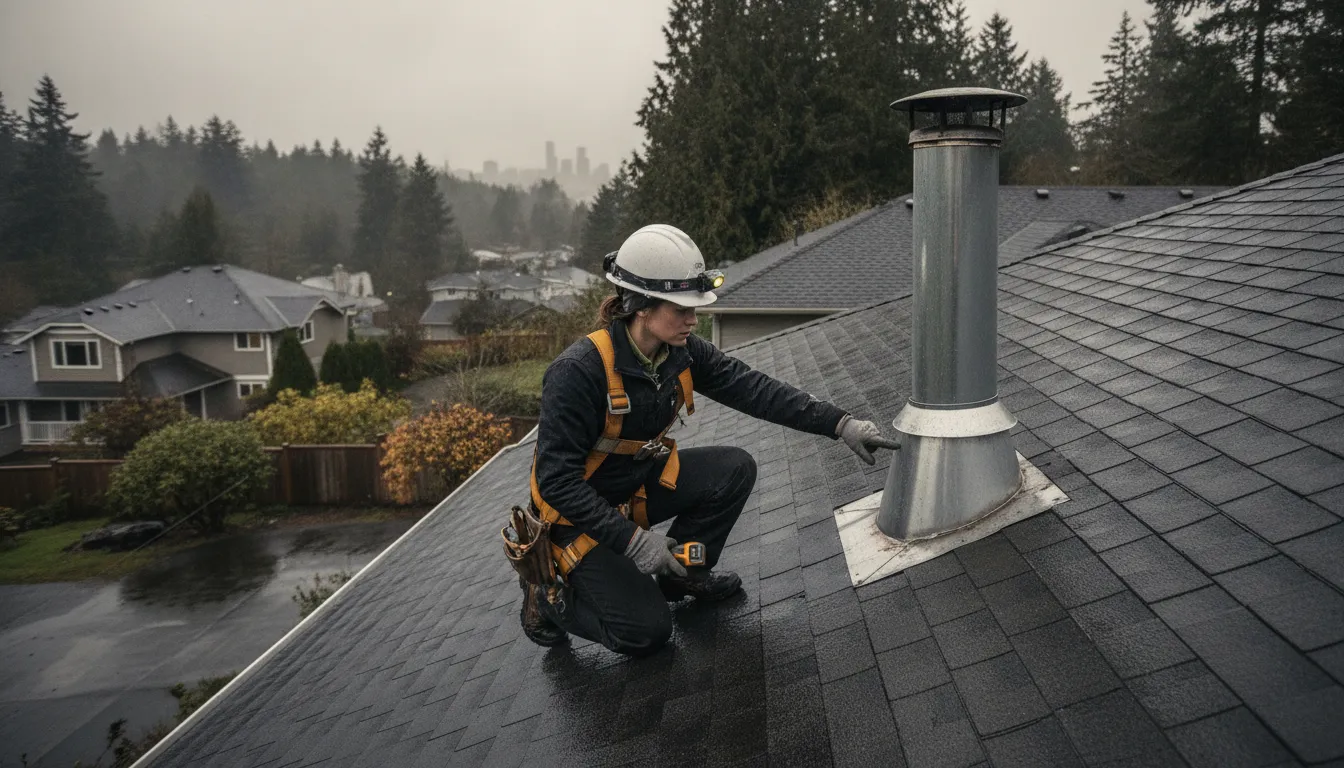
Puget Sound experience matters because Seattle roofs face frequent rain, moss, algae, and moisture at vulnerable details. A local roofer should explain how drainage, flashing, ventilation, roof slope, and maintenance affect the recommendation for your home instead of applying a generic repair or replacement plan.
A Seattle roof works through a recurring pattern of rain and moisture. Those conditions can expose weak flashing, blocked drainage, damaged sealants, and poorly protected transitions. Moss and algae can also make maintenance more important on shaded or moisture-prone roof sections.
Ask how the inspection addresses water movement
Rainwater needs a clear path away from shingles, roof valleys, penetrations, chimneys, skylights, and wall transitions. Ask what was found at those details and how the proposed work addresses the condition. If the source of a leak is unclear, the proposal should say what additional investigation may be needed.
Drainage and flashing should be discussed together. A new roof cannot solve a drainage problem if water still backs up at a gutter, valley, or roof edge. The estimate should identify included repairs or improvements and distinguish them from optional recommendations.
Discuss moss, ventilation, and moisture
Moss can retain moisture and affect roofing materials. Algae may be mostly cosmetic, but the right response depends on the material, age, slope, drainage, and current damage. Ventilation should be considered with insulation, attic moisture, and the roof assembly. Ask the roofer to explain what was observed and why the proposed approach fits the home.
For related guidance, review Landmark’s Seattle roof leak repair information and Seattle roof preparation guide. A local history claim matters most when the contractor can connect it to specific answers about Seattle-area roof conditions.
How Do Reviews Help You Compare Local Roofers?
Reviews help compare local roofers when you look for repeated details about communication, workmanship, cleanup, schedule changes, and follow-through. Give more weight to project-specific accounts and professional responses to concerns than to a star rating or a large review count without context.
A high review count can get your attention, but the details inside reviews are more useful than the number beside a star rating. Look for homeowners describing work similar to yours, such as leak repair, roof replacement, or repairs around siding and roof edges.
Look for patterns, not isolated praise
Search for repeated comments about communication. Do reviewers say the company explained the scope, answered questions, and kept them informed when plans changed? Roofing work can uncover conditions that were not visible during the first inspection. Reviews that mention clear change-order explanations can show how a contractor handles unexpected work.
Project care matters too. Look for comments about arrival times, protection of landscaping, daily cleanup, removal of debris, and the condition of the property after the crew leaves. Read how the company responds to concerns. A professional response should address the issue without arguing and explain how the company investigated it.
- Does the review describe a project similar to yours?
- Does it mention communication before, during, and after the work?
- Are jobsite protection and cleanup discussed?
- Does the reviewer explain how added work was handled?
- Does the company respond professionally to criticism?
- Do multiple reviews show the same strengths or problems?
What Separates a Trusted Seattle Roofing Company From a Low Bid?
A trusted Seattle roofing company separates its proposal from a low bid by documenting the scope, materials, installation responsibility, cleanup, change-order process, and warranty terms. Compare these commitments line by line. A lower total is not a savings if key work or accountability has been left out.
Get a written roofing estimate from Landmark Roofing & Siding before you choose a contractor.
| Factor | Stronger proposal | Warning sign |
|---|---|---|
| Scope | Connects observed conditions to materials, flashing, ventilation, disposal, cleanup, and exclusions. | Uses a vague phrase such as “replace roof” without explaining the work. |
| Crew responsibility | Identifies who manages installation and handles questions or concerns. | Cannot explain who performs the work or who remains accountable. |
| Materials | Names proposed materials and explains important installation details. | Lists a product without methods, allowances, or approval rules for substitutions. |
| Warranty | States coverage, exclusions, duration, service process, and transfer terms. | Promises lifetime protection without defining what it covers. |
| Communication | Documents changes and answers questions before work proceeds. | Pressures you to decide quickly or relies on verbal promises. |
Landmark’s certifications information and warranty information give homeowners published details to review. Consider those pages alongside the current proposal and contract. No credential replaces a detailed scope, a qualified inspection, or clear communication.
What Happens During a Professional Roofing Estimate?
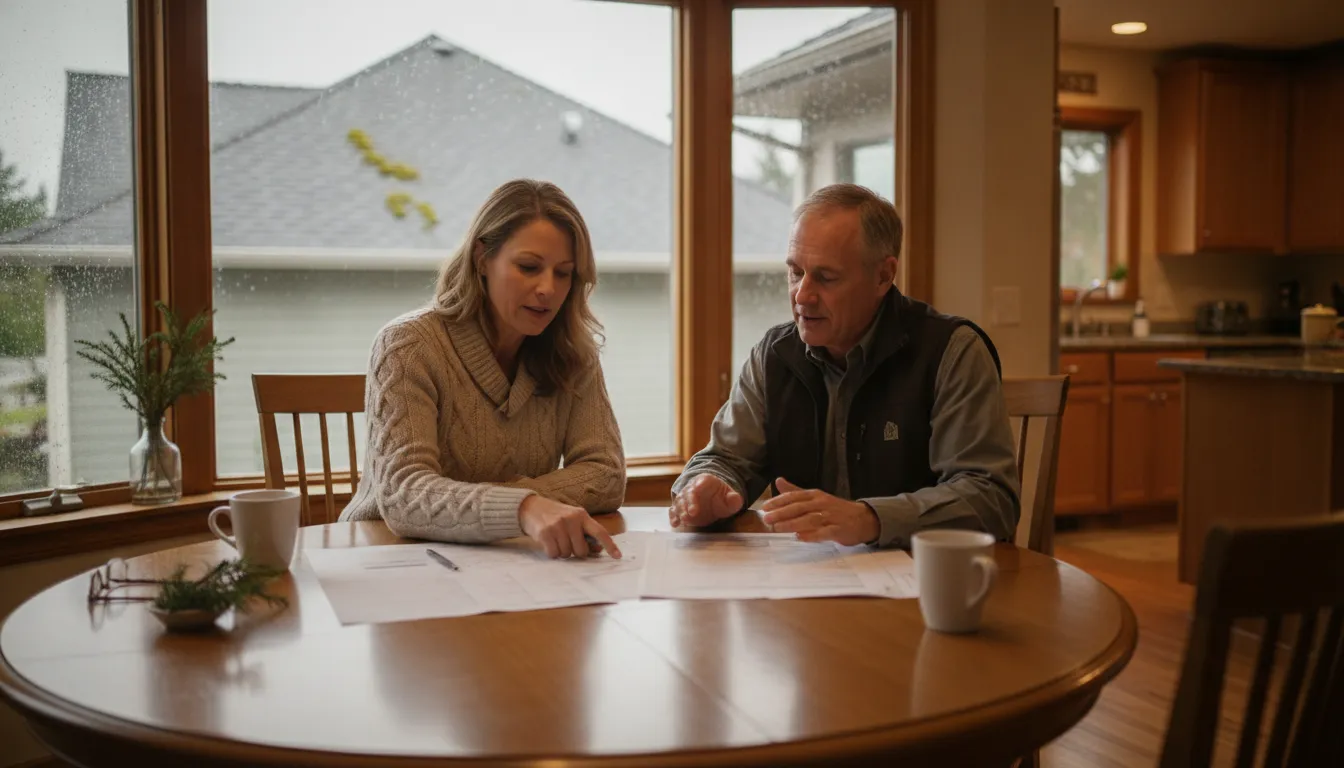
A professional roofing estimate should document the roof’s condition and likely causes of damage. It should list proposed materials and methods, ventilation and flashing work, cleanup, schedule assumptions, payment terms, exclusions, and warranty coverage. Use the written scope to compare contractors before authorizing work.
An estimate should do more than attach a number to your home. It should explain what the contractor observed, why work may be needed, and how the proposed solution addresses the roof’s condition. Use the appointment to gather information, and do not feel pressured to decide immediately.
What a thorough estimate should cover
- Condition: The contractor explains visible wear, leaks, damaged materials, flashing concerns, ventilation issues, or other observed conditions.
- Scope: The proposal identifies repair or replacement work, tear-off assumptions, materials, flashing, ventilation, site protection, disposal, and cleanup.
- Timing: The contractor explains scheduling assumptions, weather contingencies, expected duration, and how delays will be communicated.
- Cost: The written estimate identifies the total, payment terms, allowances, exclusions, and how additional work will be approved.
- Protection: The contract explains workmanship coverage, product warranty information, service requests, and any transfer rules.
Compare estimates by matching these categories. If one proposal is far lower, ask whether it includes the same tear-off, flashing, ventilation, cleanup, disposal, and warranty responsibilities. A direct question now is easier than resolving an unclear change order after work begins.
For a related checklist, read what to expect in a professional roofing estimate. A reliable contractor should explain the condition found, proposed scope, materials, schedule, cleanup, and warranty terms in language you can understand.
Frequently Asked Questions
How can I verify a roofing contractor’s Washington registration?
Search the contractor in the Washington L&I registration database before signing. Use the business name or registration number supplied by the contractor, then confirm that the legal name matches the proposal. Save the current result with your project records.
What insurance should I ask a roofing contractor to provide?
Ask for current proof of liability insurance and clarify how coverage applies to your project. If subcontractors will be involved, ask who employs them, who insures their work, and who is responsible for damage, injury, or workmanship concerns.
Why does Puget Sound experience matter for a Seattle roof?
Local experience helps a contractor account for frequent rain, moss, algae, drainage, flashing, ventilation, and moisture around roof details. Ask the company to connect its recommendation to conditions observed on your home.
What should a roofing estimate include?
A useful estimate should explain the roof condition, proposed materials, flashing and ventilation work, removal and cleanup, schedule assumptions, payment terms, exclusions, change orders, and warranty coverage. If an item is vague, ask for clarification before comparing totals.
How should I compare roofing company reviews?
Look for patterns in reviews from homeowners who had comparable work completed. Pay attention to communication, workmanship, cleanup, schedule changes, and follow-through. A large review count alone does not establish quality.
Ready to Choose the Right Seattle Roofing Company?
A careful inspection can help you understand your roof’s condition and compare proposals with better information. Landmark Roofing & Siding serves homeowners across Seattle and surrounding Puget Sound communities. Review published service information, ask focused questions, and request a written scope before approving work.