Date
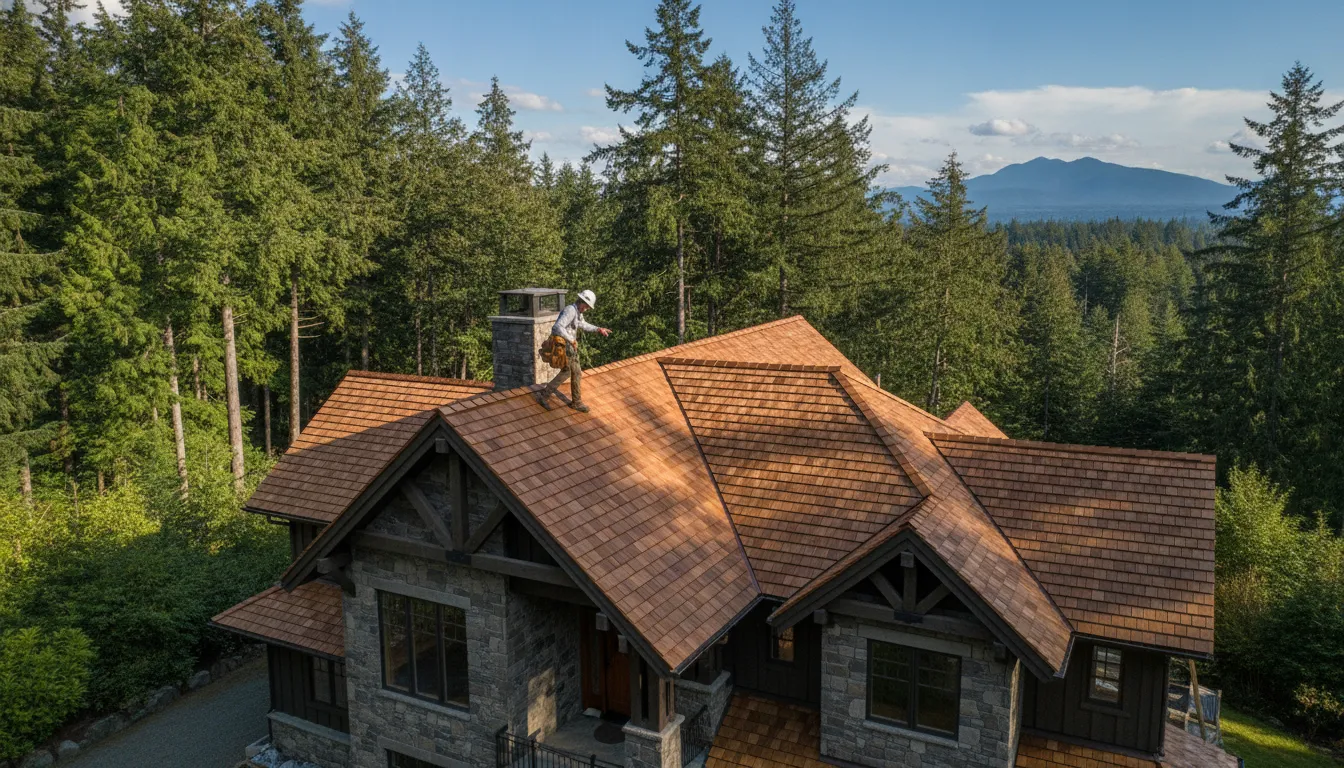
Tue Aug 18Roofing choices in the Puget Sound need to account for more than curb appeal. Rain, moss, falling needles, and the quality of installation all affect how a roof performs over time. Cedar is often considered for its warm, textured appearance, but it also requires a maintenance plan that may not suit every home.
Request a roofing assessment today to see whether cedar is right for your home.
Cedar shake shingles are thicker, textured wood roofing pieces commonly split from cedar logs. With proper maintenance, a cedar shake roof can last about 30 to 50 years, while offering natural insulation and a distinctive appearance. The tradeoffs are higher upfront cost, more demanding upkeep, and the need to evaluate fire-retardant treatment and installation details.
This guide explains how cedar shakes differ from machine-cut shingles, what influences their lifespan and cost, and how they compare with asphalt and other roofing materials. Start with the material itself, because its construction shapes nearly every performance and maintenance decision that follows.
What Are Cedar Shake Shingles?
Cedar shake shingles are wood roofing pieces made from cedar, but the term often covers two different products: shakes and shingles. The difference comes mainly from how each piece is produced, which affects its thickness, surface texture, and appearance.
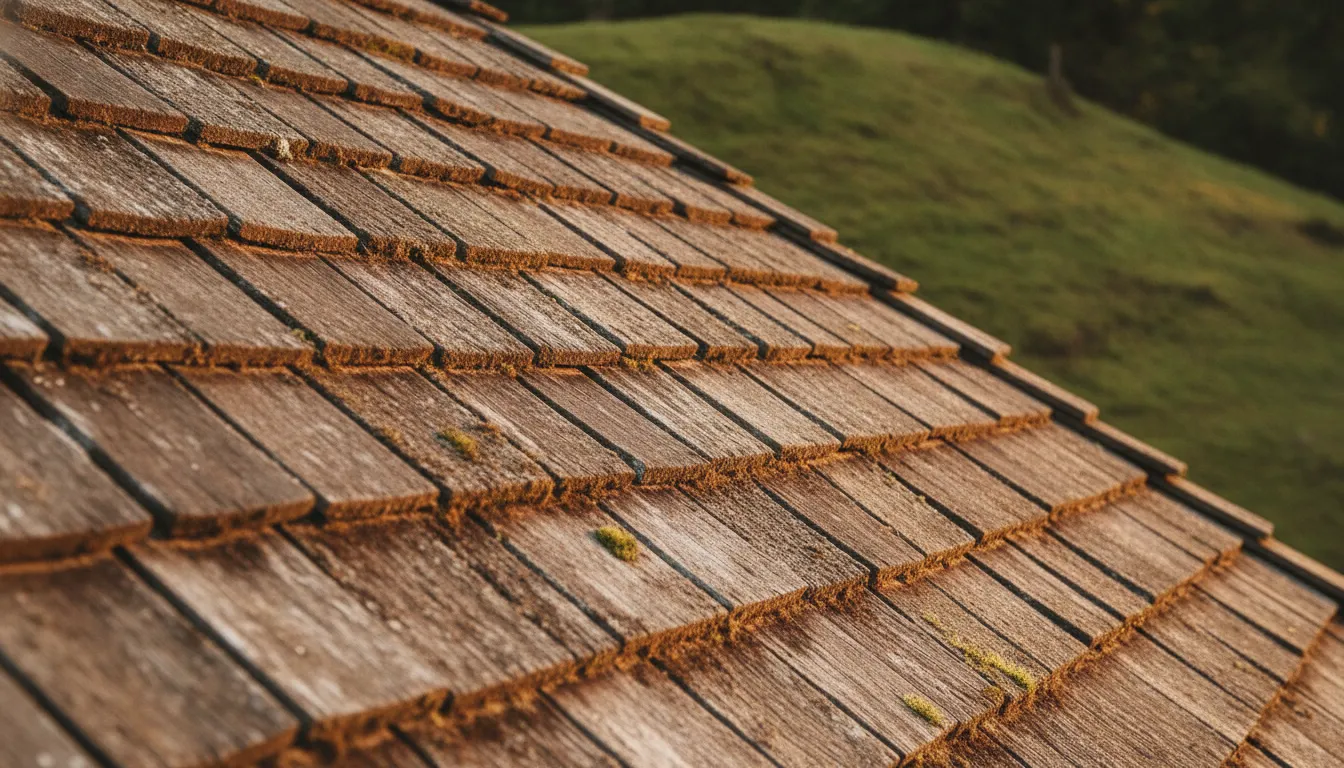
Cedar shakes are split from cedar logs, traditionally by hand. That process follows the wood’s natural grain and leaves each piece thicker, rougher, and more textured. Installed across a roof, shakes create the irregular shadow lines and rustic character associated with traditional cedar roofing. No two pieces look exactly alike, so the finished roof has more visual variation than a manufactured roofing product.
Cedar shingles are sawn or machine-cut from the log. They are thinner and have a smoother, more uniform surface than shakes. Their consistent shape creates cleaner courses and a more even appearance. The two materials can look similar from the ground, but the distinction matters when comparing appearance, installation requirements, ventilation, and long-term maintenance.
Why is western redcedar commonly used?
Western redcedar is a preferred roofing species because its heartwood contains natural extractives that help resist moisture, fungi, and insects. Those properties do not make cedar maintenance-free, especially in a wet climate. They do make the wood better suited to exterior exposure than many untreated alternatives. The Oregon State University Extension guide to wood shingle and shake roofs explains the material differences and the care needed to protect wood roofing over time.
Material selection is only one part of a successful cedar roof. Proper installation allows the roof to shed water and the wood to dry between wet periods. Roof design, ventilation, flashing, nearby trees, and exposure to shade also influence performance. In Puget Sound communities such as Redmond, Bellevue, and Seattle, homeowners should consider how rain, moss, and falling needles will affect the roof before choosing cedar.
If you are comparing the two terms, remember the simplest distinction: shakes are split, thicker, and more rustic; shingles are sawn, thinner, and more uniform. That difference helps explain why a cedar shake roof has a distinctive appearance and why it requires a roofing plan tailored to the material. Request a roofing assessment to confirm whether cedar shake shingles fit your roof structure and the Puget Sound climate before you commit to a material.
How Cedar Shake Shingles Compare to Asphalt Roofing
Cedar shake shingles and asphalt shingles make very different tradeoffs. Cedar brings a textured, traditional appearance and stronger natural insulation, while asphalt keeps the initial project simpler and more economical. The better fit depends on your home’s style, your maintenance expectations, and how long you plan to keep the roof.
| Consideration | Cedar Shake | Asphalt Shingles |
|---|---|---|
| Appearance | Rustic, dimensional, and naturally varied. The texture gives the roof a traditional character. | Smoother and more uniform, with a broad range of colors and profiles. |
| Expected lifespan | About 30 to 50 years with proper installation and regular maintenance. | About 15 to 30 years, depending on the product and roof conditions. |
| Upfront cost | Usually higher because the material and installation require more specialized planning and labor. | Generally less expensive and easier to install. |
| Natural insulation | Provides superior natural insulation compared with asphalt. | Offers less natural insulation than cedar. |
| Maintenance | Higher. Plan for inspections, cleaning, and treatment for moss, fungus, lichen, and rot. | Lower in comparison, although inspections and routine roof care still matter. |
| Fire resistance | Natural cedar is flammable, but fire-retardant-treated shakes are available and can meet applicable safety standards. | Fire performance varies by product and rating. Confirm the specific manufacturer’s classification. |
Cost is often the deciding factor. Asphalt is generally cheaper and easier to install, while cedar may offer a longer service life and better insulation when it is correctly installed and maintained. Product coverage also affects material estimates, since cedar shake bundles commonly cover about 12.5 to 20 square feet, depending on the product. For a closer look at the factors behind a cedar project, review our cedar shingles cost and lifespan guide.
There is also a materials question beyond appearance and price. Oregon State University Extension notes that wood is a renewable resource, while asphalt and steel require large amounts of nonrenewable energy to produce. That does not make cedar maintenance-free or automatically the right choice, but it gives homeowners another factor to weigh alongside durability and installation requirements. In the Puget Sound climate, the choice should account for moisture exposure and the willingness to keep up with care, not just the look on installation day.
A roofing assessment can clarify whether the structure, slope, ventilation, and surrounding trees support either material. The right comparison is not simply cedar versus asphalt. It is the material that fits the home and the level of long-term care you can realistically provide.
Oregon State University Extension guidance on wood shingle and shake roofs
The Pros and Cons of Cedar Shake Shingles
Cedar shake shingles give a roof a natural character that manufactured materials cannot fully reproduce. Their textured surface and varied grain create a rustic, traditional appearance that can complement Craftsman, Northwest, and other home styles. Cedar is also a renewable, wood-based roofing material, which appeals to homeowners who want a natural alternative to petroleum-based products.
Pros of cedar shakes
- Distinctive appearance: Cedar shakes provide the traditional, dimensional look many homeowners want. The material weathers into a natural finish, and each piece contributes variation rather than a perfectly uniform pattern. Landmark describes shakes as a choice valued for their aesthetic appeal and traditional look. Learn more about cedar shake roofing.
- Natural insulation: Cedar shakes offer natural insulating properties that can help moderate heat transfer through the roof assembly. They may provide an insulation advantage over asphalt shingles, although the full performance of any roof also depends on ventilation, underlayment, and attic insulation.
- Long potential service life: With proper installation and consistent maintenance, a cedar shake roof can last approximately 30 to 50 years. Regular care is not optional, but it can help the material reach its expected lifespan.
- Renewable material: Cedar comes from a natural, renewable resource. Homeowners should still ask how the wood was sourced and how the product was manufactured when environmental impact is part of the decision.
Cons to consider before choosing cedar shakes
- Higher upfront cost: Cedar shakes generally cost more than asphalt shingles and require more specialized installation. Asphalt is typically less expensive and simpler to install, so the initial budget difference can be significant.
- More maintenance: Cedar is not a low-maintenance roofing material. In the wet Puget Sound climate, homeowners need regular inspections, cleaning, and treatment for moss, fungus, lichen, and rot. Washington State University Extension notes that wood shingle and shake roofs need proper installation and ongoing maintenance to provide years of service. Review wood roof care guidance.
- Fire considerations: Natural cedar is flammable. Many modern cedar shake products are treated with fire retardants to meet current safety standards. But treatment does not remove the need to confirm the product rating, installation requirements, and local code requirements before purchase.
Cedar shakes make the most sense for homeowners who value appearance and natural materials and are prepared for the required upkeep. A roofing assessment can help determine whether the roof structure, ventilation, exposure, and maintenance plan support this material.
How Long Do Cedar Shake Shingles Last?
A properly installed and maintained cedar shake roof can last about 30 to 50 years. That range is a useful planning guide, not a guarantee. Some roofs reach the upper end of that lifespan, while others need major repairs much sooner when moisture, poor installation, or neglected maintenance causes deterioration.
Installation quality sets the starting point. Cedar shakes need the right underlayment, fastening, spacing, flashing, and ventilation for the roof design. The Washington State University Extension guidance on wood shingle and shake roofs emphasizes that proper installation and ongoing care are central to long service life. A material that could last for decades cannot overcome details that trap water or allow repeated leaks.
What affects the life of a cedar shake roof?
Several conditions influence how quickly cedar shakes weather:
- Climate: Puget Sound’s wet weather keeps roofing materials exposed to prolonged moisture. Shaded areas may also support moss, fungus, and lichen.
- Ventilation: Adequate airflow helps the roof assembly dry after rain. Poor ventilation can leave moisture in the roof system and accelerate decay.
- Roof slope: A steeper roof generally sheds water more readily than a low-slope roof, where moisture may remain on or beneath the shakes longer.
- Maintenance: Inspections, safe cleaning, and timely treatment for moss or rot help identify problems before damage spreads. Needles and other debris should not be allowed to build up in damp areas.
In Washington, staying ahead of moss and scheduling regular inspections matter more than waiting for visible leaks. A roofing professional can look for split or missing shakes, soft areas, lifted pieces, deteriorated flashing, and signs that the underlying roof assembly is staying wet. Early repairs are usually more manageable than replacing sections after decay has progressed.
For a closer look at material characteristics, maintenance expectations, and design considerations, read this guide to cedar shake roof shingles. The right inspection and maintenance plan can help a cedar shake roof deliver the decades of service homeowners expect from this material.
What Do Cedar Shake Shingles Cost?
Cedar shake roofing usually costs more upfront than asphalt roofing. The difference reflects both the material and the installation. Cedar shakes require more careful handling, detailed layout, and experienced labor than a standard asphalt shingle system. Asphalt is generally less expensive and simpler to install, while cedar provides a distinctive appearance and natural insulation benefits.
A material count also depends on the product selected. One bundle of cedar shake shingles typically covers about 12.5 to 20 square feet, although coverage varies by product. A roof with a large surface area may require substantially more bundles than a smaller home. Waste, starter courses, ridge details, valleys, flashing, underlayment, ventilation, and disposal can also affect the final project cost. A detailed roofing estimate is the reliable way to pin down what a cedar project will cost for your specific home.
What affects the price of a cedar shake roof?
- Product grade: Cedar products differ in quality, thickness, appearance, and coverage. Those specifications change both the material cost and the installation requirements.
- Roof size and design: A larger roof takes more material and labor. Multiple sections, dormers, valleys, skylights, and other penetrations increase the time needed for careful installation.
- Roof slope: Steeper roofs require additional safety measures and take longer to work on, which can increase labor costs.
- Underlayment and ventilation: The condition and design of the layers beneath the shakes matter. A roofing assessment may identify underlayment, flashing, or ventilation work that should be completed at the same time.
- Removal and repairs: Tear-off, sheathing repairs, dry rot, and disposal are separate cost factors when replacing an existing roof.
Residential roofing projects overall can range broadly, so a generic online price cannot account for the conditions on your home. Cedar also carries ongoing maintenance costs because regular inspections, cleaning, and treatment for moss and rot help protect its service life. For more detail on the material’s long-term value, review this guide to cedar shingles cost and lifespan.
Homeowners in Redmond, Bellevue, and surrounding Washington communities can ask about general financing options if a replacement needs to fit a planned budget. The practical first step is a local assessment of the roof’s size, slope, existing layers, and condition. That evaluation provides a more useful basis for planning than a national average or a bundle price alone.
Maintaining a Cedar Shake Roof in the Pacific Northwest
Pacific Northwest rain, shade, wind, and falling needles make regular maintenance essential for a cedar shake roof. Homeowners in Redmond, Bellevue, Seattle, and other Puget Sound communities should schedule a professional inspection at least once a year. An inspection can identify cracked or split shakes, loose fasteners, soft areas, early rot, and drainage problems before a small defect becomes a larger leak.
Keep the roof surface clear of pine and fir needles, leaves, and other debris. Cedar needs to breathe, and packed debris holds moisture against the wood. That trapped moisture can encourage decay and give moss, fungus, and lichen a place to grow. The Cedar Shake & Shingle Bureau maintenance FAQ recommends keeping cedar roofing clean and properly ventilated rather than allowing organic material to accumulate.
Control moss and lichen before they damage the roof
Moss and lichen are more than cosmetic concerns. They retain moisture and can contribute to deterioration when they remain on wood roofing for long periods. Washington State University Extension identifies protection from fungus, moss, and lichen, along with proper cleaning, as important parts of maintaining wood shingles and shakes. Follow its guidance in The Care and Maintenance of Wood Shingle and Shake Roofs.
Do not pressure-wash cedar shakes or scrape them aggressively. Those methods can damage the wood surface and force water beneath the roofing. A qualified roofer can recommend a cleaning method suited to the roof’s age and condition. Zinc or copper strips installed near the ridge cap can also help control moss growth as rainwater carries trace amounts of metal down the roof. They support a maintenance plan, but they do not replace inspections or cleaning.
Use the right treatment for cedar
Never seal a cedar shake roof with an impermeable coating. Sealing can trap moisture inside the wood, creating the problem the coating is supposed to prevent. If the roof is a candidate for treatment, use a breathable, water-repellent treatment rather than a waterproofer. The goal is to help the cedar shed moisture while allowing normal drying.
Regular cleaning, inspections, and appropriate treatment can help a properly installed cedar shake roof deliver decades of service. The wet climate around Everett, Kirkland, and Tacoma makes that maintenance a continuing responsibility, not a one-time project.
Get a cedar shake roofing inspection to protect your investment.
Frequently Asked Questions
What is the difference between cedar shake and cedar shingles?
Cedar shakes are typically hand-split, so they have a thicker, rougher, more varied surface. Cedar shingles are machine-cut and look smoother and more uniform. The choice affects the roof’s appearance, installation details, and maintenance expectations.
How long do cedar shake shingles last?
A properly installed cedar shake roof can last 30 to 50 years with consistent maintenance. The actual service life depends on installation quality, ventilation, moisture exposure, inspections, and timely attention to moss, rot, splitting, or damaged shakes. Source: Landmark Roofing & Siding.
How much does a bundle of cedar shake shingles cover?
Coverage varies by product and installation pattern, but a bundle commonly covers about 12.5 to 20 square feet. Confirm the manufacturer’s coverage specifications before estimating material quantities, because exposure and course layout affect the final amount. Source: Landmark Roofing & Siding.
Are cedar shake shingles fire resistant?
Natural cedar is combustible, but some modern cedar shake products receive fire-retardant treatment to meet applicable safety requirements. Ask which product classification applies to the material being considered, and confirm local code and insurance requirements before installation.
Do cedar shake shingles require more maintenance than asphalt?
Yes. Cedar shakes need regular inspections and cleaning, especially in the wet Pacific Northwest, where moss, fungus, lichen, and roof debris can retain moisture. Asphalt is generally less expensive, simpler to install, and easier to maintain, while cedar offers a distinctive appearance and natural insulation. Source: Washington State University Extension.
Schedule a Roofing Assessment
Cedar shake shingles can suit a Washington home, but the right choice depends on your roof’s condition, design, and maintenance needs. Request a roofing assessment from Landmark Roofing & Siding to discuss whether cedar shake shingles fit your home and long-term plans.