Date
Thu May 21Here in the Pacific Northwest, our weather is relentless. The constant rain, high humidity, and occasional strong winds demand more from a commercial roofing system than in almost any other part of the country. A generic, one-size-fits-all approach simply won’t work. Your building needs a roof installed by a team that has deep, firsthand experience with our climate. They need to know which materials stand up to moisture and how to install them to prevent leaks and moss growth. This regional expertise is the most critical factor for your roof’s performance and longevity. Finding the ‘best commercial roofers Puget Sound’ offers means finding a team that lives and works here, understands our specific building codes, and has a proven track record of protecting local businesses from the elements.
Key Takeaways
- Confirm Credentials and Experience: Before anything else, verify that any contractor is licensed, bonded, and insured. Also confirm they have specific experience with commercial projects, not just residential ones, and ask for a portfolio and references you can call.
- Prioritize Puget Sound Expertise: A local roofer understands how our region’s climate impacts commercial buildings. This knowledge is essential for recommending the right materials and ensuring the installation is done correctly to handle persistent rain and moisture.
- Look Beyond the Initial Price Tag: The cheapest bid is rarely the best value. Make your decision by comparing detailed written estimates, understanding the warranty coverage for both materials and labor, and making a smart call on whether a repair or a full replacement is the right long-term investment.
What to Look for in a Puget Sound Commercial Roofer
Choosing a roofer for your commercial property isn’t like picking one for your home. The stakes are higher, the materials are different, and the project’s scale requires a specific set of skills. Your building is a major asset, and its roof is the first line of defense against the elements, protecting everything and everyone inside. When you’re searching for a contractor, you need a true partner who understands the unique demands of commercial projects in our region.
Finding the right team means looking beyond a simple price quote. You need to evaluate their local knowledge, professional credentials, safety protocols, and their standing in the community. These factors are the pillars of a successful roofing project and a long-lasting, reliable roof. Taking the time to assess these areas will help you find a contractor who not only does great work but also protects your investment for years to come.
Expertise in Pacific Northwest Weather
The Pacific Northwest has a climate all its own, and your roof feels the effects of it every single day. The persistent rain, high humidity, and occasional strong winds demand more from a roofing system. A contractor with deep local experience understands this. They know which materials hold up best against constant moisture and how to install them to prevent leaks, moss growth, and structural damage. They are also experts on local building codes, which are specifically designed to ensure roofs can handle our weather. This regional expertise is crucial for the performance and longevity of your commercial roofing system.
The Importance of Licensing, Bonding, and Insurance
These three items are non-negotiable, and they exist to protect you and your business. Think of them as the bare minimum for any contractor you consider. A valid license proves they meet state requirements to perform the work legally. Being bonded means that if the contractor fails to complete the job or pay their suppliers, a bonding company will step in to cover the costs. Most importantly, proper insurance (including liability and workers’ compensation) protects you from being held responsible for any accidents or property damage that might occur during the project. Never hesitate to ask for proof of all three.
A Commitment to Job Site Safety
A professional roofer prioritizes safety above all else. This isn’t just about protecting their own crew; it’s about safeguarding your property, your employees, and your customers. A contractor with a strong safety culture will have clear protocols for every stage of the project. This translates to a clean, organized work site that minimizes disruption to your daily operations. They will communicate effectively about their schedule and work processes, ensuring a smooth and predictable experience. A focus on safety is a clear sign of a respectable and reliable company that values professionalism.
A Strong Local Reputation
A contractor can say anything about their quality, but their reputation tells the real story. Before signing a contract, do some research. Ask for a list of references from past commercial clients, especially those with projects similar to yours, and actually call them. Check online reviews on platforms like Google and the Better Business Bureau to see what others in the community are saying. A long history of positive feedback and successful projects in the Puget Sound area is a powerful indicator of a trustworthy company. A strong local reputation is earned through consistent quality work and excellent customer service.
How to Find the Right Commercial Roofing Partner
Finding the right roofer for your commercial property is a big decision, and it goes beyond just getting a good price. You’re looking for a partner who understands the unique challenges of the Puget Sound climate and has the expertise to protect your investment for years to come. A great local contractor will know the specific building codes and weather patterns that affect your property. They’ll have a portfolio of work you can see and a list of local clients who can speak to their reliability.
Start by focusing your search on local companies. A team that’s based in your area can respond quickly to issues and has a vested interest in maintaining a strong reputation within the community. Look for a contractor with extensive experience in commercial roofing, especially with projects similar to yours. Whether you need a simple repair or a full replacement, their track record should give you confidence. Don’t be shy about asking for references; a reputable company will be proud to share them. Finally, ensure they have all the necessary licenses and certifications to operate in Washington. This protects you and ensures the work is done to code.
Why Landmark Is a Top Choice in the Puget Sound
With over two decades of experience serving the Puget Sound, Landmark Roofing & Siding has built a reputation for quality craftsmanship and reliability. We take a comprehensive approach, handling everything from new installations and complex repairs to routine maintenance that extends the life of your roof. Our team is certified and experienced with a wide range of materials, including durable options like Duro-Last Single Ply, which are perfect for our wet climate. We’re not just contractors; we’re your neighbors, committed to protecting local businesses with dependable, high-quality roofing solutions. Our long history and proven track record make us a trusted partner for commercial property owners across the region.
Questions to Ask Any Contractor You’re Considering
To make an informed decision, it’s smart to get at least three quotes from different companies. This allows you to compare not just the price, but also the proposed materials, timelines, and scope of work. Always ask for proof of insurance and licensing; this is non-negotiable and protects you from liability. Dig into the warranty details, too. Ask for a written copy and understand what it covers, such as materials versus labor, and for how long. A clear, detailed estimate is also crucial. You can even use a roofing cost calculator to get a baseline idea before you start making calls. These questions will help you vet any contractor and find a true professional.
Which Commercial Roofing Materials Are Best for the Puget Sound?
Choosing the right material for your commercial roof is one ofs the most important decisions you’ll make for your property. Here in the Puget Sound, our roofs face a unique set of challenges, from persistent rain and moisture to wind and fluctuating temperatures. The best material is one that can stand up to the elements year after year while also fitting your budget and your building’s specific needs. A warehouse with a large, flat roof has very different requirements than a sloped-roof retail space, so understanding your options is key.
Your building’s structure, particularly its roof slope, will play a big role in determining the best options. Flat or low-slope roofs require materials that create a completely seamless, waterproof barrier, while sloped roofs can use materials that shed water in overlapping layers. Beyond the technical fit, you should also consider long-term value. Some materials have a higher upfront cost but save you money over time through lower energy bills and fewer repairs. Others offer a more budget-friendly initial investment. We’ll walk through the most common and effective commercial roofing materials for our region so you can make an informed choice for your business.
Single-Ply Roofing (TPO, PVC, EPDM, and Duro-Last)
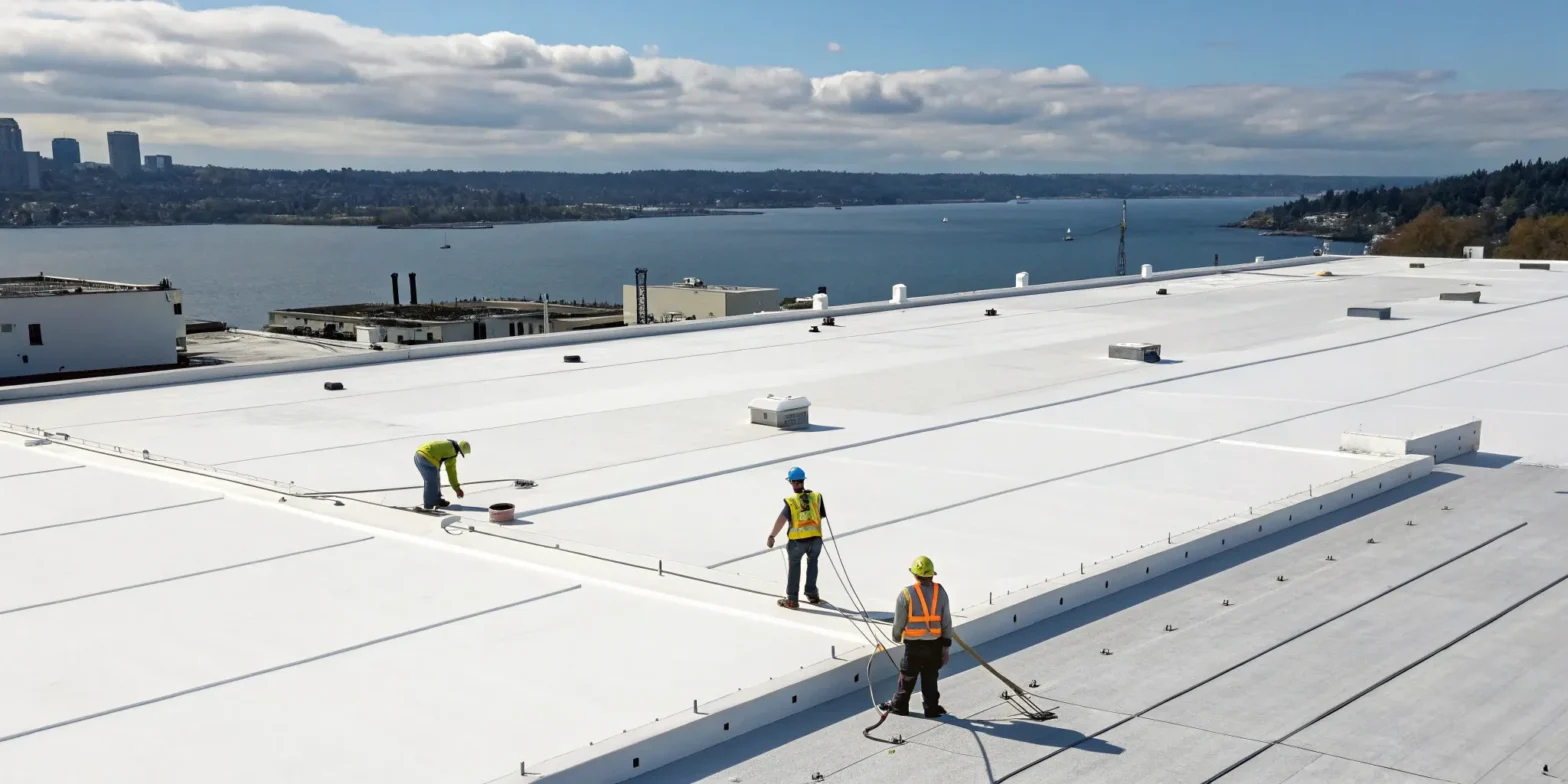
If you have a flat or low-slope roof, single-ply membranes are a fantastic modern solution. These systems consist of a single layer of flexible, durable material that is expertly sealed at the seams to create a waterproof barrier. Materials like TPO and PVC are known for their excellent resistance to bad weather and their energy-efficient properties, as they often come in white or light colors that reflect sunlight. This helps keep your building cooler and can lower your energy bills. As a certified installer of Duro-Last Single Ply systems, we trust this material to provide long-lasting protection for Puget Sound businesses.
Metal Roofing
Metal roofing is a powerhouse when it comes to durability and longevity. While it can be a larger initial investment, its lifespan often makes it one of the most cost-effective choices over time. Commercial metal roofs are built to last, with some carrying warranties of 35 years or more. They are exceptionally good at shedding our region’s heavy rainfall, and modern coatings make them highly resistant to rust and corrosion. Metal is also a strong, resilient material that can withstand high winds and impacts, making it a reliable shield for your property for decades to come.
Built-Up and Modified Bitumen Roofing
Built-up roofing (BUR) and modified bitumen are two classic, time-tested options for flat roofs. Think of BUR as a multi-layered sandwich of asphalt and reinforcing fabrics, topped with a layer of gravel or a mineral coating. This creates an incredibly tough and waterproof surface. Modified bitumen is a more modern evolution of this, using asphalt sheets that are modified with polymers for added flexibility and strength. Both are known for their exceptional durability and water resistance, making them a solid, reliable choice that has protected commercial buildings in the Pacific Northwest for many years.
Eco-Friendly and Sustainable Options
Many business owners are looking for ways to make their properties more sustainable, and your roof is a great place to start. Energy-efficient materials like white TPO and PVC fall into this category because they reduce the urban heat island effect and lower your cooling costs. These “cool roofs” can help your building meet Energy Star guidelines and may even contribute to LEED building points or federal tax credits. Choosing a durable, long-lasting material like metal is also a sustainable choice, as it reduces the need for frequent replacements and is often recyclable at the end of its life.
Essential Commercial Roofing Services to Know
When you manage a commercial property, the roof is one of your most critical assets. Understanding the different services a professional roofer offers can help you protect your investment and keep your building secure. Most professional services fall into three main categories: installation and replacement, ongoing repair and maintenance, and detailed inspections. Each plays a distinct role in the lifecycle of your roof, from its first day to its last.
Roof Installation and Replacement
This is the big one. A full roof installation or replacement is a major project, whether you’re finishing new construction or replacing a system that has reached the end of its life. For commercial properties, this isn’t just about laying down new materials. It involves careful planning to minimize disruption to your business operations. A professional team will handle everything from removing the old roof to installing a new, durable system designed to withstand Puget Sound weather. These commercial roofing projects require specific expertise to ensure the final product is secure, compliant with local codes, and built to last for decades.
Roof Repair and Maintenance
Think of roof maintenance as a health plan for your building. Instead of waiting for a major leak to disrupt your business, proactive repairs and regular maintenance can catch small problems before they become expensive disasters. This includes fixing minor leaks, clearing drainage systems, and addressing wear and tear from the elements. A consistent maintenance schedule is one of the best ways to extend the life of your commercial roof and avoid unexpected costs. Reputable contractors offer comprehensive commercial roofing services that include creating a maintenance plan tailored to your specific roof type and building needs, helping you protect your investment over the long term.
Roof Inspections
A professional roof inspection is your best tool for making smart, informed decisions about your property. It’s the first step whether you suspect a problem or just want to assess your roof’s current condition. During an inspection, a trained expert will evaluate every component of your roofing system, looking for signs of damage, potential weak spots, and areas of water intrusion. They can also assess your roof’s energy efficiency and overall lifespan. This detailed report gives you a clear picture of your roof’s health, allowing you to plan for future repairs or a full replacement with confidence and a solid budget in mind.
Repair or Replace? Making the Right Call for Your Commercial Roof
Deciding whether to repair or replace your commercial roof is one of the most significant choices a property owner can make. It’s a balancing act between managing immediate costs and making a smart long-term investment in your building’s integrity. A minor leak might seem like a quick fix, but it could also be a symptom of a much larger problem. Making the right call protects your property, tenants, and inventory from damage while also managing your operational budget effectively.
The key is to understand the condition of your current roof. Targeted repairs are perfect for addressing isolated issues and extending the life of a roof that is otherwise in good shape. However, if the problems are widespread, or if your roof is simply old, a full replacement might be the more financially sound option over time. Let’s walk through the signs that point toward each solution, so you can feel confident in your decision.
Signs Your Roof Needs Repair
If your roof is still relatively young and the issues are contained, repairs are often the best path forward. Catching problems early with regular inspections is the most effective way to prevent a small issue from turning into a major expense. Promptly addressing these concerns can add years to your roof’s life.
You should consider repairs if you notice specific, isolated problems like minor leaks after a storm, small punctures in the roof membrane, or water pooling in one or two spots. Damaged flashing around HVAC units, vents, or skylights is another common issue that can typically be fixed without a full overhaul. A professional can perform a thorough inspection to identify these trouble spots and recommend targeted commercial roofing repairs that solve the problem efficiently and affordably.
When to Choose a Full Replacement
Sometimes, a series of repairs is like putting a bandage on a problem that needs surgery. A full roof replacement becomes the more practical and cost-effective solution when the damage is extensive or the roof is nearing the end of its service life. Most commercial roofs last around 20 years, so if yours is approaching that age and experiencing frequent issues, it’s time to start planning for a replacement.
A good guideline to follow is the 25% rule: if more than a quarter of your roof is damaged, a full replacement is generally the smarter investment. Widespread issues like constant leaks, large blisters or cracks in the membrane, or sagging areas are clear indicators that your roof’s structural integrity is compromised. While a replacement is a significant upfront cost, it offers long-term peace of mind, improved energy efficiency, and a solid warranty. You can get a preliminary idea of the investment by using a roofing cost calculator to help with your budget planning.
How to Vet a Commercial Roofing Contractor
Choosing the right contractor for your commercial property is a major decision. Your roof protects your assets, employees, and customers, so it’s not a place to cut corners. To make sure you’re hiring a true professional, follow these key steps to vet any potential roofing partner. This process will help you find a reliable team that delivers quality work and peace of mind, ensuring your investment is protected for years to come. A thorough vetting process upfront saves you from costly headaches and repairs down the road.
Verify Their Credentials and Insurance
Before you even talk about materials or timelines, start with the basics: credentials. A legitimate contractor must be licensed, bonded, and insured to work in Washington. This isn’t just paperwork; it’s your protection. Proper insurance covers any potential accidents on the job site, shielding your business from liability and unexpected costs. Any reputable company will provide proof of their credentials without hesitation. Don’t be afraid to ask for a copy of their insurance certificate. If a contractor is cagey about their insurance or licensing, consider it a major red flag and move on to the next candidate.
Confirm Their Commercial Experience
Not all roofing experience is created equal. A contractor who primarily works on residential homes might not have the skills or equipment for a large-scale commercial project. Ask specifically about their commercial roofing experience. How many flat or low-slope roofs have they installed? Are they certified to work with materials like Duro-Last or TPO? A seasoned commercial roofer understands the unique demands of these systems, from proper drainage to accommodating rooftop HVAC units. This specialized knowledge is crucial for a long-lasting roof and ensures the job is done right the first time.
Get a Detailed, Written Estimate
Never accept a verbal quote. A professional contractor will provide a detailed, written estimate that breaks down all the costs. This document should include the specific materials being used, labor costs, the project timeline, and warranty information. I recommend getting at least two or three estimates from different companies. This allows you to compare not just the price, but the scope and quality of the proposed work. A suspiciously low bid can often mean subpar materials or inexperienced labor, which will cost you more in the long run. You can get a preliminary idea of costs by using an online roofing calculator before you even make a call.
Review Their Portfolio and References
A contractor’s past work is the best indicator of their quality. Ask to see a portfolio of their completed commercial projects, especially ones similar in scope and material to yours. A confident roofer will also be happy to provide a list of references you can call. Speaking directly with previous clients gives you unfiltered insight into their experience, from communication and professionalism to the final result. Don’t forget to check online reviews on sites like Google to get a broader sense of their reputation in the community. This step helps you build confidence in your choice.
Understanding Commercial Roofing Warranties
A new commercial roof is a significant investment in your property, and a strong warranty is your assurance that the investment is protected. Think of it as a promise from both the material manufacturer and your installation contractor. Understanding the different types of warranties and what they cover is key to making a confident decision. A reputable roofer will be upfront about their warranty because they stand behind their materials and their craftsmanship. Let’s break down what you need to know.
Manufacturer vs. Workmanship Warranties
First, you have the manufacturer’s warranty. This covers the roofing materials themselves against defects. For example, if a TPO membrane fails prematurely due to a manufacturing flaw, this warranty would cover the replacement materials. These warranties can last a long time, often between 15 and 30 years. Then there’s the workmanship warranty, which is provided by your roofing contractor. This is arguably the more critical of the two, as it covers the quality of the installation. Most roofing issues stem from improper installation, not faulty materials. A solid workmanship warranty shows that your contractor is confident in their team’s skill and will fix any installation-related problems that arise.
What to Look for in the Fine Print
A warranty is only as good as what’s written in it, so it’s essential to review the details carefully. Always ask for a complete, written copy of the warranty before you commit. Look for clear language that specifies what is covered (materials, labor, or both) and for how long. Pay close attention to the exclusions. Most warranties won’t cover damage from severe weather, falling debris, or issues caused by unauthorized repairs or a lack of routine maintenance. Also, find out if the warranty is transferable to a new owner if you sell the building. A transparent contractor will happily walk you through their commercial roofing warranty and answer any questions you have.
Warranty Red Flags
When you’re comparing contractors, certain things about their warranties should raise a red flag. Be cautious of any roofer who is vague about their warranty terms or only offers a verbal promise. A professional company will always provide detailed documentation. Another warning sign is a contractor who pressures you to sign a contract before you’ve had a chance to fully review the warranty. You should also be wary of warranties that seem too good to be true, as they often have hidden clauses that make them difficult to claim. Most importantly, if a contractor cannot provide proof of their license and insurance, consider it a deal-breaker. These credentials protect you and are a basic requirement for any legitimate business.
What Customer Reviews Can Really Tell You
A company’s website tells you what they want you to know, but customer reviews tell you the real story. When you’re making a significant investment in your commercial property, reviews offer an unfiltered look into what it’s actually like to work with a roofing contractor. They provide valuable insights that go far beyond a marketing brochure, covering everything from the initial phone call and estimate process to the crew’s daily conduct and the final cleanup. Think of it as getting firsthand accounts from people who were once in your exact position.
Reading reviews helps you spot patterns in a company’s performance. A single glowing review is nice, but consistent praise for clear communication, staying on schedule, and respecting the property is what truly signals a professional and reliable team. On the other hand, recurring complaints about missed deadlines, surprise costs, or poor workmanship are major red flags. By looking at the collective experience of past customers, you can build a much more accurate picture of the contractor’s strengths, weaknesses, and overall commitment to quality work and customer service.
Where to Find Trustworthy Reviews
To get a well-rounded view of a contractor’s reputation, it’s best to check a few different sources. Public platforms like Google Reviews and the Better Business Bureau (BBB) are great starting points because they gather feedback from a wide range of customers. Look for recent reviews to get a sense of the company’s current performance. Don’t stop there, though. One of the most powerful ways to vet a company is to ask them for a list of references. A confident contractor who stands by their work will be happy to connect you with past clients, especially those who had a commercial roofing project similar to yours.
How to Read Between the Lines
The real skill in using reviews is learning to read between the lines. Look past the star rating and focus on the details in the comments. Vague praise like “they did a good job” isn’t nearly as helpful as specific comments like, “The project manager sent daily updates, and the crew left the job site spotless every evening.” These details give you a concrete idea of what to expect. Also, pay close attention to how the company responds to negative feedback. A professional and constructive response that aims to solve the problem is a great sign. It shows the company cares about its reputation and is committed to customer satisfaction, even when things don’t go perfectly.
What Does Commercial Roofing Cost in the Puget Sound?
When you’re budgeting for a new commercial roof, the first question is always about cost. In the Puget Sound area, the price for a commercial roofing project can range widely, but you can generally expect to see figures between $3.50 and $7.00 per square foot. This is a broad estimate because the final price tag depends on several key variables specific to your building and the materials you choose.
Think of a roofing estimate as a custom quote for a complex project. No two commercial buildings are exactly alike, so no two roofing jobs will have the exact same cost. The size of your roof, its current condition, the type of material you select, and even the number of vents and HVAC units on top all play a role. We’ll break down these factors so you can get a clearer picture of what to expect for your property. Understanding these details will help you have a more productive conversation with any commercial roofing contractor you consider.
Factors That Influence Your Final Cost
Several components make up the total cost of a commercial roofing project. The material itself is a big one. For example, TPO (Thermoplastic Olefin) is a popular and often more affordable single-ply membrane. On the other hand, materials like metal roofing or certain EPDM (Ethylene Propylene Diene Monomer) systems might have a higher upfront cost but offer different benefits in longevity and durability. The size and complexity of your roof also matter. A large, flat, open roof is more straightforward to work on than a smaller roof with numerous pipes, vents, skylights, and HVAC units that require detailed flashing and sealing. These penetrations add significant labor time, which affects the cost. Finally, don’t forget about local permits, which are required for most roofing jobs and come with their own fees.
How to Get a Reliable Estimate
To feel confident in your budget, your best move is to gather detailed estimates from a few reputable contractors. We recommend getting at least three quotes to understand the market rate for your project. When you review these estimates, don’t just look at the final number. A trustworthy contractor will provide a detailed breakdown that separates the costs of materials, labor, and any additional fees for permits or disposal. This transparency helps you compare apples to apples. Before making a final decision, you should also verify any contractor’s license with the Washington State Department of Labor & Industries. A credible partner will have all their credentials in order and be happy to answer any questions you have about their estimate.
Partner with the Right Roofer for Your Business
Choosing the right commercial roofing contractor is a critical decision for your business. It’s not just about getting a new roof; it’s about protecting your property, your inventory, and your daily operations. The best approach is to find a true partner, not just a contractor. Start by looking for local companies. A roofer based in the Puget Sound area will have firsthand experience with our specific weather challenges, from persistent rain to strong winds. They understand the local building regulations and codes, which helps ensure your project is completed correctly and without delays. A local presence also means you can visit their office, see their work in person, and speak with other local business owners they’ve served.
Before you get too far in your search, make sure any potential contractor is licensed, bonded, and insured. This isn’t just a formality; it’s essential protection for your business. A licensed contractor has met state requirements, while a bond protects you if they fail to complete the job. Most importantly, proper insurance, including general liability and workers’ compensation, shields you from financial responsibility for any accidents or injuries that might happen on your property during the project. Don’t be afraid to ask for proof of these credentials. A reputable company will be happy to provide them.
Finally, consider the scope of services the company offers. A contractor who can handle everything from new installations and replacements to repairs and ongoing maintenance is an invaluable asset. Partnering with a company that provides comprehensive commercial services means you have a single point of contact who understands the history and specific needs of your roof. This builds a foundation for a long-term relationship, ensuring your roofing system remains durable and reliable for years to come. By focusing on these key factors, you can confidently select a commercial roofer who will be a valuable partner for your business.
Related Articles
- How to Choose the Best Kirkland Roofing Contractors – Landmark Roofing & Siding
- How to Choose the Best Roofing Companies Near Me – Landmark Roofing & Siding
- How to Choose the Best Residential Roofers Near Me – Landmark Roofing & Siding
Frequently Asked Questions
How often should I have my commercial roof inspected? For most commercial properties in the Puget Sound, a professional inspection twice a year is a smart move, once in the spring and again in the fall. This schedule allows a professional to check for any damage after the winter storms and prepare your roof for the wet season ahead. Regular inspections are the best way to catch small issues like clogged drains or minor punctures before they lead to major leaks and expensive damage. It also helps you keep your manufacturer’s warranty valid, as most require proof of routine maintenance.
What is the biggest difference between commercial and residential roofing? The main differences come down to the design and materials. Most commercial buildings have flat or low-slope roofs, which require specialized materials like single-ply membranes (TPO, Duro-Last) that create a completely waterproof surface. Residential roofs are typically sloped and use materials like shingles that shed water. The scale of the projects is also very different, and commercial roofing involves navigating things like rooftop HVAC units, vents, and unique drainage systems that you just don’t see on a house.
How long will a roof replacement disrupt my business? A professional commercial roofer knows that your business needs to keep running. A key part of their job is creating a detailed plan to minimize disruption. They should communicate clearly with you about their work schedule, which areas of the property will be affected, and what to expect regarding noise. While any major construction project has some impact, a well-managed one will be planned in phases to keep your operations as smooth as possible. Always discuss the project logistics and timeline with a contractor before you hire them.
Is a more expensive roofing material always the better choice? Not necessarily. The “best” material isn’t about the price tag; it’s about what’s right for your specific building, budget, and long-term goals. A durable material like metal might have a higher upfront cost but could save you money over decades with its long lifespan and low maintenance needs. A TPO membrane might be more budget-friendly initially and offer great energy efficiency. A good contractor will explain the pros and cons of each option for your property, helping you balance initial cost with long-term value.
Besides the final price, what should I look for in a roofing estimate? A trustworthy estimate is more than just a number at the bottom of the page. Look for a detailed, itemized breakdown that clearly lists the costs for materials, labor, permits, and debris disposal. The estimate should specify the exact type and brand of materials being used and provide a clear project timeline. This level of detail shows that the contractor is transparent and has thoroughly planned your project. Vague estimates can hide subpar materials or unexpected costs later on.