Date
Fri Jun 12Maintaining a sound roof is vital for protecting any commercial property in Washington. Constant rain can cause severe damage to your building over time. Knowing when to restore your roof will save you money.
Commercial roof restoration is a process that applies tough coatings to an existing roof system to extend its useful life. This method helps property managers reduce disruption when a complete tear-off is not yet necessary. By repairing the surface and adding a protective layer, you can reduce leak risk. plan capital work more strategically. According to Landmark Roofing, this approach works well for flat roofs in the Pacific Northwest when the base structure remains sound. It also helps keep usable roofing materials out of local landfills. This solution works best for buildings that have minor wear but still have a strong deck.
Property managers need to know the signs that show if a building is a good fit for this service. Knowing what commercial roof restoration means for Washington properties will help you make a smart investment. The process begins with a look at how these systems work in our climate.
Property managers comparing restoration and replacement options can work with commercial roofing services in Redmond to evaluate their building’s specific needs.
What commercial roof restoration means for Washington properties
Commercial roof restoration is a smart way to fix a roof without a full teardown. Instead of pulling off old parts, teams put a new safety layer over the roof. This process adds a protective layer that helps reduce leak risk and weather wear. For property managers in cities like Bellevue and Seattle, this can be a smart move to save cash. It helps you get more years out of your current roof while keeping the building dry. Commercial roof restoration works well on most flat tops that have some life left in them.
How restoration extends roof life
A good restoration plan starts with fixing small issues first. Crews clean the surface and repair small breaks before they get worse. Then, they apply high-grade coatings or new skins to the whole top. This new layer seals every seam and joint where rain might get in. It is very good for low-slope roofs that must handle heavy rain in the Puget Sound. By adding this layer at the right time, you can delay replacement and plan future capital work more carefully.
Using the right parts is key for work that lasts. Many local buildings use Duro-Last single ply skins because they have fewer seams. Good systems help with roof drainage and strength to keep water moving off the top. Landmark Roofing & Siding uses its own crews to make sure every inch is right. This focus on small details helps your roof handle wet Washington weather more reliably.
Restoration vs simple repairs
People often mix up restoration with basic patching. A patch only fixes one small hole or leak. It is a quick fix that does not help the rest of the roof top. Restoration is a full-surface task that covers every part of the material. It creates a new layer that works as one solid piece. This full cover helps reduce weak spots that may not look urgent today. It turns an old roof into a strong system again without the cost of a full new build.
Restoration also costs less than a full roof job. You do not have to pay for the work to tear off the old roof. You also save on fees to take old junk to the dump. Proactive commercial roof maintenance and restoration are key to keeping your building in top shape. Many restoration jobs in the Puget Sound move faster than a full tear-off. This means less noise and mess for the people in your building.
Finding the right time to restore
Not every roof can be saved with restoration. If the wood or metal under the roof is wet or soft, you might need a new one. A pro team must check for trapped water before they start the work. They use tools to find damp spots that the eye cannot see. In places like Renton or Issaquah, wet spots can hide deep inside the roof layers. Catching these problems early makes the restoration more reliable and helps you avoid surprise replacement costs.
Restoration is a great choice if your roof is still mostly sound. It can fit the annual maintenance budget more easily than a full replacement. It also creates less tear-off waste when the existing roof can stay in place. By choosing to restore at the right time, you protect your Washington property and avoid unnecessary disruption. Landmark Roofing & Siding helps you find the best path for your exact building and needs.
Restoration vs. replacement: how property managers should decide
Choosing between a new roof and a fix can be hard for property managers. You must balance the building budget with long-term value and tenant needs. A commercial roof restoration is often a great choice for sound structures in the Puget Sound area. It adds a new layer of protection without the cost of a full tear-off. But some roofs are too old or damaged to save. Knowing the difference between these two paths will help you manage your assets better.
Signs your roof is a fit for restoration
A good candidate for restoration has a solid base. If the insulation is dry and the structure is strong, you can often add a coating. This process helps reduce leak risk and shields the roof from sun and rain. Regular commercial roof maintenance is the best way to keep a roof ready for this path. Catching issues early means you can apply a coating before the damage goes too deep.
Restoration works well on flat roofs common in cities like Seattle and Bellevue. It seals small cracks and creates a seamless barrier that handles our heavy rain. This choice is much faster than a full job. Many commercial restoration projects take less time than a full replacement. A shorter timeline helps keep your tenants happy because there is less noise and mess in the parking lot. You can keep your business running with almost no downtime.
When a full replacement is the only option
Sometimes, a roof is past the point of a simple coating. If large areas of insulation are wet, the safer answer may be a new system. A full replacement is also worth discussing if the roof has already been restored once before. Modern commercial roof repairs can only do so much for a failing system. You want to avoid trapping water under a new layer, which can cause rot. A full tear-off lets your team find and fix any hidden deck issues.
Low-slope roofs need proper drainage and high-quality membranes for long-term health. If your current roof does not drain well, a full replacement can allow you to fix the slope. This reduces pooling water and helps keep the structure safer during heavy Puget Sound rain.
Comparing costs and timelines
Cost is a big factor for any property manager in Snohomish County, King County, or Pierce County. Restoration can be less expensive because it uses less labor and fewer supplies. It also creates less waste for landfills. A new roof costs more but offers a fresh start with the right system for the building. Use this table to see which path fits your building needs and budget goals.
. .
| Factor. | Roof Restoration. | Roof Replacement. |
|---|---|---|
| Best Fit. | Sound roofs with small leaks. | Old roofs with wet insulation. |
| Business Noise. | Low noise and short timeline. | High noise and longer work. |
| Cost Drivers. | Labor and coating materials. | Full tear-off and new deck. |
| Tenant Impact. | Minimal parking and entry issues. | Big impact on daily work. |
| Timeline. | 3 to 7 days on average. | Longer, depending on tear-off needs. |
| Long-term Value. | Extends value when the deck is sound. | Best when the old system has failed. |
Deciding between these options requires a full inspection. A pro team should check for moisture and check the deck’s health. They can then give you a report with the best path forward for your site. This data helps you make a choice that protects your asset and fits your fiscal plan.
A Bellevue roofing contractor familiar with local building codes can help property owners weigh the costs and benefits of each approach.
When is a commercial roof a good candidate for restoration?
Commercial roof restoration is a smart way to get more life out of your building. It can cost less than a full tear-off when the existing roof is still sound. But not every roof in the Puget Sound is a good fit for this fix. You must look at the bones of the roof before you decide. Our teams in Redmond and Bellevue often see roofs that are perfect for a fresh coating.
A strong roof deck
The most vital factor is the state of the roof deck. A roof deck must be dry and strong to hold a new coating. If the deck has rot or soft spots, a coating will not help. You cannot hide bad spots with a new layer of silicone or acrylic. It is like putting new paint on a rotting fence. The paint might look good, but the fence will still fall down.
Expert crews use tools to find trapped water in the roof. If the deck is sound, the roof is a great choice for a fix. Good design standards for roofs focus on building strength. This ensures the roof can handle the weight of the system over time. A solid base is needed because the new coating must bond to a roof that can still support the system. Our in-house teams check every inch of the deck before we start work.
Membrane condition and small leaks
Restoration works best when the current membrane is old but still mostly whole. If you see cracks or small leaks that stay in one spot, a coating can seal those gaps. It acts like a new skin over the old roof. This helps reduce water intrusion and may prevent a bigger bill later. Most membranes like TPO or EPDM can take a coating if they are not too far gone.
You should think about restoration if:
- The roof is near the end of its life but is not failing yet.
- Leaks are small and easy to find and fix.
- The surface is mostly smooth and has no big blisters or gaps.
- You want to stop sun and rain from wearing down the roof.
- You need to fix small drainage issues by adding a bit of slope.
Sun and rain can harm your roof over time. You can offset these effects with periodic maintenance to keep your roof in good shape. This helps the coating stick well and last longer. When the membrane is in fair shape, a coating can help extend useful service life.
Low noise for busy buildings
A full roof replacement is louder and messier than restoration. It can disrupt daily operations. This is a big problem for malls, schools, and offices that must stay open. Restoration is much faster and quieter. It is a great choice for sites where you cannot have crews tearing things up all day.
Restoration is a key part of commercial roof maintenance for busy sites. Since we do not tear off the old roof, there is no big mess or junk. This keeps your site safe and clean for staff and guests. Many commercial restoration projects can move faster than a full tear-off. This means your business in Seattle or Kirkland can keep running with very little noise. It is the best way to get a new roof feel without the stress of a major construction site.
When replacement is the safer long-term choice
While commercial roof restoration is a great way to save money, it is not always the best path. Some roofs have too much damage for a coating to fix. In these cases, a full replacement is the smartest choice. It gives the building a more complete reset when the old assembly has failed. Our team looks at several factors to decide if a roof is past its prime.
Saturated insulation and trapped moisture
One of the biggest red flags is wet insulation. When a roof leaks, water often gets trapped under the top layer. This moisture stays in the insulation boards and cannot dry out. Over time, this leads to mold growth and can rot the wooden deck below. If too much of your roof core is wet, a coating will not work because it traps the moisture inside.
If a large portion of the roof area is wet, replacement may be the more responsible path. Patching over wet spots only masks a larger issue. Dry insulation is key to good commercial roof maintenance and lower power bills. Replacing the whole system allows us to put in fresh, dry parts that protect your building better.
Widespread membrane failure
Every roof has a limit on how much it can be fixed. When a membrane gets old, it loses its power to stretch and shrink with the weather. This leads to cracks, splits, and loose seams all over the surface. If you find yourself paying for repairs every few months, the system is likely failing. A coating needs a solid base to stick to, and an old, brittle roof cannot provide that.
For buildings in Seattle, Bellevue, or Redmond, the heavy rain can test any weak spot. When leaks happen in many different areas, it shows the entire top layer is worn out. Buying new roofing parts is often cheaper than endless patches. A new roof can also provide clearer warranty coverage for property managers.
Structural concerns and poor drainage
Sometimes the problem is not just the roof surface but how it was built. Standing water, or ponding, is a major sign of trouble on a flat roof. If water stays on the surface after storms, it can put extra weight on the structure. This weight can cause the roof to sag, which leads to even more water gathering in those spots. Good design is needed for long-term roof performance and safety.
Bad drainage can also lead to fast wear and tear. If the roof was not sloped right, a new coating will not fix the underlying issue. In these cases, we must remove the old roof to fix the slope or add new drains. While regular maintenance helps most roofs, it cannot solve build flaws. A full replacement lets our team fix the bones of the roof to prevent future leaks.
How Washington weather changes the restoration decision
Weather in the Pacific Northwest puts a lot of stress on flat roofs. In cities like Seattle and Bellevue, heavy rain and damp air are common. These things can lead to water leaks and building rot if your roof is not safe. A commercial roof restoration adds a new layer of safety to your building. This process uses coatings to seal the surface and reduce the risk of water getting inside.
Rain and moss growth in Puget Sound
The damp air in Redmond and Kirkland creates a perfect home for moss and algae. These small plants hold wetness against the roof surface. Over time, this water can rot the materials underneath. Periodic maintenance can help offset the effects of this weathering. A restoration coating creates a smooth finish that makes it harder for moss to grow. It also helps water run off the roof faster so it does not sit and cause damage.
Moss can hide cracks and holes in your roof membrane. If you ignore these small issues, they can turn into big leaks. During a commercial roof restoration, crews clean the entire surface. This allows them to find and fix weak spots before they apply the top coat. This early step helps you avoid costly commercial roof repairs in the future. It is a smart way to keep your building dry in our wet weather.
Freeze-thaw cycles and seam failure
Washington winters often bring freeze-thaw cycles. This happens when water enters small gaps and then freezes. As the ice grows, it pushes against the roof materials. This can cause seams to pull apart and create large openings. Many commercial buildings in Everett and Tacoma have flat roofs with many seams. These areas are the most likely spots for leaks to start during the cold months.
A restoration system solves this problem by creating a more continuous barrier. High-quality membranes, like those from Duro-Last, reduce the number of seams from the start. When you add a restoration coating, you seal the remaining edges. This makes the roof surface more resilient as weather changes. Since the material is flexible, it can grow and shrink as the weather changes. This helps reduce cracking when it turns from cold to warm.
Wind and drainage on flat roofs
Strong winds from the Puget Sound can lift the edges of a roof. If the membrane is old or loose, the wind might tear it away. Restoration bonds the new coating to the old roof system. This can improve protection when the existing assembly is still secure. It is a key factor for property managers in Shoreline and Edmonds who want to protect their assets. A safer roof means less worry during our heavy winter storms.
Proper drainage standards are also vital for low-slope roofs. Standing water, or ponding, can weigh down the structure. It also speeds up the wear on the roof coating. During a restoration, experts can fix low spots to improve how water flows to the drains. This helps your commercial roof restoration perform as intended. Keeping water moving off the roof is the best way to reduce leak and rot risks.
What should managers expect during a restoration project?
When you manage a site, a commercial roof restoration is a big step toward protecting your budget. It is a planned way to improve performance without jumping straight to a full replacement. You can expect Landmark’s team to follow a clear plan from start to end. This plan helps keep your tenants informed and your building protected while work is underway.
The first site check
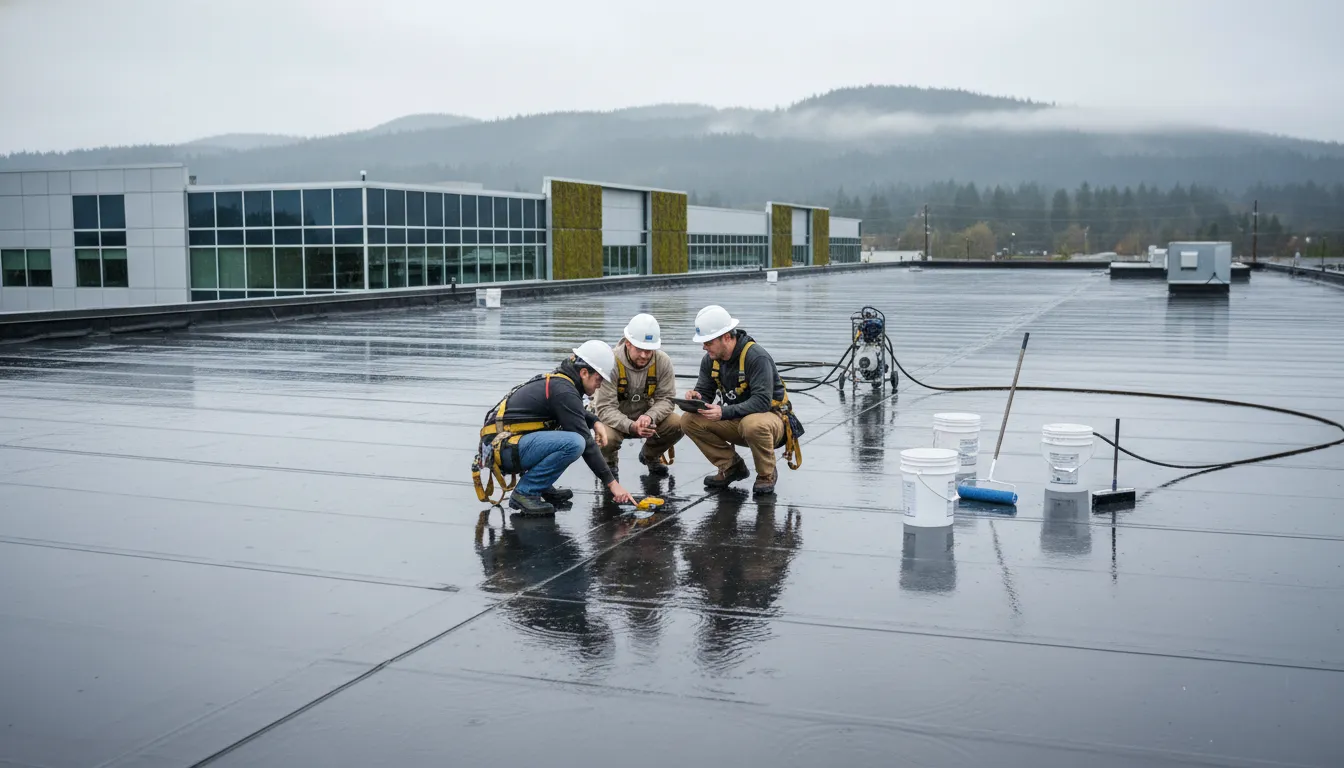
The work starts with a deep look at your roof. The team checks for leaks, soft spots, old damage, drainage issues, and signs of trapped moisture. A moisture scan or core test may be recommended when the surface does not tell the full story. This step shows whether your roof is a good fit for restoration or needs a different commercial roof maintenance plan. If the base is sound, the project can move forward with a practical scope.
Every part of the roof matters. The crew reviews edges, seams, drains, penetrations, rooftop equipment, and areas where water tends to sit. That review helps avoid surprises once cleaning and repair work begins. It also gives property managers the documentation they need to explain the plan to owners, tenants, or HOA boards.
Steps for a smooth job
Clear communication is a major part of a good restoration project. You should know when crews will arrive, where they will stage materials, and what areas tenants may need to avoid. Landmark uses its own crews, which helps keep quality control consistent. A typical restoration path includes:
- Full roof check to find weak spots, wet areas, and drainage concerns.
- Cleaning the roof surface to remove dirt, moss, algae, and loose material.
- Fixing the base layer and patching small leaks, holes, seams, or flashing issues.
- Applying primer or base coat so the new layer can bond properly.
- Installing the selected coating or membrane system for the roof conditions.
- Final walkthrough to check seams, joints, drains, penetrations, and edges.
- Providing photos, notes, and project records for management files.
Final checks and proof
Once the coating or layer is on, the team completes a final check. The goal is to confirm the roof drains well and has no missed gaps. Regular care can add to the useful life of a roof. Managers should keep the final photos and notes with the building’s capital improvement records.
Documentation matters because commercial decisions often involve more than one stakeholder. Owners want to see value, tenants want minimal disruption, and managers need a clean record of what was done. A clear closeout package helps everyone understand the condition of the roof and the next maintenance step.
Frequently Asked Questions
How much does it cost to restore a commercial roof?
Commercial roof restoration often costs less than a full replacement because it avoids a complete tear-off when the existing roof is still sound. Actual savings depend on roof size, access, drainage, wet insulation, and the coating or membrane system selected. This approach helps property managers extend value while staying within a practical budget.
What is the life expectancy of a commercial roof?
A commercial roof’s life expectancy depends on the roof type, installation quality, drainage, maintenance history. weather exposure. Regular maintenance and timely restoration can help an existing system perform longer. By applying protective coatings to a sound roof, managers can delay replacement. protect the structure from Puget Sound rain.
How long does a commercial roof restoration project take?
Many commercial roof restoration projects can be completed in a shorter window than a full replacement. The actual time depends on roof size, weather, access, surface preparation, repairs. the coating system being used. Landmark’s commercial projects commonly require careful scheduling so tenants, owners. managers know what to expect before work begins.
When should you choose commercial roof restoration over replacement?
You should choose restoration when your roof is mostly in good shape but needs extra protection. This option works well if the roof has small leaks but the insulation underneath is dry. Choosing restoration for a building in Redmond or Renton can reduce disruption and help you plan future capital work. If your roof is too old or has deep damage, you may need a full replacement instead.
Ready to request your professional commercial roofing consultation?
Leaving roof issues alone can lead to big leaks that damage your building and cost a lot of money for your business over time. Small leaks often turn into major trouble if you wait too long, but acting now gives you a dry building without a long mess. You can avoid the high cost of a full roof replacement and save your budget by choosing a simple. fast restoration plan today.
Ready to request a commercial roofing consultation? Request your commercial roofing consultation to protect your building and save money on your project this year. Our local team in Redmond is ready to help you with your roofing needs and provide a clear plan for your property today.