Date
Tue Jun 23A siding choice that looks attractive on a dry sample board still has to perform through months of Puget Sound rain. Hardie board siding gives Washington homeowners the appearance of painted wood with a fiber cement composition designed to resist moisture damage, pests, and fire. It is a strong fit for many homes, but its weight, installation requirements, and higher initial cost make a careful comparison worthwhile.
Request a siding consultation to compare Hardie board styles, installation details, and long-term value for your Washington home.
Quick answer: Hardie board siding is often a good choice for Washington homes because it resists rot, swelling, pests, and fire while offering wood-like styles. Its performance depends on correct flashing, clearances, fastening, and water-management details.
What is Hardie board siding?
Hardie board siding is a common name for James Hardie fiber cement siding. The material combines Portland cement, sand, water, and cellulose fibers into durable boards and panels. Unlike natural wood, fiber cement does not provide food for insects and is not prone to rot. Unlike thin vinyl panels, it has a substantial feel and holds a crisp profile.
The James Hardie lineup includes more than one look. Hardie Plank lap siding creates familiar horizontal courses. Hardie Panel vertical siding can produce a clean board-and-batten appearance. Hardie Shingle siding recreates the texture and pattern of cedar shingles. The thicker Hardie Artisan line creates deeper shadow lines for detailed architectural designs.
Finish and texture choices
Homeowners can select smooth boards or Select Cedarmill woodgrain texture. Boards are available primed for field painting or with ColorPlus Technology, a factory-applied baked-on finish. ColorPlus can provide a more consistent finish and comes with a separate 15-year limited warranty covering paint and labor, according to the product information available to Landmark.
These choices make the material adaptable to craftsman, contemporary, and traditional homes across Redmond, Bellevue, Kirkland, and nearby Puget Sound communities. Landmark is a James Hardie Preferred Contractor and offers full Bellevue siding services to explain which profiles suit your home’s proportions and existing trim.
Why does Hardie board siding suit Washington weather?
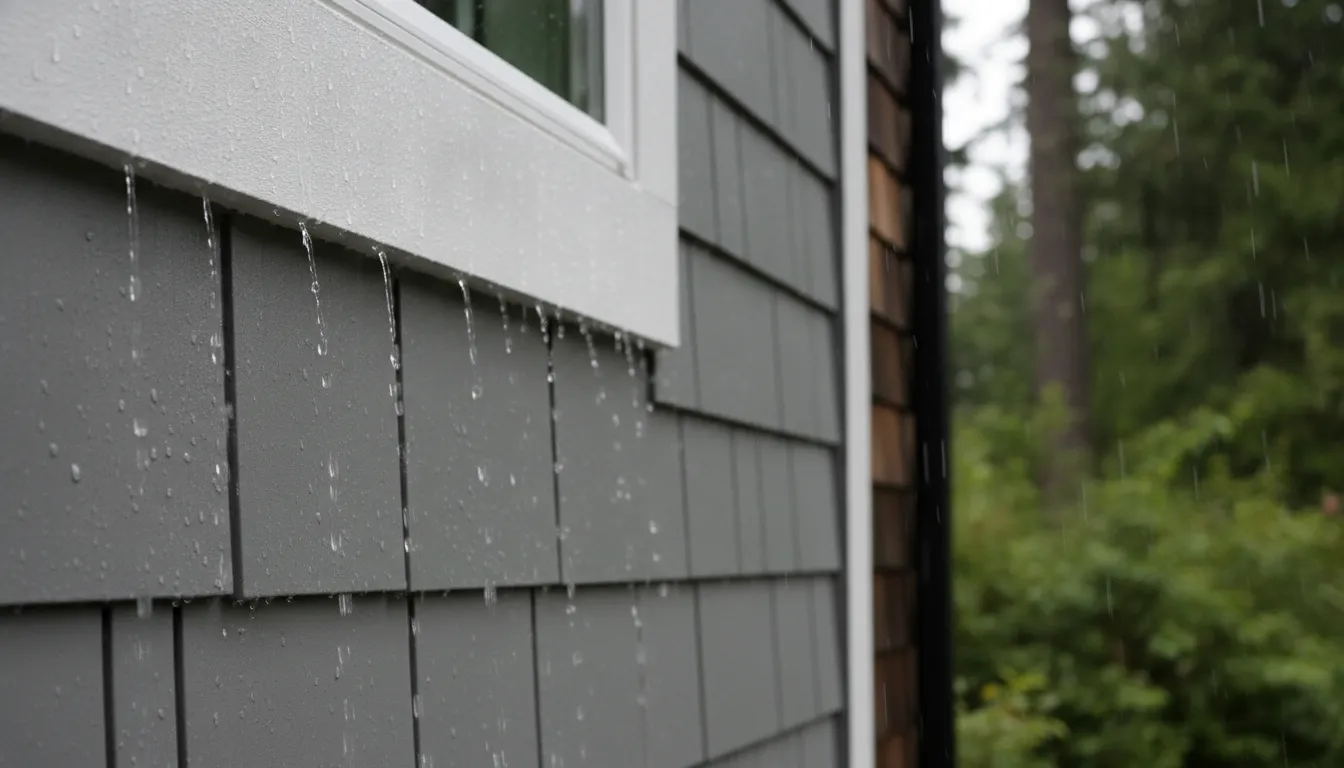
Hardie board siding suits Washington weather because fiber cement resists rot, swelling, warping, and pest damage. A complete installation also uses flashing, a weather-resistant barrier, and correct clearances to move rain away from the wall assembly.
Rain itself is only part of the local challenge. Wind-driven water can reach joints and penetrations. Damp debris can collect near lower courses. Repeated wet and dry cycles test caulk, paint, flashing, and trim. Fiber cement removes the rot risk associated with wood siding, but it does not replace the water-management layers behind the cladding.
Moisture resistance is not the same as waterproofing
A durable exterior is a system. Siding sheds most of the rain, while properly installed flashing directs water around windows, doors, roof-to-wall intersections, and other openings. A weather-resistant barrier provides another drainage plane behind the boards. Installers must also maintain manufacturer-required gaps from roofs, decks, grade, and hard surfaces.
This distinction matters when comparing proposals. A low bid that focuses only on visible boards may overlook damaged sheathing, worn flashing, or other underlying issues. Landmark’s residential siding services include removal of old siding, repair of underlying problems, and installation of a new exterior suited to the Pacific Northwest climate.
Fire and pest resistance
Fiber cement is noncombustible, which can be valuable for homeowners who want a fire-resistant exterior material. It also does not attract termites or other wood-damaging pests. These properties do not make an entire home fireproof or eliminate all maintenance, but they reduce two common vulnerabilities of natural wood cladding.
Hardie board siding styles and warranty details
James Hardie offers lap, vertical panel, shingle, and premium architectural siding. The right profile depends on the home’s architecture, desired shadow lines, maintenance plan, and whether the owner wants a field-painted or factory-applied finish.
Choosing a profile is more than a color decision. Board width and exposure change the apparent scale of a home. Vertical panels can emphasize height. Shingle accents can add texture to gables. Wider lap siding can create a quieter, more contemporary appearance, while narrower exposures often fit traditional facades.
- Hardie Plank lap siding: Horizontal boards in smooth or woodgrain textures for a broad range of home styles.
- Hardie Panel vertical siding: Large panels used for contemporary lines or board-and-batten designs.
- Hardie Shingle siding: Straight-edge or staggered-edge panels that echo cedar shingles without wood’s rot risk.
- Hardie Artisan siding: A premium 5/8-inch-thick profile that creates pronounced shadow lines and refined details.
James Hardie fiber cement siding carries a 30-year non-prorated transferable limited product warranty. ColorPlus finishes carry an additional 15-year limited warranty covering paint and labor. Warranty terms have exclusions and installation requirements, so homeowners should review the current manufacturer documents for the selected product and keep project records.
Landmark also offers a transferable lifetime craftsmanship warranty, with coverage details provided in the project agreement. Product warranties and contractor workmanship warranties protect different things. Ask a contractor to explain who handles a future claim, what documentation is retained, and which installation details are required to preserve manufacturer coverage.
How does Hardie board compare with vinyl and wood?
Hardie board typically offers more fire resistance and rot resistance than wood, plus a more substantial look than vinyl. Vinyl often has a lower initial price, while wood offers authentic natural character but requires more frequent upkeep in damp conditions.
| Factor | Hardie board fiber cement | Vinyl siding | Natural wood siding |
|---|---|---|---|
| Moisture and rot | Resists rot and swelling when correctly installed | Does not rot, but water can still reach the wall behind it | Can rot if coatings and drainage details fail |
| Fire behavior | Noncombustible material | Can melt or deform near high heat | Combustible |
| Appearance | Wood-like textures, smooth boards, panels, and shingles | Many colors and profiles, with lighter material depth | Authentic grain and natural variation |
| Maintenance | Periodic washing, caulk checks, and eventual repainting depending on finish | Low routine maintenance | Regular coating, caulk, and rot monitoring |
| Installation | Heavy material requiring trained cutting, fastening, flashing, and dust controls | Lightweight and generally faster to install | Requires careful moisture detailing and finishing |
There is no universal winner. Vinyl can make sense when controlling the initial budget and minimizing routine finish maintenance are top priorities. Cedar can be right for an owner who values authentic natural material and accepts a more involved maintenance plan. Hardie board is often the middle path for homeowners who want wood-like design choices with greater resistance to moisture, pests, and fire.
Questions that make the comparison more useful
- Is the current siding failing because of the material, poor flashing, or an underlying wall issue?
- How long do you expect to own the home?
- Do you prefer a factory finish or the flexibility to repaint later?
- Are there architectural details that favor lap boards, panels, shingles, or a combination?
- Does the proposal include removal, disposal, sheathing repairs, flashing, trim, and painting?
For a closer look at available materials and project scope, review Landmark’s siding options and James Hardie siding services.
What are the drawbacks of Hardie board siding?
The main drawbacks are higher initial cost, heavy boards, specialized installation, and ongoing finish maintenance. These tradeoffs are manageable when they are included in the project plan rather than treated as surprises.
Installation quality has an outsized effect
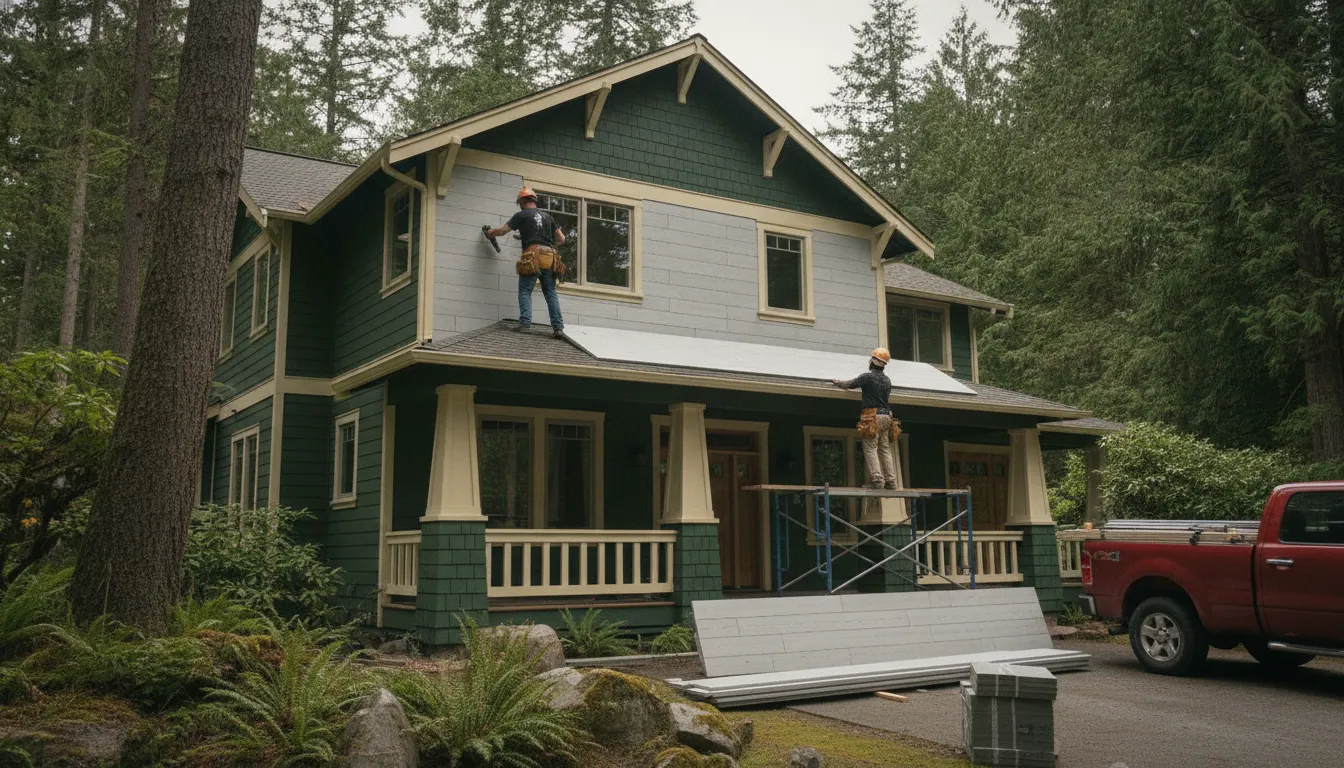
Fiber cement boards are heavy and can break if carried or fastened incorrectly. Cutting creates silica-containing dust, so trained crews need suitable tools and dust-control practices. Fastener placement, joint treatment, flashing, and required clearances all affect performance and warranty eligibility.
Because siding covers the wall assembly, replacement is also the right time to inspect what is underneath. Soft sheathing, damaged wrap, and poorly flashed openings should be addressed before new boards conceal them. Homeowners should ask how a contractor prices unexpected repairs and documents corrected conditions.
It is low maintenance, not no maintenance
Hardie board does not rot like wood, but the exterior still needs attention. Wash dirt and organic growth as needed using methods permitted by the manufacturer. Inspect caulked joints, trim interfaces, penetrations, and painted surfaces. Keep plants, soil, and debris from holding moisture against lower courses. Repaint field-applied or aging finishes when coating condition calls for it.
A simple annual walk-around after the wet season can identify open caulk joints, impact damage, blocked drainage points, or finish wear while the repair is still limited. That is especially useful on shaded elevations and areas exposed to roof runoff.
How to evaluate a Hardie board siding proposal
A complete Hardie board proposal should identify the exact product, finish, removal scope, water-management details, repair allowances, warranty, and cleanup plan. Compare what is included, not just the final price.
Homeowners often receive proposals that appear similar but cover very different work. One may include removal and disposal, replacement of damaged sheathing, new flashing, trim, and painting. Another may assume the existing wall is sound and exclude repairs. Clarifying those differences reduces the chance of costly change orders.
Use this proposal checklist
- Exact James Hardie product line, profile, texture, color, and finish system
- Areas included and excluded, with trim and accent locations clearly identified
- Removal, disposal, wall inspection, and weather-resistant barrier scope
- Window, door, deck, roof-to-wall, and penetration flashing details
- Process and pricing method for damaged sheathing or framing discovered after removal
- Manufacturer and workmanship warranty details
- Project communication, site protection, cleanup, and final inspection process
Landmark has served the Puget Sound area since 2005, uses direct-employed installation crews, and holds James Hardie Preferred Contractor status. Those points are useful because siding performance depends on both the selected product and the team installing the complete wall system.
Talk with Landmark’s siding team about a detailed proposal for your home, including products, water-management details, and warranty coverage.
Is Hardie board siding right for your Washington home?
Hardie board is a strong choice when you value moisture resistance, fire resistance, wood-like design options, and a long product warranty. It may not be the right fit if the lowest upfront cost or the lightest installation system is your main priority.
Start with the condition of the existing exterior. Cracked boards, soft areas, persistent peeling, failed caulk, and water stains may point to a larger moisture issue that new siding alone will not solve. A thorough inspection should identify the likely cause and determine whether repairs or full replacement make sense.
Then consider the length of ownership and desired maintenance plan. A homeowner planning to stay for many years may place more value on durable material and transferable warranty coverage. A planned sale or limited budget can change the calculation. The best choice balances the wall’s needs, the home’s design, and a realistic total project scope.
Local experience matters because common details vary by region. Homes in Redmond, Seattle, Sammamish, and other Puget Sound communities face long damp periods and wind-driven rain. A siding contractor should be able to explain how the proposed assembly handles those conditions, not simply state that the visible boards are weather resistant.
Frequently asked questions about Hardie board siding
How long does Hardie board siding last?
Service life depends on installation, exposure, and maintenance. James Hardie backs its fiber cement siding with a 30-year non-prorated transferable limited product warranty. Homeowners should follow care instructions, maintain coatings and joints, and keep warranty documents.
Does Hardie board siding need to be painted?
Primed boards require field painting. ColorPlus boards arrive with a factory-applied baked-on finish and a separate 15-year limited finish warranty covering paint and labor. Any finish can eventually need attention, so inspect it periodically.
Can Hardie board siding handle heavy Washington rain?
The fiber cement material resists rot and swelling, making it well suited to damp conditions. Still, successful rain management depends on a complete assembly with flashing, a weather-resistant barrier, correct joints, and required clearances.
Is Hardie board siding fire resistant?
Fiber cement is a noncombustible material. It can improve the fire resistance of the exterior cladding, but it does not make the entire home fireproof. Other assemblies and site conditions also affect risk.
Is Hardie board more expensive than vinyl siding?
Hardie board commonly has a higher initial installed cost because the material is heavier and installation is more involved. Compare complete proposals, expected maintenance, finish options, and warranty coverage rather than material price alone.
What styles of Hardie board siding are available?
Options include horizontal Hardie Plank lap siding, Hardie Panel vertical siding, Hardie Shingle siding, and premium Hardie Artisan profiles. Smooth and woodgrain textures, plus primed and ColorPlus finishes, support a range of home designs.
Get a clear siding recommendation
The right siding decision begins with the wall you have, the look you want, and the installation details your Washington home needs. Landmark Roofing & Siding can inspect the existing exterior, explain practical material choices, and prepare a scope that accounts for water management and long-term protection.
Request your siding consultation to find out whether Hardie board siding is the right fit for your Puget Sound home.