
Date
Wed Jun 24Thick moss on a Seattle roof does more than just ruin your home’s curb appeal. This green growth acts like a sponge that traps moisture and dirt against your shingles. Over time, that dampness can rot the structure and lead to expensive leaks.
Moss on roof seattle homes is a common problem caused by the damp and shady weather of the Pacific Northwest. While the plants look harmless, they trap soil and debris that hold moisture against your roof. According to experts at Oregon State University, this trapped water can speed up how fast materials rot and shorten the life of your roof. As the moss grows, it also lifts shingles and creates gaps where rain can leak into your attic. This leads to wood rot and home damage that costs thousands of dollars to fix. Regular cleaning is the only way to stop moss from destroying your shingles and protect your home from the wet climate.
Every homeowner in the Puget Sound region needs to understand how this growth affects their home. You might wonder why some houses seem to have more problems than others. To find the right answer, we must first look at Why moss grows on Seattle roofs. The path begins with
Moss On Roof Seattle: Why moss grows on Seattle roofs
Seattle is known for its rain and cloudy days. This damp weather makes a great home for moss to grow. If you look at many homes in the area, you will see green growth on the roof. In the moist Pacific Northwest, moss on roofs is hard to avoid. Knowing why it starts can help you keep your home in good shape for years.
How moisture helps moss
Moss loves the wet air in the Puget Sound. It does not have roots like a tree. Instead, it gets what it needs from the air and water around it. Seattle’s high moisture levels mean moss can grow almost all year. Once it starts, it holds on tight to your roof. This can lead to a need for roof repair and maintenance if the growth stays for too long.
When moss takes hold, it acts like a small sponge. It sucks up rainwater and stays wet. This wet layer can keep your roof damp even after the sun comes out. Over time, the constant water can hurt the layers under your shingles. This is why many owners see more growth during our long, wet winters.
Shade and roof spot
The way your home sits on your lot also matters. Moss needs shade to grow because hot sun can dry it out fast. Roof parts that face north often get the least light. These areas stay cool and damp, which lets moss spread. Nearby trees can also cast long shadows over your roof for most of the day.
If you have tall trees near your house, you might see more green patches. Trimming back these trees is a great way to prevent moss growth on cedar shakes and asphalt shingles. Letting more sun reach your roof will help the top dry out. This change in the area is often the best way to stop moss from coming back.
Dirt and leaf buildup
Moss often starts growing where dirt and leaves gather. In Seattle, needles from pine trees and leaves from maple trees often land on roofs. This debris traps water and starts to break down into soil. Moss then uses this soil to anchor itself and find food. Even a small amount of dirt in a corner can start a big problem.
As moss grows, it can lift the edges of your shingles. On asphalt or metal roofs, this lifting creates gaps. Water can then find its way under the shingles and rot the wood. Keeping your roof clear of leaves and dirt is a simple step to protect your home. Small steps now can prevent large costs later.
How moss can damage a roof
In the damp climate of the Pacific Northwest, moss on a roof is a common sight. For people dealing with moss on roof seattle, the growth often starts in the shady spots of the home. Moss is a simple plant that lacks roots, but it is very good at holding onto water. It acts like a thick, green sponge that stays wet long after the rain stops.
How moss traps water
This constant wetness is the main way moss causes harm. It creates a small zone of wetness that stays in place for days or weeks. From Oregon State University, moss traps soil and dirt that keep roof parts wet for long times. This mix of dirt and water can lead to the decay of wood and other roofing parts. Over time, this process can shorten the life of your roof. Instead of water flowing off the roof, the moss keeps it trapped against the surface. This can lead to the growth of fungi that break down the parts that keep your home dry.
Damage to shingles and layers
As moss grows, it can spread under the edges of your shingles. On asphalt and metal roofs, the thick pads of moss can lift shingles up. This lifting creates small gaps that allow rain to blow or seep inside. Once water gets under the top layer, it can reach the wood deck or the felt paper below. This is why small patches of moss should not be ignored.
When water reaches these deep layers, it can cause leaks that are hard to find from the outside. You might not see the damage until it starts to rot the wood in your attic or cause mold to grow. This can lead to high costs for repairing moss-related roof damage in the future. The moss acts like a wedge that slowly pulls the roof apart. This is a big worry for homes with asphalt shingles, as the moss can also pull away the outer grit on the surface.
This can lead to a need for residential roofing in Redmond that addresses the long-term effects of moisture and moss growth.
Impact on roof drainage
Moss does not stay in just one place. Bits of it can break off and wash down the roof during heavy rain or wind. These clumps of moss often get stuck in your gutters and downspouts. When the flow of water is blocked, it can back up onto the roof or overflow onto the ground.
Blocked drainage often leads to water pooling near the eaves or the flashing. This is a weak point for most roofs. If water sits in these spots, it can seep into the fascia boards or the walls of your home. This wetness can also damage the gutters themselves by adding weight and causing them to sag. Keeping your roof clear of moss helps ensure that water moves away from your home as it should. Without a clear path for water, the risk of rot near the edge of the roof goes up. This is a common issue for many homes in the Puget Sound area.
When does moss mean your roof needs repair?
In the Seattle area, seeing a bit of green on your roof is a common sight. The damp air and high rain levels in the Puget Sound region make moss growth almost sure to happen. While a few small patches might look like a simple cleaning task, moss can hide deep issues. You should not ignore it for too long. Knowing when a small patch of green becomes a sign of deep damage is key to saving your home. In the moist Pacific Northwest, moss on roofs is bound to grow and can lead to big repair bills if left alone.
Signs of moss-related damage
Moss does more than just sit on top of your shingles. On asphalt and metal roofs, moss can lift the shingles up. It acts like a tiny wedge that pushes the layers apart. This creates small gaps that let wind and rain get under the outer layer of your roof. Once water finds a path, it can reach the wood deck below and cause rot. If you see shingles that look raised near moss, you may need help. You should start repairing moss-related roof damage before the next big storm hits.
Another big warning sign is the buildup of soil and grit. As moss grows, it traps dirt and debris. This mix acts like a sponge that holds water against your roof for days or weeks. This constant wetness invites fungi to grow, which speeds up how fast your roof breaks down. If the moss feels thick and spongy to the touch, it is likely holding water that is slowly eating away at your roof. Over time, this wet debris shortens the life of your roof by keeping it damp for too long.
When to call an expert
You should look for moss during your yearly roof check. If you see large clumps that cover a wide area, it is time for a closer look. You should also check for moss that has grown deep into the seams between shingles. This type of growth is hard to remove without causing more harm. Using the wrong tools can scrape off the tough grit on your shingles, which makes them fail faster. An expert can find out if the moss is just on the surface or if it has caused leaks that you cannot see yet.
At Landmark Roofing & Siding, we have over 20 years of work in towns like Redmond and Bellevue. Our direct-hire crews know the signs of rot that many owners miss. Choosing expert roof repair services can help you fix small leaks before they turn into a big project. Protecting your home starts with catching moss damage early. If you see signs of shingle lifting or damp spots, get an expert to check it out right away. We can help you decide if you just need a deep clean or if a repair is needed to keep your home safe.
What should you do about moss on a Seattle roof?
Finding moss on your roof is a common part of life in the Puget Sound area. The damp weather makes it easy for moss to grow and spread fast. If you see green clumps on your shingles, you should act quickly to keep your home safe.
Safe roof inspection
The first step is to look at your roof and see how much moss you have. You should do this from the ground if you can. Use a pair of binoculars to get a close look at the shingles. Look for spots where the moss is lifting the shingle edges or trapping soil.
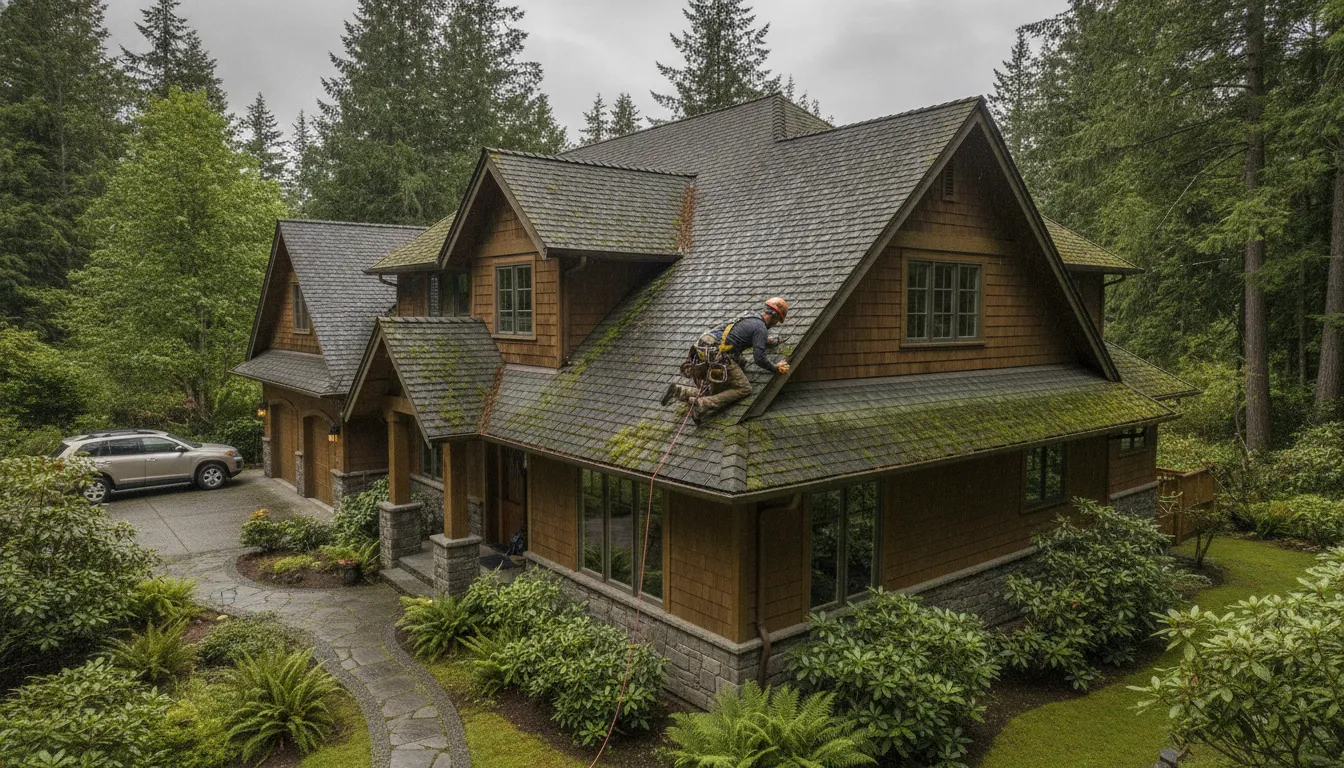
If you must go on the roof, safety is your main goal. A wet, mossy roof is very slick and can lead to falls. It is often best to hire a pro who has the right gear to work up high. A clear view of the damage will help you decide if you need simple roof repair and maintenance or a full cleaning.
Steps for moss removal
When you are ready to deal with the growth, follow these steps to protect your roof.
- Inspect the whole surface. Look for areas where moss has trapped dirt and debris. This trapped mess holds water and can speed up the rot of your roof parts.
- Clear loose debris by hand. Use a soft brush to gently sweep away large clumps of moss. Never use a high-pressure wash, as this can tear your shingles and cause leaks.
- Apply a safe treatment. Use a moss killer like zinc sulfate or potassium salts of fatty acids. These products kill the plant at the root without harming your shingles or the land.
- Rinse the area with a garden hose. Once the moss dies and turns brown, you can wash it away with a light stream of water. Do not scrub hard, or you might lose the safe coating on your shingles.
- Trim back tree limbs. Cut down any branches that hang over your home. Letting more sun hit your shingles is the best way to stop moss from coming back to your roof.
Gentle cleaning methods
It can be tempting to use a power washer to get the job done fast. But high pressure is one of the worst things for your roof. It can blow water under the shingles and soak the wood underneath. This leads to mold and rot that can cost many thousands of dollars to fix.
Instead, stick to gentle ways and safe products. If the moss is too thick to handle on your own, reach out for help. A local team knows how to treat a moss on roof Seattle problem without causing more harm. They can make sure your home stays dry and safe for years to come.
How to prevent moss from returning
Stopping moss from growing back on your roof takes more than a one-time cleaning. In the damp climate of Western Washington, moss can return fast if the roof stays wet. To keep your home safe, you must change how the roof sits in its setting. This means more than just clearing the current growth. You need to make the roof a place where moss cannot live. Stopping moss growth on cedar shakes or asphalt shingles starts with simple care and routine checks. Taking these steps now can save you from a lot of work later.
Let the sunlight reach the shingles
Moss loves dark and wet spots. One of the best ways to stop it is to let in more sunlight. Trimming back trees that hang over your house is a great long-term move. When you cut back large limbs, more sun hits the roof. This helps the shingles dry out fast after it rains. Experts at Oregon State University say that more light is the top way to keep moss away. By changing the shade on your roof, you make it a hard place for moss to thrive. This is a vital part of keeping your roof in good shape and avoiding the need for expert help too often.
Clean off debris and leaves
Dirt and needles act like a sponge on your roof. When these things pile up, they hold water against the shingles. This moisture gives moss exactly what it needs to grow. You should clear your roof at least twice each year. The fall and spring are the best times for this task. Use a soft brush or a leaf blower to remove twigs and dirt. Do not use a pressure washer by yourself. While it might seem fast, pressure washing a roof the wrong way can tear the shingles. It can also strip away the granules that protect your roof from the sun.
Catching moss early is much easier than removing a thick green carpet later. Walk around your home once a month and look at the roof from the ground. Look for green fuzzy spots or dark stains. If you see small patches, you can treat them before they spread. You can use safe soaps or zinc products to kill small bits of moss. Just be careful with zinc if you have copper gutters, as it can cause rust. Acting fast when you see the first sign of moss will keep your roof in good shape for years.
Manage gutters and roof drainage
Good drainage is key to a dry and healthy roof. If your gutters are full of gunk, water can back up and sit on the roof. This creates a wet zone where moss and rot can start. You should check your gutters and downspouts at the start of each wet season. Make sure the water flows freely away from your home. In towns like Seattle and Bellevue, heavy rain happens a lot in the fall. Keeping your drainage clear is a big part of roof repair and maintenance. A clear path for water keeps the edges of your roof dry and free of moss.
Homeowners looking for a Bellevue roofing contractor can also benefit from professional moss prevention and roof maintenance services.
Moss removal versus roof repair
In the moist climate of Seattle, moss on your roof is often likely. Homeowners must often decide if they need a simple cleaning or a more serious fix. Knowing the difference between surface moss and deep damage can save you money. This choice is key to keeping your home safe and dry for many years.
When simple removal is enough
Routine moss removal is a normal part of home care in the Pacific Northwest. You should act when you see thin layers of green growth starting to form on your shingles. At this stage, the moss has not yet trapped enough soil to cause rot or decay.
Proper moss control and care stops the growth before it affects the life of the roof. Some people use zinc sulfate or soap-based products to kill the moss safely. Keeping the sun on your roof by trimming trees also helps a lot.
Signs that you need a roof repair
If moss stays on the roof for too long, it begins to lift the edges of the shingles. This creates small gaps where wind and rain can enter your home. You may need a repair if you see cracked shingles or water stains in your attic.
These issues show that the moss has already caused some harm to the home. Moss also acts as a sponge that holds water against the roof surface. You will need an expert to check the repairing moss-related roof damage to keep your home dry.
Choosing between removal and repair
There are times when cleaning or small repairs cannot fix the problem. If moss covers more than half of the roof, the wood beneath the shingles may be soft. A roof that is over twenty years old often lacks the strength to handle a deep cleaning.
In these cases, a new roof is the best choice for your house. You should talk to a local pro for roof repair and maintenance tips to see if your roof is still safe. Replacing an old, moss-heavy roof protects your home from sudden leaks during the storm season in Puget Sound. It also helps to keep the value of your home high over time.
| Factor | Moss Removal | Roof Repair |
|---|---|---|
| Main Goal | Kill moss and clear debris | Fix leaks and replace shingles |
| Roof Condition | Good; moss is on the surface | Poor; shingles are lifted or torn |
| Typical Work Time | A few hours to one day | One to three days |
| Impact on Roof Life | Prevents future rot | Restores the water seal |
| When to Perform | Every two or three years | When damage or leaks occur |
Why a professional roof inspection matters
Moss is a common sight in the moist climate of the Pacific Northwest. While a few green patches might look like they belong in a forest, they do not belong on your home. In this part of the country, moss on roofs is bound to happen, but it can lead to high costs if left alone. Getting a pro to look at your roof is the first step to keeping your home safe.
Finding hidden damage from moss
One of the biggest risks of moss is that it hides what is going on beneath it. Moss traps soil and dirt, which holds wetness against your roof. This wetness causes wood to rot and repairing moss-related roof damage can cost a lot if you wait too long. A pro can see past the green and find weak spots before they become leaks.
Moss can also lift your shingles. When moss grows under the edges, it creates gaps. These gaps let wind and rain get under the roof layers. This can damage the wood deck and cause mold to grow inside your attic. An expert knows how to check for these lifted spots and fix them fast.
Safety and proper tools
Checking a roof yourself can be risky. Roofs in areas like Seattle and Bellevue are often steep and slick from rain. Professional crews have the right safety gear and training to work high up without falling. They also know which tools to use so they do not hurt your roof while they work.
Using the wrong tools can do more harm than good. For example, some people try to use high pressure water to blast away moss. But bad technique with a pressure washer can damage shingles and wash away the bits that protect them. Professionals use soft wash methods and safe soap-based cleaners to kill moss without hurting your home.
Protecting your home’s value
Your roof is one of the most important parts of your house. Keeping it in good shape helps keep your home value high. When you hire professional roof repair services, you get a clear report on the state of your roof. This is helpful if you plan to sell your home or talk to your insurance group.
A trained expert can also help you keep your warranty valid. Many makers of roof products need you to have steady checks to keep your coverage. By getting a pro to look at your roof every year, you make sure that you are covered if something goes wrong. This gives you peace of mind and saves you money over time.
Frequently Asked Questions
Should I be concerned about moss on my roof?
Yes, you should worry about moss because it acts like a sponge on your roof. It traps soil and dirt which holds water against the shingles for a long time. According to Oregon State University, this water can speed up wood rot and damage the layers under the roof. In the damp Seattle air, leaving moss alone can lead to leaks and high repair bills. This will shorten the life of your roof.
Is it worth having moss removed from a roof?
Clearing moss is a smart move to protect your home and save money on bills. When moss grows between shingles, it can lift them up and let water leak into your attic. This can cause rot in the wood frame of your house. Expert cleaning keeps your roof strong and helps your home look its best. By clearing moss early, you avoid the cost of a new roof. This ensures your home stays dry during rainy Seattle winters.
How much does it cost to clean moss from a roof?
Most roof cleaning jobs in the Puget Sound area cost between 400 and 1,200 dollars. The size of your house and the amount of moss will change the price. Steeper roofs are also harder to clean and may cost more. While cleaning is an upfront cost, it is much cheaper than a full roof repair. It is best to have an expert check your roof. They can find the safest way to treat your home without hurting the shingles.
How do you stop moss from growing back on your roof?
The best way to stop moss is to change the area on your roof. Trimming back trees to let in more sunlight is a great long-term plan. You can also use zinc or copper strips near the top of the roof. According to experts, soap-based products are safe for pets and help stop moss. These soaps kill the moss by hurting its cells but do not harm your roof or the local land.
Protect your Seattle-area roof from moss damage
Moss can hide lifted shingles, drainage problems, and moisture damage that grows more expensive over time. Landmark Roofing & Siding has served Puget Sound property owners since 2005. And our directly employed crews can inspect your roof, explain what they find, and recommend an appropriate next step.
Request your roof inspection to get practical guidance for protecting your home.